United States President Donald Trump has indicated that Iran will still be allowed to participate in this summer’s 2026 FIFA World Cup despite escalating hostilities between the two countries, according to Gianni Infantino, president of FIFA.
Infantino disclosed the development in an Instagram post after meeting Trump on Tuesday to discuss preparations for the tournament, which will be jointly hosted by the United States, Canada, and Mexico. The competition is scheduled to begin on June 11.
According to Infantino, the conversation also touched on the current situation in Iran, whose national team’s participation in the tournament has been uncertain following recent military tensions.
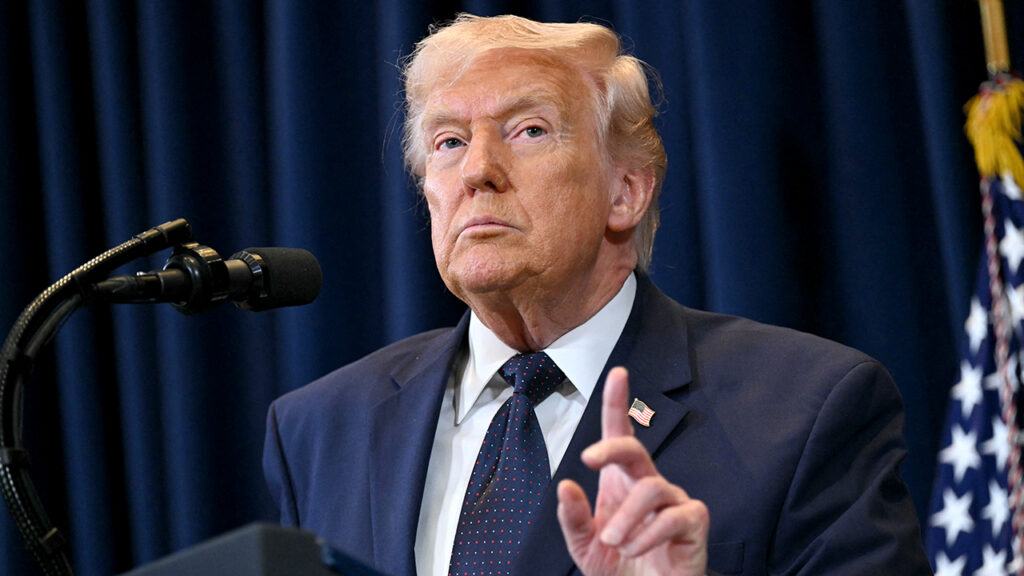
“During the discussions, President Trump reiterated that the Iranian team is, of course, welcome to compete in the tournament in the United States,” Infantino wrote. He added that the World Cup has the power to unite people around the world during difficult times.
The remarks come amid escalating conflict after the United States and Israel launched military strikes in Iran earlier this month, reportedly killing Iranian Supreme Leader Ayatollah Ali Khamenei. Tehran later retaliated with missile and drone attacks targeting Israel and several Gulf states hosting U.S. military bases, including Bahrain, Kuwait, Qatar, and the United Arab Emirates.
Despite the tensions, Iran’s national team is still scheduled to play three group-stage matches in the United States. The team is expected to face New Zealand and Belgium in Los Angeles on June 15 and June 21 respectively, before taking on Egypt in Seattle on June 26.
Trump had previously told Politico that he did not consider Iran’s participation in the tournament a major concern.
However, uncertainty remains within Iran’s football leadership. Mehdi Taj, president of the Football Federation Islamic Republic of Iran, reportedly said recent attacks have made it difficult to view the World Cup with optimism.
Meanwhile, Australia has granted humanitarian visas to six members of Iran’s women’s national team due to safety concerns. The players had been in the country competing in the AFC Women’s Asian Cup.
Australia’s Home Affairs Minister Tony Burke confirmed that seven people were initially granted asylum, though one player later decided to return to Iran.
The situation highlights the growing impact of geopolitical tensions on international sports, even as FIFA officials emphasize the tournament’s role in promoting unity across nations.