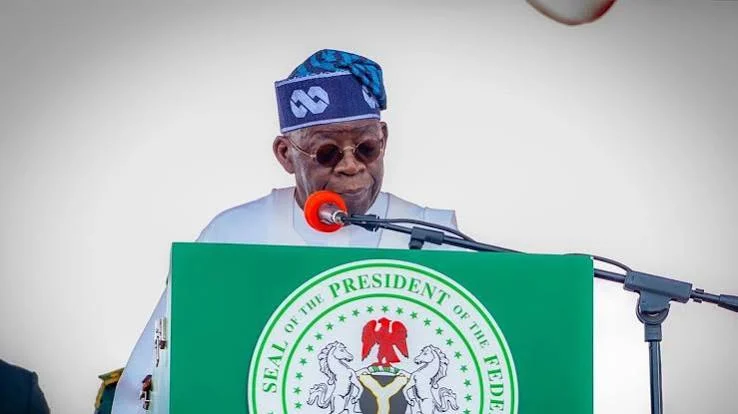
President Bola Tinubu has criticised former Vice President Atiku Abubakar’s reported pledge to restore petrol subsidies if elected president, describing the proposal as a reflection of what he called a poor understanding of Nigeria’s governance and economic realities.
Tinubu spoke on Thursday at the State House, Abuja, while receiving Osun State Governor Ademola Adeleke following his victory in last Saturday’s governorship election.
The President said Nigeria’s economic challenges before the removal of petrol subsidy demonstrated why returning to the previous regime would be a backward step.
“I saw one of my opponents now say he will go back to subsidy. I read it. That is demonstration of a serious ignorance on governance and economy,” Tinubu said.
He recalled that before his administration removed the subsidy, many states struggled to meet their financial obligations.
“Before I came here, 27 states were unable to pay salaries, not to even talk of pensioners,” the President said, adding that several state governments regularly sought financial support from the Federal Government.
Tinubu also advised Adeleke to embrace reconciliation and avoid stigmatising his political opponents following his re-election.
According to him, the governor should use his new mandate to promote unity, peace, democracy and stability in the state.
“All for reconciliation, expand your coast. That is the only way you can give thanks to our people,” Tinubu said.
He urged Adeleke to govern with humility and recognise the support of the people, stressing that his administration should focus on consolidating democracy and strengthening the rule of law.
Speaking with journalists after the meeting, Adeleke said he visited the President to express appreciation for what he described as the preservation of the people’s will during the Osun election.
“I’m here to thank Mr President, the father of the nation, because he fought for this democracy. That is why he allowed free and fair election, and that is the result,” the governor said.
Atiku’s Past Position Under Spotlight
Atiku’s renewed position on fuel subsidy has also revived scrutiny of his previous public comments on the policy.
Between 2020 and 2023, the former Vice President repeatedly supported the removal of petrol subsidy and the liberalisation of the downstream petroleum sector.
He had argued that subsidies and price controls encouraged corruption, discouraged investment and placed an unsustainable burden on Nigeria’s public finances.
Atiku also maintained that petrol prices should be determined by market forces while government resources should be redirected towards expanding domestic refining capacity and strengthening the broader economy.
Drawing from his experience in the Olusegun Obasanjo administration, Atiku said the government had pursued a phased withdrawal of fuel subsidies and succeeded in removing the subsidy on diesel.
In a previous statement, he described the eventual withdrawal of fuel subsidy and price controls as the right policy direction, although he argued at the time that it should have been implemented earlier when the economy was stronger.
His latest pledge to restore the subsidy, however, represents a significant shift from his previous position.
Presidency Says Proposal Represents a Return to the Past
The Presidency, in its response, said Atiku’s position amounted to a return to what it described as an outdated and unsustainable economic policy.
It said Nigerians deserved to know how a restored subsidy regime would be funded and whether such a policy could operate within the current legal and structural framework governing the petroleum sector.
The Presidency argued that the former subsidy arrangement was not simply a government-funded discount, but a system that required the public sector to absorb the difference between regulated pump prices and the actual cost of supplying petrol.
According to the statement, the Petroleum Industry Act had already established a framework that ended the previous subsidy regime and liberalised the downstream petroleum market.
The government also rejected claims that a massive subsidy windfall was available for redistribution, insisting that the old system had accumulated substantial financial obligations.
It further argued that Nigeria’s petroleum sector had changed significantly since 2023, particularly with the growth of domestic refining capacity.
The Presidency cited the Dangote Refinery and other local refiners as examples of how market-driven reforms were reshaping the industry, warning that a return to subsidised petrol prices could discourage domestic investment and undermine smaller refineries.
It also said increased revenue available to the Federal Government, states and local governments had improved the fiscal capacity of the three tiers of government.
According to the Presidency, funds that would previously have been used to sustain discounted petrol prices were now being channelled into public finances, enabling governments to meet salary obligations and undertake infrastructure projects.
The government maintained that the debate over fuel subsidy should reflect the current realities of Nigeria’s petroleum market rather than the conditions that existed before the reforms.
Atiku’s subsidy proposal is expected to remain a major point of political and economic debate as Nigeria moves closer to the next presidential election, with the controversy highlighting sharply different approaches to fuel pricing, public spending and the management of the country’s oil sector.