The South African government has rejected Nigeria’s move to seek compensation for businesses and properties abandoned by Nigerians who fled recent xenophobic attacks, insisting that only legally registered assets are recognised under its laws while urging Nigerian authorities to identify alleged drug-related locations linked to some of its citizens.
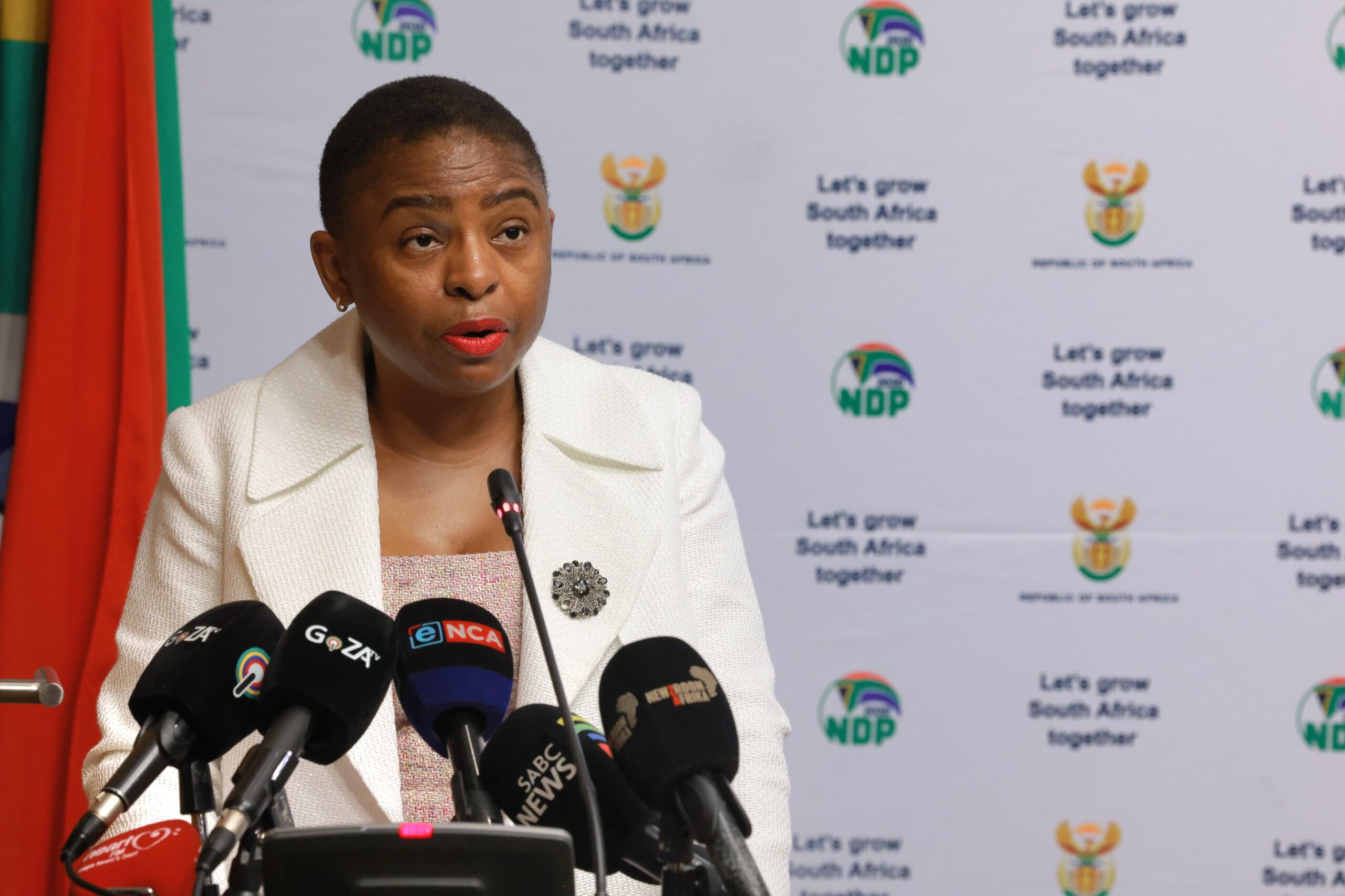
South Africa’s Minister in the Presidency, Khumbudzo Ntshavheni, made the remarks during a press briefing on Friday, maintaining that Nigerians who legally own property in the country retain full ownership rights and can sell their assets through the normal property market rather than seek compensation from the government.
According to Ntshavheni, all legally acquired properties in South Africa are properly documented through official registration systems.
“If you own a property in South Africa, it’s registered. If it’s a house, it’s registered with the Deeds Register. If you own a car, it’s registered in the NATIS system. If you own a business, it’s registered with the CIPC,” she said.
She stressed that Nigerians leaving South Africa could legally dispose of both movable and immovable assets if they are properly registered.
“If you own a property in South Africa, those who leave their properties, if they are properly legally registered in the country, they can dispose of the properties in the property market in South Africa, whether it’s movable or immovable property,” she added.
The minister also sparked controversy by calling on Nigerian authorities to identify locations allegedly being used for drug-related activities by some Nigerians in South Africa.
“We’ll be interested to know where the drug dens of Nigerians are so they can show us where they’ve been holding the drugs so that we can clean the drugs in South Africa quite urgently,” Ntshavheni stated.
She further ruled out compensation for structures located in informal settlements, describing such structures as illegal under South African law.
“Informal squatter camps and settlements are never properties because they are illegal in the country. So you are already violating our law if you tell us about a shack in an informal settlement. So there is no compensation that will come from government,” she said.
Her remarks followed Nigeria’s announcement that it would pursue compensation for citizens who abandoned businesses and other assets while escaping anti-migrant violence in South Africa.
Speaking during an interview on Channels Television on July 1, Acting Nigerian High Commissioner to South Africa, Temitope Ajayi, disclosed that affected Nigerians had been directed to compile detailed records of businesses and properties left behind.
“In terms of the businesses, just three days ago, myself and the South African deputy minister of foreign affairs were together, and we were discussing this,” Ajayi said.
“I took up the discussion with her, and we have agreed that we are going to ask our people who are returning to begin to document what they are leaving behind.”
He explained that returnees had been instructed to provide comprehensive documentation of their abandoned assets, including businesses, vehicles, and both movable and immovable property.
“I have asked them before they left yesterday to document very accurately those things they were leaving behind in terms of businesses, in terms of even cars, movable and immovable properties.
“We are going to work with the South African government to get to the exact locations of all these businesses, shops and properties and present them to the South African government for possible compensation because we will not allow the labour people have suffered to build over the years to just go down the drain or be taken over by people,” he added.
Meanwhile, the Federal Government has continued its evacuation programme for Nigerians affected by the violence.
More than 850 Nigerians have now been evacuated from South Africa in four separate batches since the xenophobic attacks escalated.
The first evacuation flight, operated by Air Peace, returned 262 Nigerians to Lagos on June 11, followed by a second batch of 66 returnees on June 25. A third flight brought approximately 271 Nigerians back from Johannesburg on June 30.
The latest evacuation took place on July 3, when another Air Peace charter flight arrived at the Murtala Muhammed International Airport with 268 Nigerian returnees, accompanied by two officials and flight crew members.
Nigeria’s Minister of Foreign Affairs, Bianca Odumegwu-Ojukwu, said the government remains committed to ensuring the safe return of Nigerians affected by the unrest while continuing diplomatic engagement with South African authorities over the crisis.