King Charles III initiated the second day of his journey to Kenya, acknowledging the absence of justification for colonial-era abuses during Britain’s dominion in the East African nation. During the four-day state visit accompanied by Queen Camilla, he aimed not only to comprehend these past wrongs but also to foster a contemporary partnership among equals facing present challenges.
Despite mounting calls for a formal apology to a country violently ruled by Britain before gaining independence in 1963, the 74-year-old British head of state, on the initial day in Kenya, expressed deep sorrow and regret for past wrongdoings but stopped short of issuing an apology.
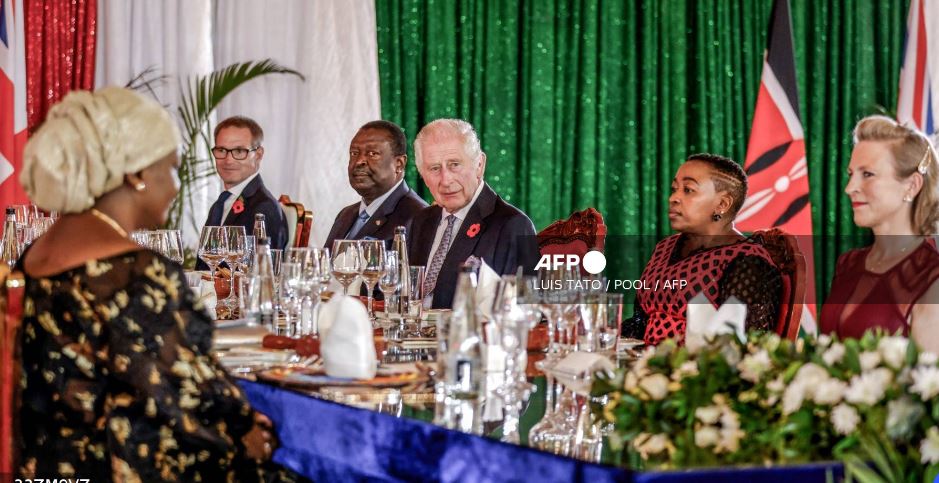
Speaking at a state banquet on Tuesday evening, King Charles recognized the “abhorrent and unjustifiable acts of violence” committed against Kenyans during their painful struggle for independence and sovereignty. He emphasized that there could be no excuse for such actions and highlighted the importance of addressing history with honesty and openness to fortify present friendships and build stronger bonds for the future.
The visit marks King Charles’ first tour of an African and Commonwealth nation since ascending to the throne last year after the passing of his mother, Queen Elizabeth II. Kenyan newspapers captured the significance of confronting the empire’s dark past and debated the complexities surrounding demands for reparations, proposing potential avenues for reconciliation and restoration.
During the visit, King Charles and Queen Camilla received a ceremonial welcome by President William Ruto and paid respects at the Uhuru Gardens Memorial Park, where Kenya declared independence in 1963. However, the park’s history also encompassed a dark period where British colonial authorities detained suspected Mau Mau guerrillas during the 1952-1960 uprising, known as the “Emergency.”
President Ruto condemned the colonial response to Kenya’s quest for self-determination as “monstrous in its cruelty” but appreciated King Charles’ willingness to address uncomfortable truths.
King Charles emphasized the country’s special significance for his family, alluding to his mother’s deep affection for Kenya and its people. His upcoming itinerary includes visits to honor war veterans, pay tribute to environmentalist Wangari Maathai, and engage in initiatives focusing on climate change, creative arts, technology, and youth support in Nairobi and Mombasa.