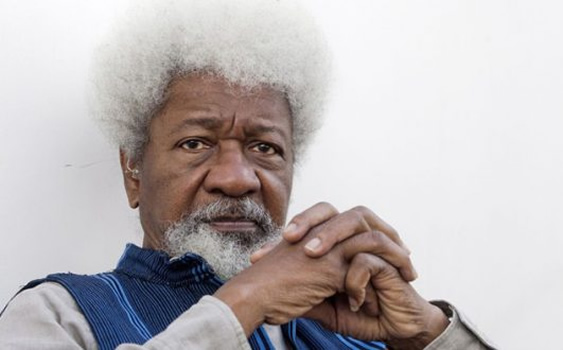
Renowned Nigerian playwright and Nobel laureate, Wole Soyinka, has raised concerns about the arbitrary exercise of power by the Economic and Financial Crimes Commission (EFCC) in the ongoing detention of former Minister of Power, Dr. Olu Agunloye. Soyinka, in a detailed critique, questions the basis for Agunloye’s arrest, emphasizing the need for transparency and adherence to fundamental human rights.
Soyinka, who has a history of advocating for accountability in corruption-fighting agencies, highlights his previous interventions aimed at promoting the rule of law within organizations like the EFCC. However, he expresses disappointment over what he perceives as a departure from lawful conduct in Agunloye’s case.
The central issue raised by Soyinka revolves around the EFCC resorting to “Trial or Smear by Media,” criticizing the sensationalist nature of the media campaign against Agunloye. Soyinka deems this approach unworthy, reprehensible, and counterproductive, suggesting it impedes citizens’ willingness to engage in public service and hinders national development.
He points to the abrupt declaration of Agunloye as “WANTED” less than 36 hours after he was seen at a public event, questioning the authenticity of such a declaration and characterizing it as a distasteful attempt at social media sensationalism. Soyinka contends that such tactics are not conducive to serious crime-solving commitments.
Soyinka further discloses that Agunloye, in response to the “WANTED” declaration, voluntarily issued a statement regarding his movements, expressing readiness to comply with the EFCC. However, upon showing up at the EFCC offices in Abuja, he was promptly arrested and detained.
The Nobel laureate urges a non-partisan commission to thoroughly investigate the Mambilla Project, a 16-year-old project linked to Agunloye’s charges, which he believes holds key answers to the unresolved murder case of former Minister of Power, Bola Ige. Soyinka advocates for transparency, public hearings, and cross-examination of witnesses to bring closure to the longstanding issues surrounding the Mambilla Project.
In conclusion, Soyinka calls for the release of Agunloye by the EFCC or the equitable arrest and detention of all individuals involved in the Mambilla Project scandal. He emphasizes the urgency of redirecting the EFCC’s efforts toward a productive end that serves the nation’s interests and addresses the longstanding challenges in a transparent manner.
The detailed critique by Wole Soyinka reflects his deep concern for justice, accountability, and the proper functioning of anti-corruption agencies in Nigeria.