Nigeria has renewed its call for Africa to be granted permanent representation on the United Nations Security Council, describing the continent’s continued exclusion from the body as unfair and inconsistent with modern global realities.
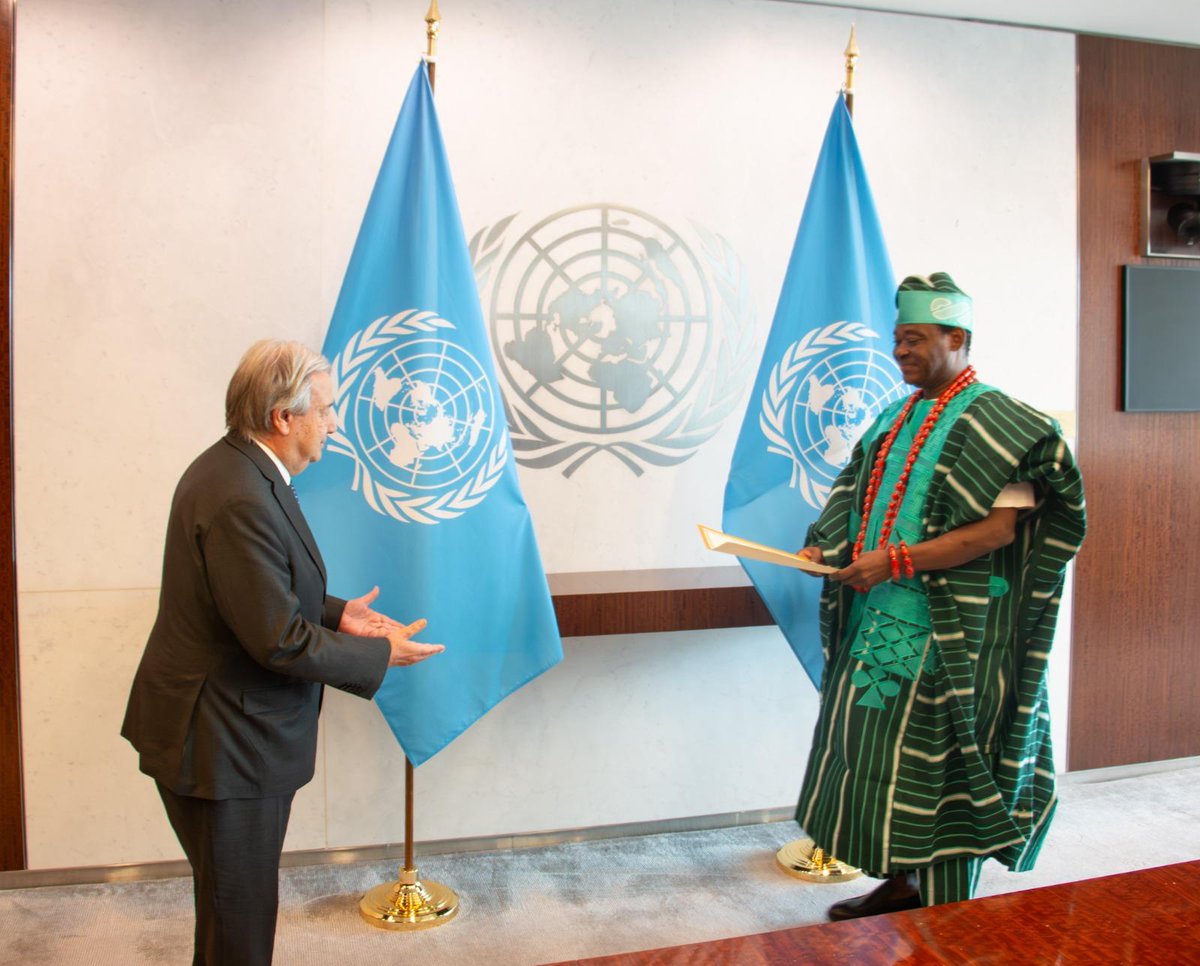
Speaking ahead of the 81st session of the United Nations General Assembly, Nigeria’s Permanent Representative to the UN, Ambassador Jimoh Ibrahim, said the country remains committed to the UN Charter and the UN-80 Reform Agenda while advocating changes to the organisation’s governance structure.
In an interview with ARISE News on Thursday, Ibrahim said Nigeria’s recommitment to the United Nations was made on behalf of President Bola Tinubu and reflects the country’s confidence in the institution’s role in promoting global peace, security and international cooperation.
The envoy argued that Africa’s absence from the Security Council’s permanent membership category is unjust, considering the continent accounts for roughly a quarter of the world’s population.
“It is quite unjust, very unheard of to say that Africa, who has a population of 25 percent of the entire world, have no seats in the Security Council of the United Nations,” Ibrahim said.
He maintained that the lack of African representation at the highest level of global security decision-making has contributed to challenges facing the continent, stressing that international institutions must evolve to reflect contemporary realities rather than structures established after the Second World War.
According to him, Africa’s 54 countries deserve a stronger voice in shaping global security policies, particularly in the 21st century.
Ibrahim said Nigeria is actively pursuing a seat on the Security Council as part of broader efforts to strengthen its influence on the international stage.
“Nigeria is a giant of Africa. We want to return to that glory, and we must have the seats in the Security Council,” he stated.
The ambassador noted that discussions on Security Council reform remain ongoing within the United Nations, adding that meaningful reform of the organisation would be difficult to achieve if Africa continues to be excluded from permanent membership.
He further linked the issue to the credibility of the UN-80 Reform Agenda, arguing that the initiative would fall short of its objectives without addressing Africa’s representation concerns.
Addressing ongoing conflicts in regions such as Sudan, Gaza and Ukraine, Ibrahim said global security challenges are often shaped by competing national interests, political considerations and power dynamics among major nations.
He emphasized that sustainable international peace depends on balancing those interests while ensuring broader inclusion in global governance structures.
Nigeria’s position on Security Council reform is expected to feature prominently during discussions at the upcoming session of the United Nations General Assembly in New York, where member states are set to debate the future direction of the United Nations and its reform agenda.