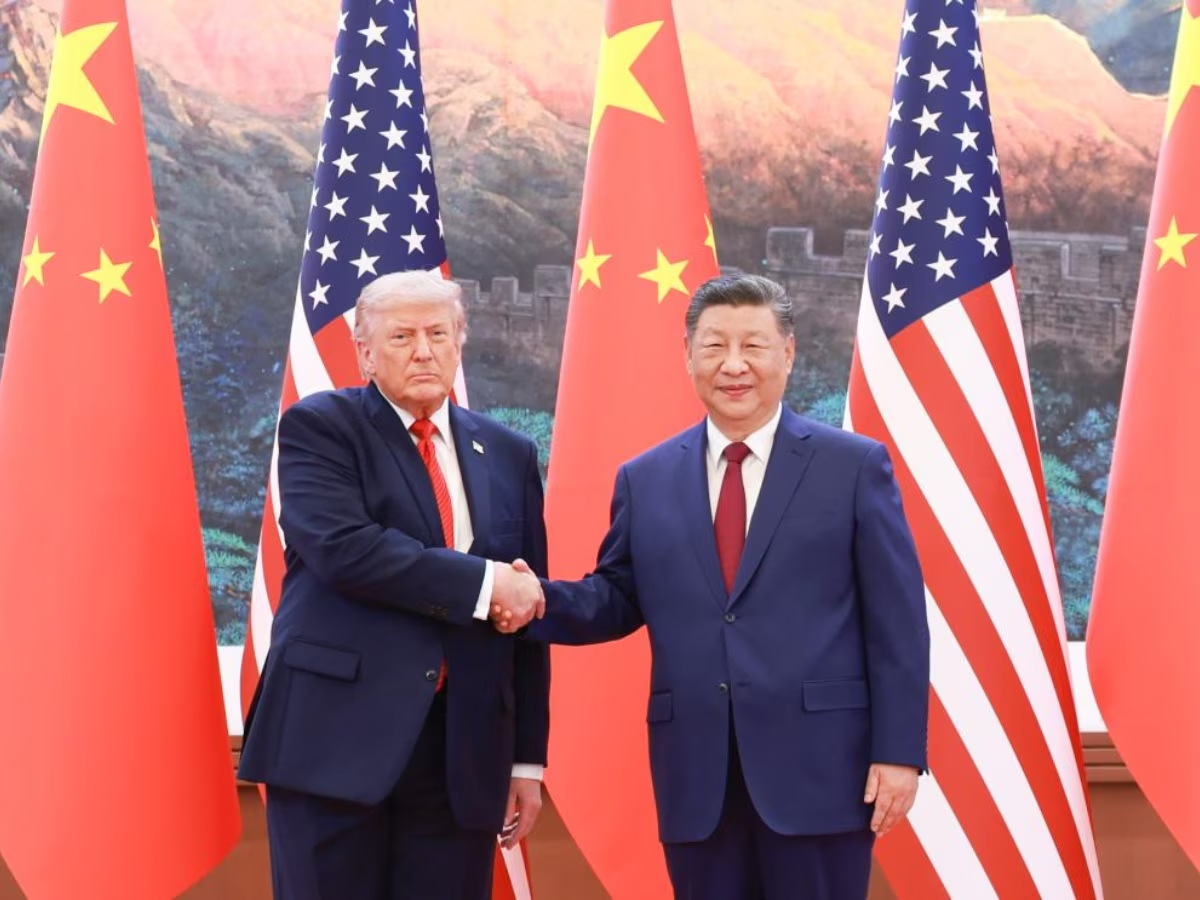
The United States and China have agreed to reduce tariffs on $60 billion worth of goods while extending their trade truce, giving both countries additional time to negotiate broader economic arrangements.
The agreement covers $30 billion worth of non-sensitive goods selected by each country for preferential tariff treatment, according to US Trade Representative Jamieson Greer.
Greer said the deal would improve market access for US exporters, covering about 30 percent of American exports to China.
The tariff reductions were among the key outcomes of a second summit this year between US President Donald Trump and Chinese President Xi Jinping in Washington last week.
Under the arrangement, China plans to reduce tariffs on several US agricultural products, including corn, wheat, sorghum, meat, dairy products, vegetable oils and meals. Soybeans, however, were not included on the list.
Beijing will also consider lower tariffs on American fish and seafood, logs and wood products, cosmetics and medical devices.
In return, the United States will reduce tariffs on a range of Chinese consumer goods. The products include small household appliances such as coffee makers and toasters, tableware, blankets, bed linen, toys, fireworks, artificial flowers, Christmas lights and other holiday decorations, as well as children’s car seats.
China’s Commerce Ministry said Monday that the two-month extension of the trade truce, through January 10, would allow both sides to assess existing agreements and continue efforts to resolve economic and trade disputes.
The ministry said the extension would help create a “relatively stable and predictable policy environment” for businesses and support continued negotiations between the two countries.
Washington and Beijing also agreed to maintain regular discussions on investment opportunities and barriers, improve policy transparency and predictability, and address concerns raised by businesses.
Despite the agreement, Chinese financial markets reacted negatively on Monday, with investors expressing disappointment over the lack of detailed commitments from the leaders’ summit.
The benchmark CSI300 index fell more than 2 percent to its lowest level in a year, while technology stocks also declined amid bipartisan support in the United States for restrictions on Chinese components used in data centres.