The Presidency has refuted claims made by former Secretary to the Government of the Federation (SGF), Boss Mustapha, suggesting that no single individual was responsible for the emergence of Muhammadu Buhari as President in 2015.
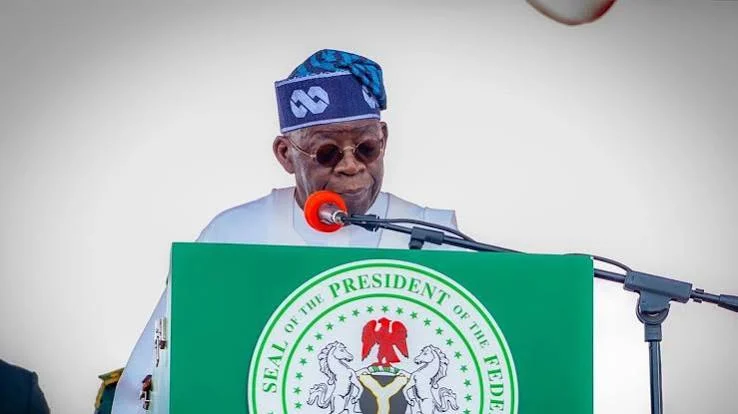
Reacting strongly, the Senior Special Assistant to President Bola Tinubu on Media and Publicity, Temitope Ajayi, asserted that without Tinubu’s decisive support, Buhari would not have secured the All Progressives Congress (APC) presidential ticket ahead of the 2015 general elections.
Ajayi made his remarks via a post on his official X (formerly Twitter) handle, @TheTope_Ajayi, in response to Mustapha’s comments during a recent book launch in Abuja. The book was authored by Mallam Garba Shehu, former spokesperson to President Buhari.
At the event, Mustapha had argued that Buhari’s victory was a collective effort, citing his consistent 12.5 million vote base and the contribution of legacy parties that merged into the APC to form a formidable political force. He dismissed the notion that any one person — including Tinubu — was solely responsible for Buhari’s presidential success.
But Ajayi dismissed Mustapha’s version of events as a “distortion of political history,” pointing out that Buhari’s presidential journey only advanced after securing the party’s nomination — something that, he said, would not have happened without Tinubu’s backing.
“Let us even leave the general election that then-General Buhari won to become president in 2015,” Ajayi wrote. “There is no way he would have won the election to be president without first becoming the presidential candidate of his party, APC.”
Ajayi went on to say that Tinubu’s influence was instrumental during the pivotal APC primary held in 2014 at Teslim Balogun Stadium in Lagos. He stated that Tinubu mobilized governors and South-West delegates, delivering the political machinery that handed Buhari the party’s ticket.
“Every effort and support that made it possible for President Buhari to win should never be diminished. Buhari had his 12 million captive Northern votes, yet he lost three presidential elections in 2003, 2007, and 2011,” Ajayi emphasized.
The clash highlights an ongoing ideological split within the APC. Political watchers note that factions loyal to Buhari, including former Kaduna State governor Nasir el-Rufai and former Attorney General Abubakar Malami, SAN, have taken public stances seen as antagonistic to President Tinubu’s leadership and potential re-election bid.
There is growing concern among Tinubu’s allies about Buhari’s silence amid rising intra-party tensions. Some believe his failure to rein in loyalists like el-Rufai and Malami may be tacit encouragement of opposition within the party ranks.
The back-and-forth underscores the continuing debate over the legacy of APC’s 2015 victory — a historic election that ended the 16-year rule of the Peoples Democratic Party (PDP) and brought Buhari to power on a wave of popular momentum and elite political alignment.
As the 2027 election cycle begins to take shape, the ruling party may find itself confronting old wounds and realigning loyalties in what promises to be another high-stakes contest for power.