The United Nations on Friday declared a famine in Gaza, marking the first time such a crisis has been confirmed in the Middle East, even as Israel strongly denied the findings and accused international monitors of spreading “Hamas propaganda.”
The Integrated Food Security Phase Classification (IPC), a UN-backed coalition of experts tasked with monitoring hunger crises, confirmed that famine conditions — IPC Phase 5 — are now present in Gaza City, which accounts for about 20 percent of the territory. The IPC warned that famine is likely to spread to Deir el-Balah and Khan Yunis by the end of September, potentially engulfing nearly two-thirds of the Palestinian enclave.
According to the latest report, more than 500,000 people — roughly one-quarter of Gaza’s population — are facing “catastrophic hunger,” with projections estimating the number could rise to over 640,000 people by the end of September. The panel said the collapse of Gaza’s food system, widespread displacement, restricted humanitarian access, and the ongoing Israel-Hamas war have fueled the unprecedented crisis.
“After 22 months of relentless conflict, over half a million people in the Gaza Strip are facing starvation, destitution, and death,” the IPC report stated.
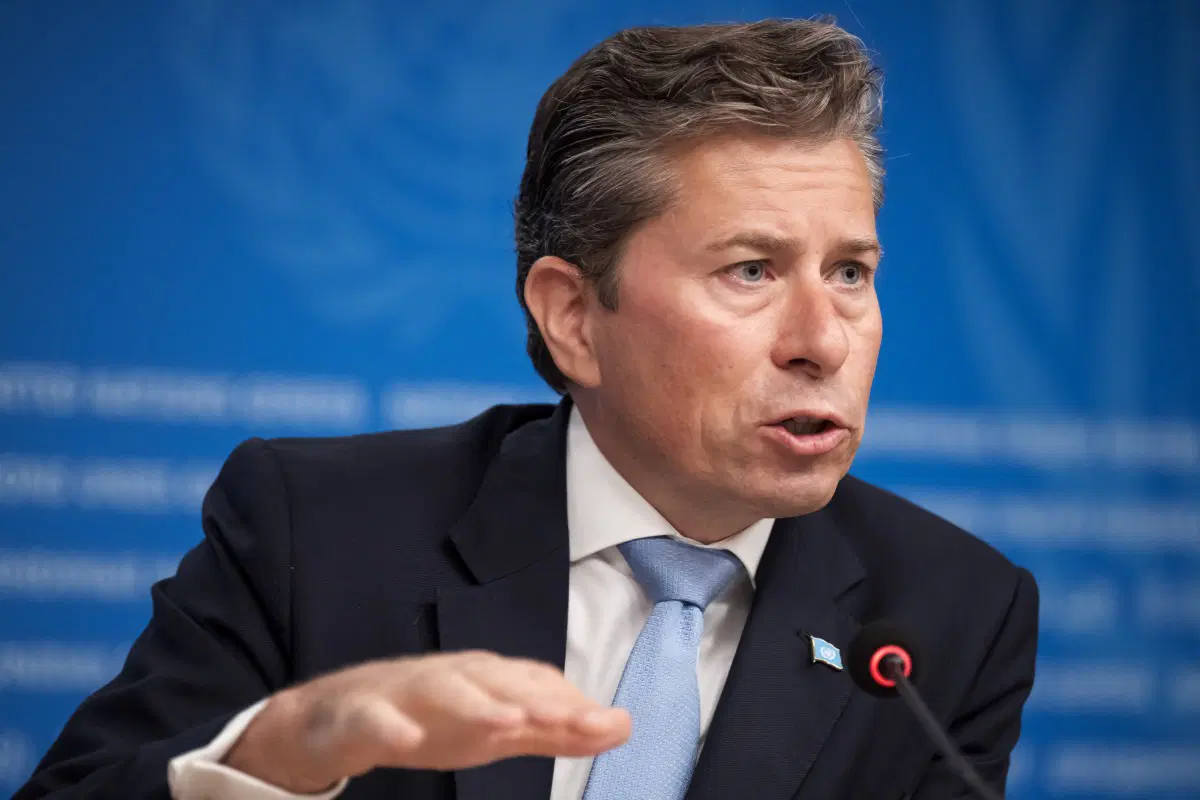
UN aid chief Tom Fletcher, speaking in Geneva, condemned the situation as “a famine that should haunt us all,” stressing that it was preventable if humanitarian corridors had been kept open. “Food is piling up at borders because of systematic obstruction by Israel,” Fletcher said.
The IPC noted that 98 percent of Gaza’s farmland has been destroyed or rendered inaccessible, livestock wiped out, and fishing banned. With water access collapsing, healthcare systems near total failure, and child malnutrition rising, the panel said the conditions meet the UN’s threshold for famine: extreme food scarcity for at least 20 percent of households, acute malnutrition in at least 30 percent of children under five, and a daily death toll of at least two people per 10,000 from hunger or hunger-related diseases.
Israel, however, immediately rejected the declaration. The foreign ministry accused the IPC of basing its findings on “Hamas lies laundered through organisations with vested interests.” It argued that recent deliveries of aid have improved the situation, claiming a “sharp decline in food prices” in parts of Gaza.
“There is no famine in Gaza,” the ministry said in a statement, dismissing the UN report as a politically motivated attack. COGAT, the Israeli military body overseeing civil affairs in Palestinian territories, also dismissed the findings, saying the IPC relied on “partial data” and failed to account for recent humanitarian efforts.
The crisis comes amid nearly two years of conflict triggered by Hamas’s October 2023 attack on Israel, which killed 1,219 people, mostly civilians. In retaliation, Israel launched a massive military offensive that has killed at least 62,192 Palestinians, mostly women and children, according to Gaza’s health ministry — figures the UN considers credible.
Despite Israel’s denials, UN agencies and humanitarian groups have consistently warned that Gaza is experiencing one of the worst hunger crises in modern history, with children among the most vulnerable. Fletcher urged world leaders to act swiftly, warning that without immediate and sustained humanitarian access, “tens of thousands more could die before the year ends.”