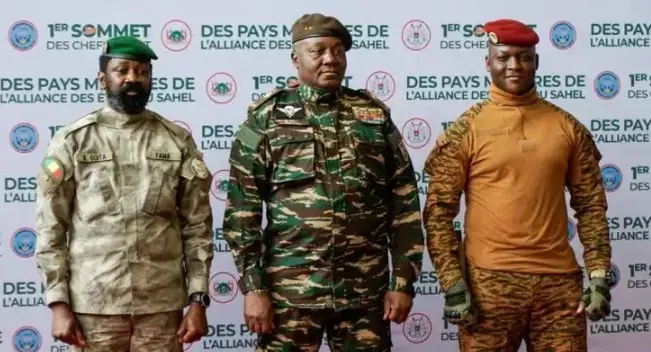
In a dramatic diplomatic move, Mali, Burkina Faso, and Niger have jointly announced their withdrawal from the International Criminal Court (ICC), declaring that they no longer recognise the tribunal’s authority.
The military-led governments of the three Sahel states, which share recent histories of coups and prolonged conflict, accused the ICC of selective prosecutions and described it as an “instrument of neo-colonialist repression.” The decision, they said, aligns with their broader push for sovereignty and follows their earlier collective withdrawal from the Economic Community of West African States (ECOWAS).
While pledging to safeguard human rights in accordance with “African values,” the juntas framed the exit as a rejection of what they consider external interference.
Context of Accusations
The announcement comes amid mounting international scrutiny over alleged war crimes in the Sahel. Human rights groups and United Nations experts have accused the militaries of Mali and Burkina Faso, as well as their allied militias, of committing atrocities during operations against Islamist insurgents. The armed groups themselves have also been implicated in mass killings and other violations.
Although authorities in Bamako and Ouagadougou insist domestic investigations are underway, no public findings have been released, raising concerns over accountability.
ICC and Global Justice Divide
Headquartered in The Hague, the ICC was established in 2002 to prosecute the gravest crimes, including genocide, crimes against humanity, and war crimes. All member states of the European Union are parties to the Rome Statute, but powerful nations such as the United States, Russia, and Israel remain outside the treaty.
Critics in Africa have long accused the ICC of disproportionately targeting leaders and actors from the continent, while overlooking alleged abuses by Western powers and their allies.
Resource-Rich, Conflict-Torn Region
Despite holding vast reserves of gold, uranium, and other resources—much of it exploited by European and North American firms—Mali, Burkina Faso, and Niger remain among the world’s poorest countries. Located in the Sahel region along critical migration and smuggling routes to Europe, the states have faced years of destabilization fueled by jihadist violence, poverty, and political instability.
Between 2020 and 2023, military juntas seized power in all three former French colonies, ousting elected governments that had struggled to contain Islamist insurgencies. Since then, the regimes have distanced themselves from Western partners, particularly France, while forging closer ties with Russia for security support.
What Next?
The collective withdrawal from the ICC further deepens the trio’s isolation from Western-backed institutions and cements their pivot toward alternative alliances. For now, the fate of ongoing or future war crimes investigations in the region remains uncertain, raising fears that victims of atrocities may be denied justice on the international stage.