Washington, D.C., U.S. — The International Monetary Fund (IMF) and other global financial stakeholders have acknowledged Nigeria’s economic reforms as impactful and far-reaching, affirming that the country is on a steady path toward recovery and stability.
This commendation came during the recently concluded IMF/World Bank Group Annual Meetings held in Washington, D.C., where Nigeria received praise for its bold fiscal, monetary, and structural policy reforms aimed at stabilising the economy and attracting investment.
According to the Director of the IMF’s African Department, Abebe Selassie, Sub-Saharan Africa — including Nigeria — has shown remarkable resilience amid global economic turbulence marked by tightening financial conditions and slowing global growth.
“Despite difficult circumstances, Nigeria’s economic management has demonstrated a commitment to stability,” Selassie said, noting the country’s efforts in domestic revenue mobilisation, debt management, and policy coordination.
He added that Nigeria’s ongoing monetary tightening aligns with efforts to curb inflation, though he emphasised that more work remains to achieve full price stability. “Monetary policy has been intelligently managed, but there is still some distance to go before achieving desired stability,” he stated.
Similarly, Davide Furceri, Division Chief of the IMF’s Fiscal Affairs Department, praised Nigeria’s fiscal reforms as “neutral and well aligned” with its monetary policies. He urged continued fiscal discipline, efficient tax reforms, and smarter spending to improve public finance management.
“Nigeria has made significant progress — streamlining tax codes, reducing expenditures, and easing compliance for individuals and businesses. These are steps in the right direction,” Furceri said.
Furceri also advised the government to enhance social spending to cushion vulnerable households and ensure inclusive growth.
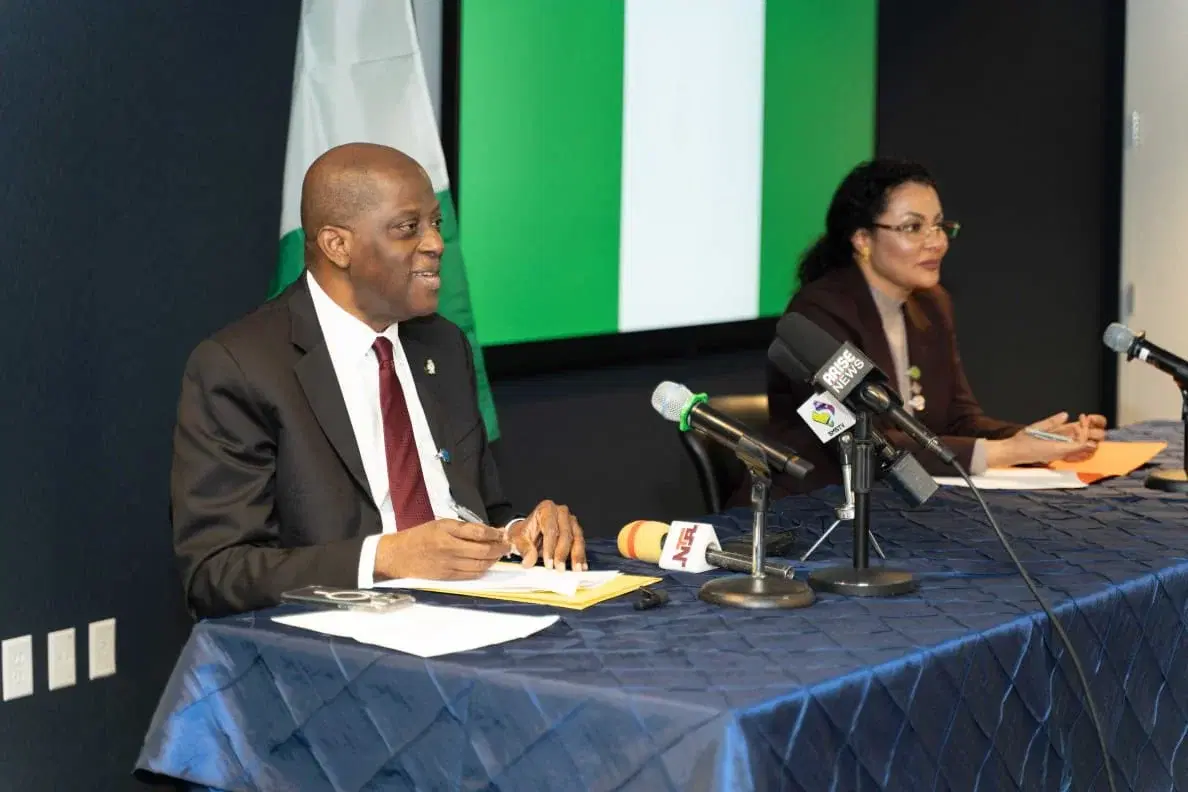
At the meetings, Central Bank of Nigeria (CBN) Governor Yemi Cardoso assured international investors of Nigeria’s long-term reform agenda. He said the CBN and Ministry of Finance were working closely to ensure “alignment, stability, and clarity for investors,” while reinforcing confidence in Nigeria’s economic future.
“Our focus remains clear — strengthening fundamentals, advancing reforms, and unlocking opportunities for sustainable investment and growth,” Cardoso affirmed.
In a major diplomatic boost, Cardoso was elected as the new Chair of the Intergovernmental Group of 24 (G-24), a coalition of developing countries that advocates for global financial inclusivity. The election, observers say, reflects rising international confidence in Nigeria’s leadership and reform trajectory.
Cardoso also signed a Memorandum of Understanding (MoU) with the Central Bank of Angola to strengthen regional monetary cooperation and promote financial stability across Africa.
Meanwhile, CBN Deputy Governor for Economic Policy, Mohammed Abdullahi, revealed that Nigeria’s foreign exchange (FX) inflows have surged significantly — with market turnover rising by 56.4% to $8.6 billion in 2025, up from $5.5 billion in 2024.
He attributed this growth to reforms such as the order-based FX quotation system, improved remittance channels, and greater transparency in the official FX window.
“Average net flows between January 2023 and July have doubled, showing clear confidence in Nigeria’s economic direction,” Abdullahi said.
Also speaking, Minister of State for Finance, Dr. Doris Uzoka-Anite, noted that fiscal and monetary reforms have become increasingly integrated and are driving real economic gains.
“To many here, it feels like a miracle that such bold, multiple reforms could yield stability and growth within two years,” she said, linking lower inflation to improved clarity and predictability in the FX market.
However, back home, some Nigerians argue that the global recognition has yet to translate into better living conditions. Analysts urge the Federal Government to ensure that the benefits of reforms — including lower inflation, improved purchasing power, and job creation — reach ordinary citizens.
As the IMF and global financial leaders continue to applaud Nigeria’s reform trajectory, expectations remain high for the government to consolidate its gains and make the reforms tangibly felt across households and businesses.