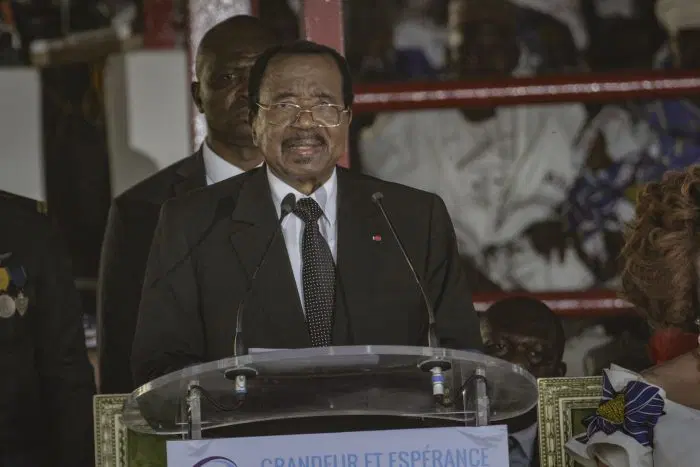
Cameroon’s long-serving President Paul Biya has been re-elected for an unprecedented eighth term in office, extending his 43-year rule after securing 53.7 percent of the vote, according to official results announced Monday by the Constitutional Council.
The 92-year-old leader — the world’s oldest serving head of state — was declared the winner of the October 12 election after a tense and violent post-election period marked by protests and bloodshed in several cities.
Biya’s closest challenger, Issa Tchiroma Bakary, a former government minister, came in second with 35.2 percent of the vote. Tchiroma, however, has rejected the results, insisting that he — not Biya — won the election, and accusing authorities of widespread irregularities.
Two days after polls closed, Tchiroma had proclaimed himself the victor, claiming he had secured 54.8 percent of the ballots compared to Biya’s 31.3 percent. He subsequently called for nationwide demonstrations, which have since turned violent.
Protests Turn Deadly
On Sunday, at least four people were killed in Douala, Cameroon’s economic capital, following clashes between security forces and opposition supporters. The regional governor confirmed the deaths, saying several officers were also injured.
According to eyewitnesses, security forces initially used tear gas to disperse demonstrators but later opened fire with live ammunition. Protesters showed reporters bullet casings at the scene, while others accused authorities of using excessive force to silence dissent.
“They fired, three bodies fell right in front of us,” one protester told AFP, requesting anonymity for fear of reprisal.
The violence underscores mounting tensions following the disputed election, with opposition supporters vowing to continue demonstrations despite a government ban on public gatherings.
Critics Decry ‘Rigged System’
Political analysts had widely predicted Biya’s re-election, citing his long-standing control over the state’s political machinery. Critics argue that Cameroon’s electoral system is deeply skewed in favor of the ruling party, the Cameroon People’s Democratic Movement (CPDM), and that transparency remains elusive in the country’s electoral process.
Biya, who has ruled since 1982, has repeatedly faced accusations of authoritarianism, human rights abuses, and repression of opposition voices. His government has also grappled with persistent economic inequality, social unrest, and a separatist conflict in the country’s English-speaking regions.
Despite these challenges, Biya has maintained a firm grip on power, often portraying himself as a symbol of stability amid regional turmoil.
“This victory is a testament to the Cameroonian people’s trust and their desire for continuity,” a government spokesman said following the announcement.
International Reactions and Next Steps
International observers have yet to issue a final statement on the credibility of the polls, but human rights groups have called for restraint from both the government and opposition to prevent further bloodshed.
The United Nations and African Union have expressed concern over the violence and urged authorities to guarantee citizens’ right to peaceful protest and ensure transparency in the post-election process.
Meanwhile, opposition leader Tchiroma remains defiant, telling supporters he will continue to “defend the people’s mandate.”
Biya’s new seven-year term is expected to begin later this month, further cementing his status as one of Africa’s most enduring — and controversial — leaders.