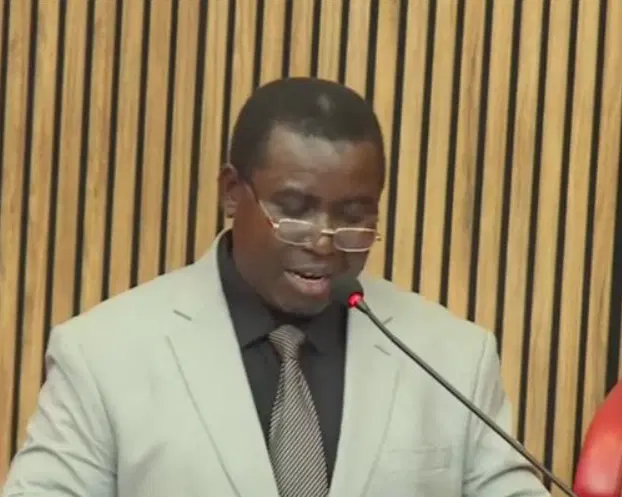
The newly appointed Chairman of the Independent National Electoral Commission (INEC), Prof. Joash Amupitan, SAN, has declared a decisive end to Nigeria’s long-standing culture of excessive pre-election court battles, describing it as a distortion of democracy.
Speaking on Monday at the 56th Annual National Conference of the Nigerian Association of Law Teachers (NALT), held at the University of Abuja, Prof. Amupitan said his administration would prioritize restoring integrity to Nigeria’s electoral process by ensuring that elections are determined by voters, not judges.
Prof. Amupitan, who assumed office barely a week ago following his swearing-in by President Bola Tinubu, lamented that over 1,000 pre-election cases were filed before the 2023 general elections — a figure he described as “a symptom of systemic failure.”
“That is not democracy. That is litigation by other means,” he said. “We cannot continue to allow the courts to determine our elections. Elections must be won at the polling units, not in the courtroom.”
The INEC chief emphasized that the solution lies in enforcing internal democracy within political parties and ensuring full compliance with existing electoral laws.
“If political parties obey their constitutions, respect the Electoral Act, and align with the Nigerian Constitution, the avalanche of pre-election cases will collapse,” he asserted. “My goal is simple: to make the law an instrument of change, not chaos. When we get the law right, even losers will be the first to congratulate the winners.”
Prof. Amupitan, a Senior Advocate of Nigeria and renowned academic, also urged the National Assembly to strengthen the nation’s electoral framework to enhance credibility and transparency. He added that the commission would collaborate with legal experts to introduce reforms aimed at simplifying and safeguarding the electoral process.
Acknowledging that reducing election-related cases might not please some in the legal profession, the INEC chairman maintained that the reform was vital for the stability and legitimacy of Nigeria’s democracy.
“While some lawyers may not welcome fewer cases, restoring public confidence in elections is far more important for the nation’s future,” he said.
The NALT President and Dean of the Faculty of Law, University of Ibadan, Prof. John Akintayo, commended Amupitan’s commitment to reform, noting that law remains central to good governance and national development.
“A nation’s progress depends on how its laws anticipate, adapt to, and shape change,” Akintayo remarked.
Conference Chairman and Dean of Law, University of Abuja, Prof. Uwakwe Abugu, said this year’s event would focus on critical issues such as food security, artificial intelligence, biotechnology, and legal reform—areas he described as vital for aligning Nigeria’s governance with global realities.
The conference, themed “Law, National Development and Economic Sustainability in a Globalised World,” drew participants from across Nigeria’s legal and academic communities, with Prof. Amupitan’s remarks setting a reformist tone for INEC’s new leadership era.