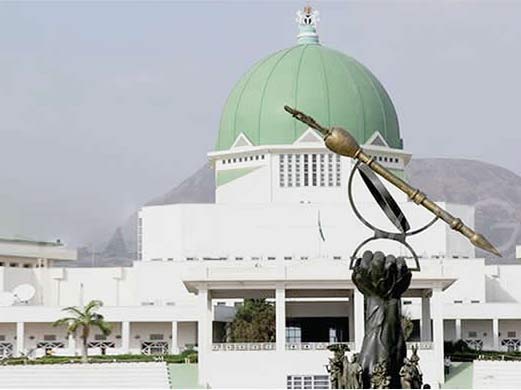
The House of Representatives has raised a serious security alarm following credible threats from terrorist groups to bomb the National Assembly complex. The revelation was made on Tuesday by Hon. Garba Muhammad, Chairman of the House Committee on Internal Security, during a public hearing on a bill seeking to establish a Legislative Security Directorate aimed at bolstering safety within the National Assembly.
Muhammad disclosed that lawmakers have received multiple threats, not only from terrorist elements but also from protesters who have vowed to lock down the premises. He stressed that the situation underscores the urgent need for a coordinated and modern security framework to protect legislators, staff, and visitors.
“We have received threats from terrorists to bomb the National Assembly complex and threats from protesters to lock up the National Assembly,” he said.
“Legislators are exposed to threats from constituents and others who gain easy access into their offices without any formal appointment.”
The lawmaker warned that without immediate intervention, the threats and rising security lapses could cripple legislative operations — a scenario that would have grave consequences for governance and national stability.
“It is obvious that with the ongoing security challenges, if proper measures are not taken, it will truncate the legislative activities in the National Assembly,” Muhammad cautioned.
“If activities are thwarted, there will be no representation, no oversight, no annual budget, no plenary at all — and that will destabilise democracy and the stability of our nation.”
According to him, the National Assembly has increasingly become vulnerable to a range of security breaches, including theft of vehicles and motorcycles, vandalism, infiltration by unregistered visitors, and circulation of fake identity cards.
Muhammad emphasized that modern security management in sensitive institutions such as Parliament requires a holistic and integrated approach — combining physical infrastructure, intelligence gathering, and personnel training to create a safe and functional environment for legislative work.
“That is why this bill is very important. It seeks to address all these challenges and adopt world best practices in parliamentary security procedures and architecture,” he explained.
While reaffirming the need for transparency and public accessibility — a hallmark of democracy — Muhammad maintained that such openness must not come at the expense of safety.
“The National Assembly must remain accessible to the public, but security must not be compromised,” he said. “This bill is committed to ensuring the best security architecture to protect legislators, staff, visitors, and property.”
He further urged all state Houses of Assembly to emulate the federal legislature by prioritizing internal security frameworks that protect lawmakers and preserve democratic institutions.
Muhammad concluded by calling for bipartisan support for the proposed bill, describing it as a major step toward safeguarding Nigeria’s democracy against emerging threats.
“If we fail to protect the sanctity of our Parliament, we risk weakening the very foundation of our democracy,” he added.