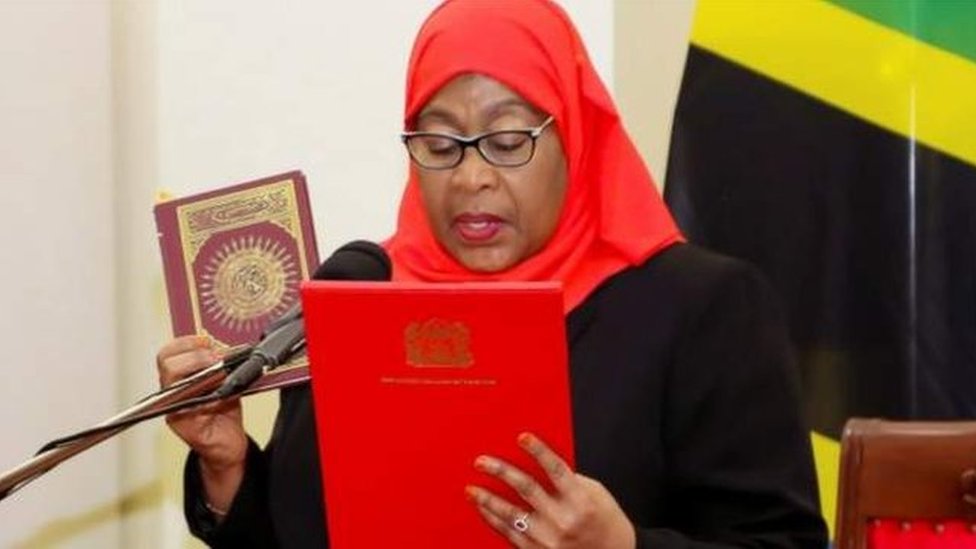
President Samia Suluhu Hassan has been sworn in for a second term under heavy security in the capital, Dodoma, following a disputed election marred by widespread violence and allegations of fraud. The inauguration, held on Monday at a military parade ground instead of a public stadium, was closed to the public and broadcast live on state television. Attending the ceremony were several regional leaders, including the presidents of Somalia, Zambia, Mozambique, and Burundi.
Samia, wearing a red headscarf and dark glasses, took the oath of office after being declared the winner with 98 percent of the vote, in an election where major opposition candidates were either imprisoned or barred from participating. International observers and human rights organizations have expressed concern over the credibility of the vote and the violence that followed, which opposition groups claim has left hundreds dead.
The opposition Chadema Party, which was banned from contesting, described the election as a “sham” and claimed that no fewer than 800 people were killed during violent clashes with security forces. A diplomatic source told the BBC there was credible evidence that at least 500 deaths had occurred, while the UN human rights office confirmed receiving “credible reports” of at least 10 deaths across three major cities.
In a statement to AFP, Chadema maintained that the results announced by the electoral commission “had no basis in reality,” calling for a new election under international supervision. On election day, many polling stations remained largely empty, though the electoral commission later claimed a voter turnout of 87 percent.
Tanzanian authorities have sought to downplay the extent of the violence, with police spokesman David Misime blaming foreign nationals and local motorbike operators for the unrest. “There are individuals who entered the country illegally with the intention of causing chaos,” Misime said, urging citizens to report any foreigners whose presence or activities appeared suspicious. His remarks came amid reports that several Kenyan nationals have gone missing in Tanzania, including one teacher allegedly killed. Kenyan activist Hussein Khalid confirmed receiving reports of disappearances via social media.
The unrest has triggered an economic crisis in parts of the country, with the prices of food, fuel, and essentials doubling or tripling. Schools and public transportation remain shut down in several regions. The situation has drawn condemnation and concern from international bodies and religious leaders. Pope Leo XIV called for prayers for Tanzania, lamenting the “numerous victims” of post-election violence. EU foreign policy chief Kaja Kallas urged restraint, while UN Secretary-General António Guterres said he was “deeply concerned” by reports of deaths and injuries.
The election extends the dominance of the Chama Cha Mapinduzi (CCM) party, which, along with its predecessor TANU, has ruled Tanzania continuously since independence. Key opposition figures Tundu Lissu and Luhaga Mpina were prevented from running — Lissu remains detained on treason charges, which he denies, while Mpina of the ACT-Wazalendo party was excluded on what his supporters called “politically motivated” legal grounds. Only sixteen minor parties, none with a strong national base, were permitted to contest the election.
Rights groups, including Amnesty International, have accused the government of waging a “wave of terror” marked by enforced disappearances, torture, and extrajudicial killings. Authorities, however, have rejected these allegations, insisting the polls were free and fair. President Samia Suluhu Hassan, Tanzania’s first female leader who first assumed office in 2021 following the death of John Magufuli, now faces mounting domestic and international pressure to restore calm, ensure accountability for post-election violence, and rebuild trust in Tanzania’s democratic institutions.