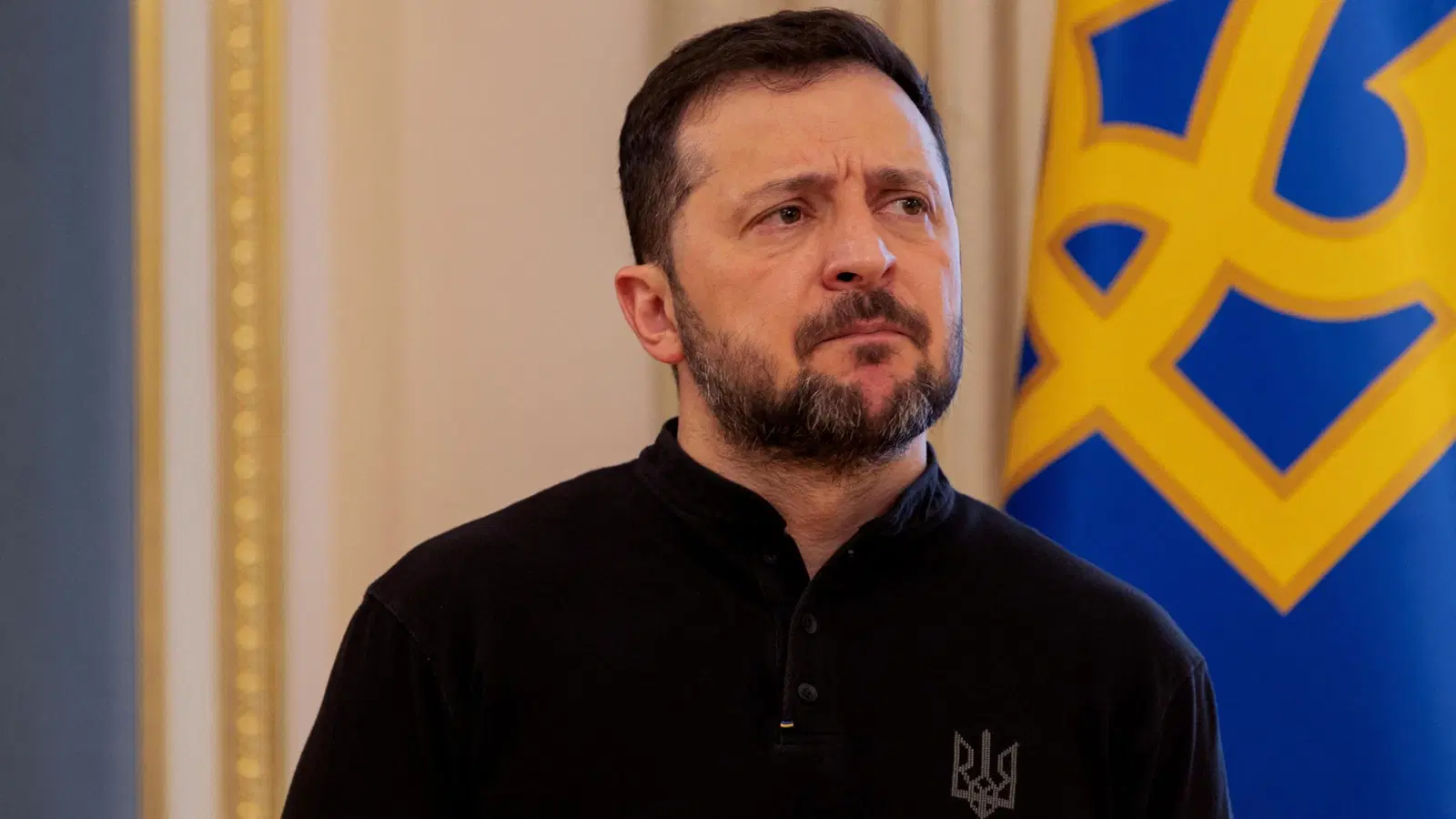
Ukrainian President Volodymyr Zelensky on Monday welcomed what he described as “important steps” made during high-level talks in Geneva but stressed that significantly more work is required to reach a viable peace agreement with Russia.
The discussions, held on Sunday in Switzerland, brought together Ukrainian, US, and European officials as they reviewed a controversial US-backed proposal aimed at ending Russia’s nearly four-year invasion. The plan had drawn criticism from Kyiv and several European capitals, with many arguing it concedes too much to Moscow’s territorial demands.
Despite earlier pushback, negotiators from all sides described the Geneva talks as “constructive,” issuing a joint statement pointing to areas of consensus. EU leaders are expected to continue deliberations at emergency Ukraine-focused consultations on the sidelines of a summit in Angola later on Monday.
Speaking via video link at a conference in Sweden, Zelensky said Ukraine and the United States had managed to protect several “extremely sensitive points” in the proposal. These include the full exchange of prisoners of war under an all-for-all mechanism, the release of detained civilians, and the return of Ukrainian children taken to Russia from occupied territories — an issue Kyiv has repeatedly condemned as illegal deportation.
“These are important steps,” Zelensky said. “But to achieve real peace, more — much more — is needed.”
He described the current moment as “critical,” insisting that Ukraine is open to compromise only “when it strengthens, not weakens us.”
Concerns had mounted in Europe after a 28-point US draft circulated last week appeared to formalize Russian control over additional occupied areas — a move many in Kyiv and the EU viewed as rewarding aggression. “Putin wants legal recognition for what he has stolen,” Zelensky warned.
The Kremlin, meanwhile, said it had not been briefed on the outcome of the Geneva discussions. Presidential spokesperson Dmitry Peskov noted that Moscow was aware the plan had undergone “adjustments” since it was initially endorsed by former US President Donald Trump and welcomed by President Vladimir Putin.
“We will wait,” Peskov said.