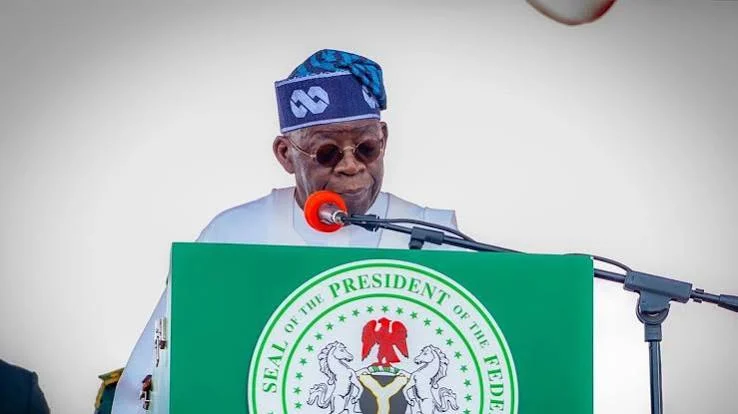
Senate President, Godswill Akpabio, has taken the legal battle arising from the suspension of Kogi Central Senator, Natasha Akpoti-Uduaghan, to the Supreme Court, following an adverse ruling by the Court of Appeal, Abuja Division.
Court documents dated December 1, 2025, and obtained on Sunday, confirm that Akpabio filed a notice of appeal challenging the appellate court’s decision to strike out the Federal Government’s brief of argument in the case linked to the senator’s suspension.
The Court of Appeal had dismissed the brief on the grounds that it was incompetent and failed to comply with mandatory provisions of the Court of Appeal Rules. The court cited several violations, including the use of an incorrect font size and line spacing, exceeding the stipulated 35-page limit, and the failure to seek leave of court to depart from the rules. The panel also ruled that the notice of appeal itself was defective.
Although Akpabio had publicly described the appellate court’s action as illegal, certified records of proceedings indicated that the decision was based strictly on procedural non-compliance. The justices held that the breaches were substantive and undermined the competence of the appeal, leading to the brief being struck out in its entirety.
Dissatisfied with the ruling, the Senate President is now urging the Supreme Court to overturn the decision. In his notice of appeal, Akpabio argued that the Court of Appeal violated his right to a fair hearing by declining to grant leave to regularise the defective brief or exceed the page limit. He asked the apex court to set aside the proceedings of November 28, 2025, nullify the judgment, and allow him to refile his brief in compliance with the rules.
Akpabio’s personal involvement in pursuing the appeal has drawn public attention, with some legal and political observers describing the move as unusual for a sitting Senate President. Sources within the National Assembly alleged that he has closely monitored the case, fuelling concerns in some quarters of the legal community.
The dispute has also been shaped by the long-standing political tension between Akpabio and Akpoti-Uduaghan, who has gained national prominence for her outspoken criticism of Senate leadership. Insiders claim her rising profile has unsettled the Senate President.
A source within the National Assembly said the matter had “moved beyond the courtroom” and taken on the character of a political contest for influence and relevance.
Meanwhile, Akpoti-Uduaghan’s legal team has confirmed receipt of the Supreme Court documents, dismissing the appeal as a desperate attempt to overturn a lawful decision. One of her lawyers expressed confidence that the judiciary would uphold the appellate court’s ruling.
Akpoti-Uduaghan was suspended for six months in March 2025 after protesting the relocation of her seat during plenary. Although the suspension elapsed in September, she was unable to resume immediately due to ongoing legal proceedings and resistance from Senate leadership. Her office was later reopened by the Sergeant-at-Arms, and she returned to the Senate, maintaining that she had no apology to offer.
With the matter now before the Supreme Court, the legal and political battle has once again attracted intense public scrutiny.