Members of the United States Congress have voiced strong reservations over Nigeria’s reported $9m lobbying agreement in Washington, suggesting the deal may be intended to blunt international criticism of the country’s human rights and religious freedom record.
The issue came up during a joint hearing on Wednesday involving the House Subcommittee on Africa and the Subcommittee on the Western Hemisphere, held under the theme Defending Religious Freedom Around the World. Former US Ambassador-at-Large for International Religious Freedom Sam Brownback and former chair of the US Commission on International Religious Freedom (USCIRF), Dr Stephen Schneck, testified at the session.
Chairman of the House Foreign Affairs Africa Subcommittee, Chris Smith, reaffirmed Congress’s October 2025 decision to place Nigeria on the Country of Particular Concern (CPC) list, calling the designation “long overdue” following years of attacks on Christian communities.
Smith criticised what he described as aggressive lobbying efforts aimed at reversing that decision.
He told lawmakers he was troubled by Nigeria’s $9m contract with Washington-based lobbying firm DCI Group, which amounts to roughly $750,000 per month. He also highlighted a separate $120,000 monthly agreement between a Nigerian billionaire and consulting firm Valcour, arguing that both arrangements appeared designed to downplay reports of abuses.
“These firms arrive with polished narratives meant to convince people there’s no problem,” Smith said.
Ranking Member Sara Jacobs offered a different perspective, warning against portraying Nigeria’s crisis solely through the lens of Christian persecution. She stressed that violence in the country affects both Christians and Muslims and stems from a mix of social, economic and security challenges.
Jacobs also faulted recent cuts to US foreign assistance for Nigeria, including funding for faith-based initiatives and communities affected by conflict. She noted that the Community Initiatives to Promote Peace programme—credited with reducing violence in some areas—had been scrapped.
“The drivers of violence in Nigeria are complex,” Jacobs said, cautioning that simplified narratives risk worsening religious tensions.
She further questioned the effectiveness of recent US airstrikes in Sokoto State, arguing they had failed to provide meaningful relief to impacted communities.
Dr Schneck supported that view, saying the cost of the military operation likely exceeded previous investments in interfaith cooperation and humanitarian aid. He warned that such strikes could inadvertently strengthen extremist groups.
“To the extent that they have any impact, actions like this may push militant organisations closer together and encourage future mobilisation,” Schneck said, describing the strikes as misguided.
Addressing Nigeria’s broader challenges, Schneck pointed to insurgency by Boko Haram and ISWAP, farmer-herder conflicts, banditry, organised crime and widespread displacement, alongside what he called a government struggling to deliver security and justice.
Lawmakers also questioned whether the CPC designation alone could drive change. Representative Jefferson Shreve raised doubts about its impact, prompting Brownback to call for tougher measures, including Magnitsky sanctions and targeted economic penalties.
“Without real consequences, many leaders will simply ignore these labels,” Brownback said.
While Representative Bill Huizenga said recent US actions had renewed attention on Nigeria, Brownback expressed distrust in the Federal Government, accusing it of abandoning power-sharing traditions and failing to protect vulnerable populations.
“This government has not earned our confidence,” he said.
US President Donald Trump has repeatedly alleged that Christians in Nigeria are facing genocide and has previously threatened military intervention. Nigerian authorities have rejected those claims, acknowledging serious security problems but insisting no genocide is taking place.
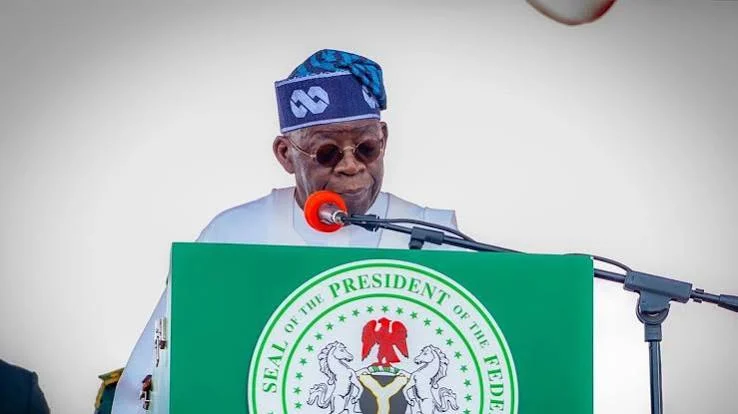
Amid the diplomatic friction, US Africa Command carried out coordinated airstrikes against terrorist targets in Sokoto State on December 25, working alongside President Bola Tinubu’s administration.
In January, official filings revealed that Nigeria signed a $9m agreement with lobbying firm DCI Group to present its efforts to protect Christian communities to US officials. Documents lodged with the Department of Justice showed the firm was retained through Kaduna-based Aster Legal on behalf of National Security Adviser Nuhu Ribadu, with the contract dated December 17, 2025.
Separately, disclosures released this month showed billionaire Matthew Tonlagha entered a six-month deal worth $120,000 per month with lobbying firm Valcour to engage US media, Congress and the Trump administration in support of US–Nigeria relations. Valcour was established in 2023 by Matt Mowers, a former State Department adviser during Trump’s first term.
Tonlagha also serves as vice-president of Tantita Security Services, an oil infrastructure protection company linked to former Niger Delta militant leader Oweizidei Ekpemupolo.