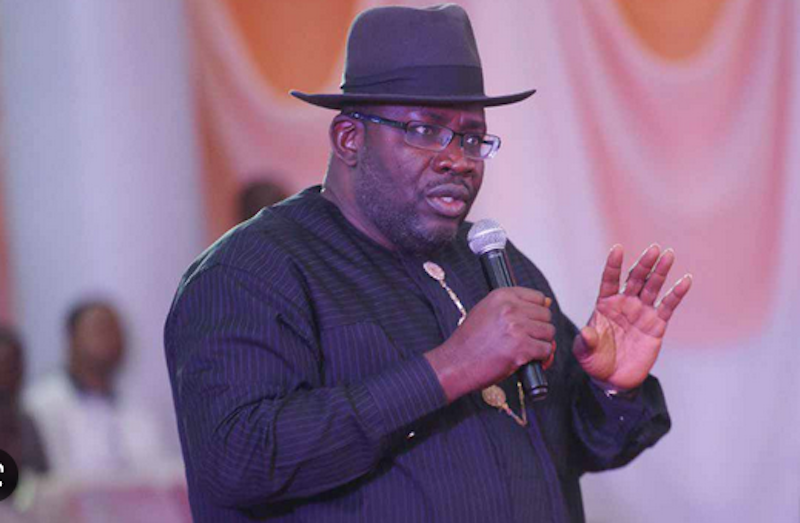
Former Bayelsa State Governor and Senator representing Bayelsa West, Seriake Dickson, has argued that Nigeria is not ready for real-time electronic voting, dismissing claims that the absence of compulsory real-time transmission of election results undermines transparency.
Speaking during an interview on ARISE News on Tuesday, Dickson said the push for “real-time” transmission of results is largely misunderstood, noting that Nigeria does not yet operate a fully electronic voting system.
“We are not voting electronically in Nigeria. We are not at the point where you go and press a button and your vote is instantly added to a portal,” he said, describing the phrase “real time” as unnecessary within the current electoral framework.
According to the senator, the term does not, by itself, guarantee credible elections. “The word ‘real time’ in this context is actually superfluous. It doesn’t automatically translate to transparency, and it shouldn’t have been there in the first place,” he added.
Dickson maintained that the Senate’s recent handling of the Electoral Act Amendment Bill should not be viewed as a blow to democracy. His comments followed an emergency plenary in which the Senate revisited Clause 60(3) of the bill amid public criticism.
At the session, lawmakers approved electronic transmission of results to the Independent National Electoral Commission’s Result Viewing Portal (IREV) while retaining manual collation as a fallback in cases of network failure. However, the Senate declined to make real-time upload of results mandatory.
While critics argue that the lack of an explicit real-time requirement could encourage manipulation, Dickson insisted he was speaking in his personal capacity and not as a spokesperson for the Senate.
“I’m here to give my views as someone who has been deeply involved in these processes and who participated in today’s proceedings,” he said.
He explained that debates over electronic transmission had spanned nearly two years, involving extensive consultations with INEC through committee engagements, workshops and conferences. He also disclosed that he was absent when the Senate earlier took a controversial position on the clause due to a family bereavement.
Dickson traced resistance to electronic transmission to long-standing political divisions, noting that similar opposition emerged during attempts to introduce the measure in the 9th Senate. He said both chambers of the National Assembly had initially agreed on safeguarding IREV before the position was altered on the Senate floor.
He described the earlier reversal as unfortunate, particularly after INEC had assured lawmakers of its capacity to implement electronic transmission. According to him, Senate leadership later promised to find a compromise, which informed the revised position.
Emphasising that transparency begins at the polling unit, Dickson said the EC8A result form remains the primary evidence of electoral victory. He noted that once votes are counted, signed by party agents and copies issued, presiding officers are compelled to transmit results electronically to IREV.
Although he expressed reservations about allowing manual collation in cases of network failure, the senator said compromise was inevitable in parliamentary decision-making. He stressed that electronic transmission remains mandatory under the amended clause passed by the Senate.
On reconciling differences between the Senate and House of Representatives versions of the bill, Dickson said he would support the House position, which reflected earlier joint committee consensus.
He also raised concerns over proposals to compel all political parties to adopt direct primaries, arguing that such a system should not be imposed, especially on smaller parties.
Concluding, Dickson said electoral reform must be gradual, adding that making electronic transmission compulsory represents measurable progress. “You make gains incrementally. It’s not always your way or the highway,” he said.