Iran has reaffirmed that no country can strip it of its right to enrich uranium for peaceful purposes, as tensions rise following renewed warnings from US President Donald Trump after recent talks in Geneva.
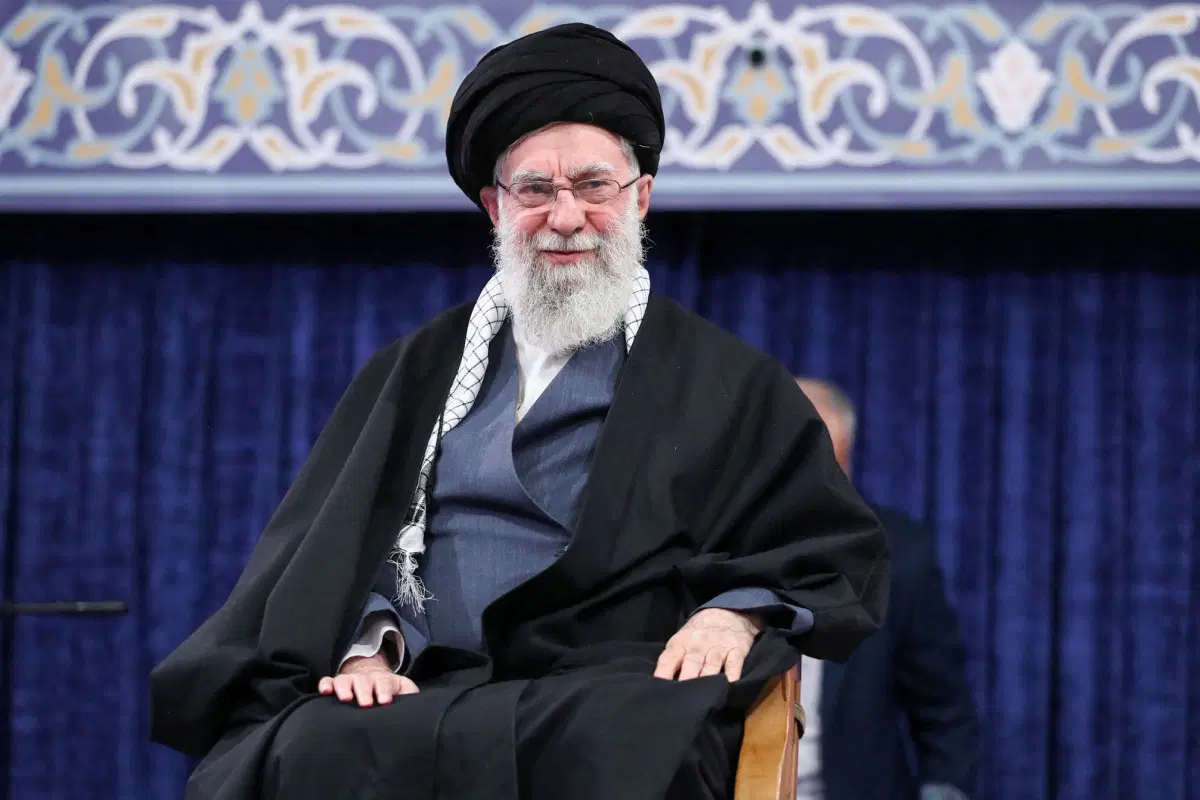
Speaking in a video published Thursday by Etemad daily, Iran’s atomic energy chief, Mohammad Eslami, said enrichment remains central to the country’s nuclear programme.
“The basis of the nuclear industry is enrichment. Whatever you want to do in the nuclear process, you need nuclear fuel,” Eslami stated. “Iran’s nuclear programme is proceeding according to the rules of the International Atomic Energy Agency, and no country can deprive Iran of the right to peacefully benefit from this technology.”
His remarks came after a second round of Oman-mediated negotiations between Tehran and Washington held in Geneva on Tuesday. The talks followed an initial meeting on February 6 in Oman — the first diplomatic engagement since discussions collapsed during the 12-day Iran-Israel war in June.
During that conflict, the United States briefly joined Israel in carrying out strikes on Iranian nuclear facilities.
On Wednesday, Trump again hinted at possible military action in a post on his Truth Social platform. He warned Britain against relinquishing sovereignty over the Chagos Islands in the Indian Ocean, suggesting that the Diego Garcia airbase could be required if Iran fails to reach a deal, describing Tehran as a “highly unstable and dangerous regime.”
Washington has consistently pushed for zero uranium enrichment by Iran and has also sought to address Tehran’s ballistic missile programme and its support for armed groups in the Middle East — issues strongly backed by Israel for inclusion in negotiations.
Western governments have long accused Iran of seeking nuclear weapons capability. Tehran denies any military ambitions, maintaining that its nuclear activities are strictly for civilian energy and research purposes.
Amid mounting pressure, Trump has expanded the US military presence in the region, describing it as an “armada.” After deploying the aircraft carrier USS Abraham Lincoln and accompanying warships to the Gulf in January, he recently announced that a second carrier, the Gerald Ford, would soon head to the Middle East.
Meanwhile, Iranian naval forces have conducted drills in the Gulf and near the strategic Strait of Hormuz. Separately, Iranian and Russian naval units began joint exercises in the Sea of Oman and the northern Indian Ocean on Thursday, underscoring the increasingly complex security dynamics in the region.