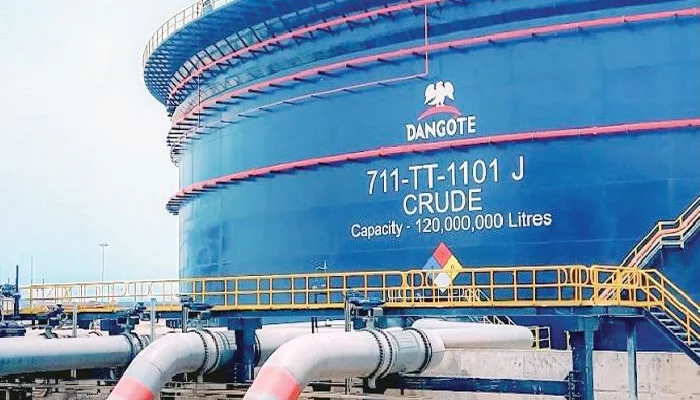
Motorists and businesses across Nigeria are facing rising fuel costs after the Dangote Petroleum Refinery increased its gantry price for Premium Motor Spirit (PMS) to N995 per litre, triggering higher pump prices nationwide.
Checks indicate that petrol now sells between N1,000 and N1,190 per litre depending on location and the retail outlet, intensifying financial pressure on consumers already battling rising living costs.
The price hike has begun to affect transportation fares and the prices of goods and services in many parts of the country, as transport operators and small-scale business owners adjust their rates to reflect the higher cost of fuel.
Although there has been no widespread panic buying due to relatively stable supply, many motorists say the increase is further stretching household budgets amid persistent inflation.
Several transport operators and traders across major cities said the new pricing regime has made daily operations more expensive, forcing them to either increase fares or reduce trips to remain profitable.
Global crisis driving price surge
Analysts say the recent spike in petrol prices in Nigeria is linked to the ongoing geopolitical tensions in the Middle East involving Iran, the United States and Israel, which have disrupted global oil supply chains.
The crisis escalated in late February 2026 after coordinated military strikes by the United States and Israel on Iranian targets, an action that reportedly led to the death of Iran’s Supreme Leader. Iran subsequently responded with retaliatory drone and missile attacks across the region, further intensifying the conflict.
One of the major consequences of the conflict has been disruptions to shipping activities in the Strait of Hormuz, a narrow waterway located between Iran and the Arabian Peninsula that serves as one of the most important oil transit routes in the world.
The strait accounts for nearly 20 percent of global oil and natural gas shipments, making it a critical corridor for international energy trade.
Following the escalation of hostilities, Iran warned vessels linked to the United States and Israel against entering the waterway, while attacks on commercial ships in the area forced many tankers to halt movement.
At the height of the tension, tanker traffic through the strait dropped significantly, with several vessels remaining anchored outside the corridor due to security concerns.
The disruption has left millions of barrels of crude oil and refined petroleum products stranded in the Gulf region, raising fears of a potential global supply shortage.
As a result, global oil prices have surged, with Brent crude rising above $90 per barrel. Market analysts warn that prices could climb even higher if the conflict continues.
Because global crude oil prices serve as the benchmark for petroleum products, the supply shock has quickly translated into higher fuel prices in many countries, including Nigeria, where consumers are already struggling with rising living costs.