The Federal Government,
We write with deep concern, acknowledging the severe hardships that have descended upon our nation due to the recent sharp increase in the prices of Premium Motor Spirit (PMS) and Automotive Gas Oil (AGO), commonly known as petrol and diesel. What was already a difficult economic situation has now been pushed to a breaking point, threatening the very fabric of our daily lives.
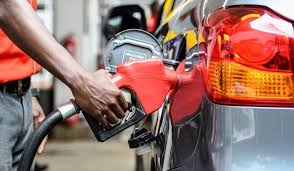
The numbers tell a stark story. In just the last week, petrol prices have skyrocketed from an average of N830–N870 per litre to as high as N1,400 per litre in some filling stations. Diesel, the lifeblood of our industries and transportation, has seen a similar surge, jumping from about N1,200 to as high as N1,750 per litre. Experts warn that if the current global crisis persists, petrol prices could approach N2,000 per litre.
These are not just abstract numbers; they translate into a daily reality of survival for millions of Nigerians. For the average Nigerian, this means:
- Soaring Transportation Costs: Commuting to work, taking children to school, or moving goods to the market—all these have become luxuries, as many can no longer afford them.
- Exploding Food Prices: Our food supply chain relies heavily on diesel-powered trucks. As diesel costs rise, the price of food staples follows immediately, worsening the nation’s food insecurity.
- Crippled Small Businesses: From welders, vulcanizers, pepper grinders, and tailors to cold drink sellers and restaurant owners, millions of small enterprises depend on generators due to persistent power challenges. Rising fuel costs force many to either shut down or pass on exorbitant costs to customers.
- Rekindled Inflation Nightmare: This fuel price shock threatens to reverse hard-won gains made in taming inflation over the past year, plunging the country back into a prolonged cost-of-living crisis.
It is crucial to understand that the primary driver of this hardship is not a domestic failure, but a major global event. Escalating geopolitical tensions and conflict in the Middle East have led to the closure of the Strait of Hormuz, a critical waterway through which about sixty percent of the world’s oil passes. This has pushed global crude prices soaring past $95 per barrel.
As energy expert David Okon explained, the refinery is already absorbing part of the cost to cushion the impact on Nigerians. When the refinery previously sold petrol at N774 per litre, crude oil was landing at about $68 per barrel. However, with crude now at roughly $95 per barrel, the cost difference is significant. The Dangote Refinery, operating as a private business in a deregulated market, must procure this expensive crude, making price adjustments an inevitable market reality.
While the global situation is beyond our control, the Federal Government has the power to implement measures that can shield citizens from the full impact of this crisis. We respectfully appeal to the government to consider the following relief measures:
- Fix Government-Owned Refineries Through Strategic Partnerships:
For decades, state-owned refineries have remained underperforming, consuming billions of naira in turnaround maintenance without results. The current administration has identified that the issue is operational, not just financial. We urge the government to expedite its strategy of bringing in experienced global refinery operators as equity partners. As NNPC GCEO Bayo Ojulari stated, when operators have equity, they care about uptime, efficiency, and margins. This is the only way to ensure these assets operate as sustainable businesses rather than perpetual projects. - Deepen Collaboration with and Support for the Dangote Refinery:
We commend the government’s existing 7.25% equity stake in the Dangote Refinery, which embeds national interest in its success. However, there is a need to move beyond passive ownership to active collaboration. - Prioritize Domestic Crude Supply:
We call on the government, through NNPC Ltd., to increase the allocation of local crude to the Dangote Refinery at subsidized rates. Currently, the refinery receives less than the required volume, forcing it to import crude at international prices. As civil society group PANEP noted, Nigeria, as an oil-producing country, should not be fully exposed to global oil price volatility. Guaranteeing local crude supply will lower production costs and reflect in reduced pump prices. - Acknowledge the Stabilizing Role:
The Dangote Refinery has played a crucial role in preventing a deeper national crisis. Without it, Nigeria could face not only high prices but also severe fuel shortages, long queues, and a resurgence of the black market. Its commitment to prioritizing the domestic market makes it a strategic national asset that must be protected and strengthened.
In conclusion, the hardship is real and demands urgent attention. While the government cannot control global conflicts, it can determine how Nigeria responds. By fixing local refineries and empowering the Dangote Refinery with adequate domestic crude supply, the country can build a resilient energy sector that protects citizens from global shocks. The time for decisive action is now.
Sincerely,
E-Signed:
Ogbonnaya C. Emmanuel
National President,
Youth Advancement Initiative
08035809568
Olawale Atelumotu
National General Secretary
Youth Advancement Initiative
08063737464
Daniel Yusuf
National PRO
Youth Advancement Initiative