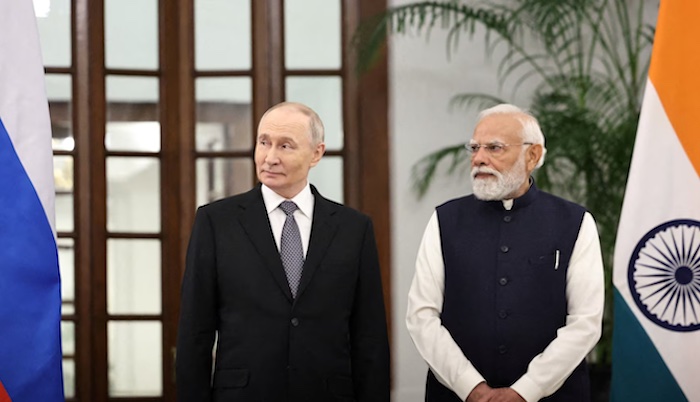
India is moving to strengthen energy cooperation with Russia in response to supply disruptions triggered by escalating conflict involving Iran, as global energy markets face renewed uncertainty.
Officials in India have reopened discussions with Moscow to resume direct liquefied natural gas (LNG) imports—an arrangement that has remained dormant since the onset of the Russia-Ukraine War. Negotiations are said to be advancing quickly, with a potential agreement expected within weeks.
The renewed push follows instability in the Middle East after coordinated US-Israeli strikes on Iran prompted retaliatory actions that disrupted critical maritime routes. India, which relies heavily on shipments passing through the Strait of Hormuz, has been grappling with supply constraints, rising fuel prices, and concerns over domestic shortages.
At a high-level meeting in New Delhi on March 19, Russian Deputy Energy Minister Pavel Sorokin and India’s Petroleum Minister Hardeep Singh Puri discussed plans to expand crude oil shipments and revive LNG cooperation. Analysts suggest Russian oil could soon make up as much as 40 percent of India’s total imports—roughly double the levels recorded earlier this year.
India had previously emerged as a major buyer of discounted Russian crude following Western sanctions, with imports valued at nearly $44 billion last year. However, purchases declined after trade tensions escalated under policies linked to Donald Trump, including tariffs later struck down by the US Supreme Court.
With energy security now under pressure, New Delhi is reassessing earlier decisions and has reportedly approached Washington for potential sanctions waivers to allow the resumption of Russian LNG imports, while maintaining limited purchases of non-sanctioned fuels.
Experts say India’s renewed outreach highlights its delicate balancing act between Western allies and Moscow, as it seeks to secure affordable energy while navigating geopolitical risks. For Russia, the situation presents an opportunity to deepen economic ties, including investments in India’s power sector and expanding trade using local currencies.
Officials warn that prolonged instability in the Middle East could fuel inflation, weaken India’s currency, and slow economic growth—adding urgency to efforts to stabilize energy supplies.