Violence has erupted in South Africa’s Eastern Cape Province following widespread protests over the alleged coronation of an Igbo traditional ruler, with unrest escalating into attacks on vehicles and foreign-owned businesses.
The demonstrations, led by members of ActionSA alongside traditional leaders and local residents, began as a peaceful protest against what organisers described as a breach of constitutional order and established traditional leadership systems. However, tensions quickly intensified in parts of the province, particularly in KuGompo City, where crowds turned violent.
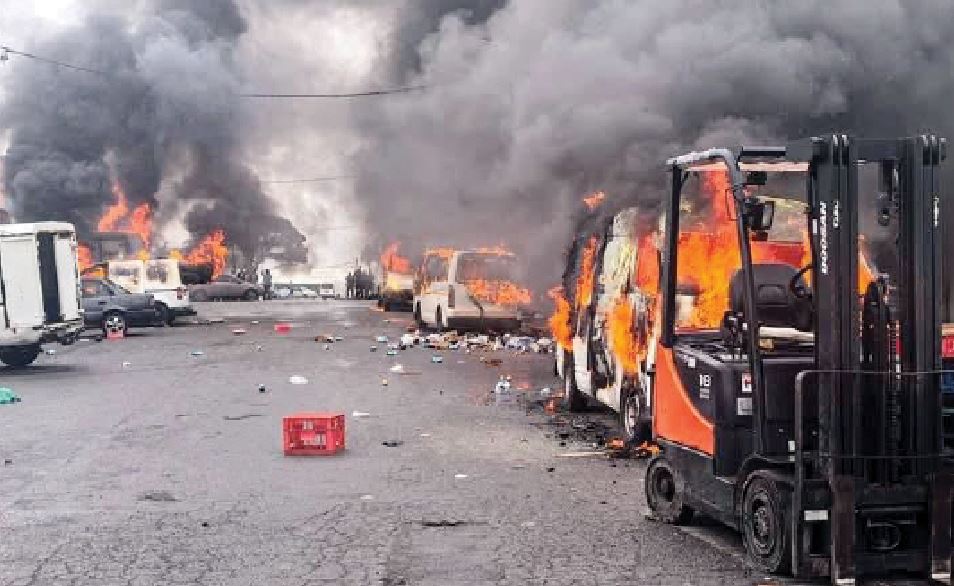
According to local media reports, protesters set fire to vehicles and buildings believed to belong to foreign nationals, while incidents of looting were also recorded. Security forces were deployed to restore order as clashes spread, with authorities working to disperse demonstrators.
Reports indicate the situation turned deadly after a stabbing incident allegedly involving Ethiopian shop owners, with at least two individuals hospitalised and several properties destroyed during the unrest.
ActionSA’s Eastern Cape chair, Athol Trollip, strongly condemned the coronation, describing it as unlawful and inconsistent with South Africa’s traditional governance framework. He reiterated the party’s stance on immigration and sovereignty, insisting that no provision exists within the country’s constitution for the installation of a foreign traditional ruler.
Trollip also raised concerns about statements reportedly made during the coronation, warning against any attempt to establish parallel traditional structures or encourage mass migration tied to such claims. He stressed that the province recognises only constitutionally acknowledged traditional leaders and rejected the legitimacy of the disputed kingship.
Some protesters issued warnings of further escalation if authorities fail to intervene, with calls for deportation of individuals linked to the coronation. Others urged the government to investigate foreign-owned businesses and ensure compliance with local laws.
Local voices also expressed concern over preserving cultural authority and sovereignty, calling for urgent government action to prevent the crisis from deepening.
Meanwhile, the Nigerians in Diaspora Commission (NiDCOM) said it had not received any official reports confirming attacks on Nigerians, urging caution against unverified claims circulating on social media. The commission noted it would rely on formal diplomatic channels for accurate information.
Nigeria’s High Commission in Pretoria has, however, issued an advisory urging its citizens in South Africa to remain vigilant. Nigerians were advised to avoid large gatherings, limit unnecessary travel, and exercise caution both offline and on social media to prevent further escalation of tensions.
Authorities continue to monitor the situation closely as efforts to restore calm remain ongoing.