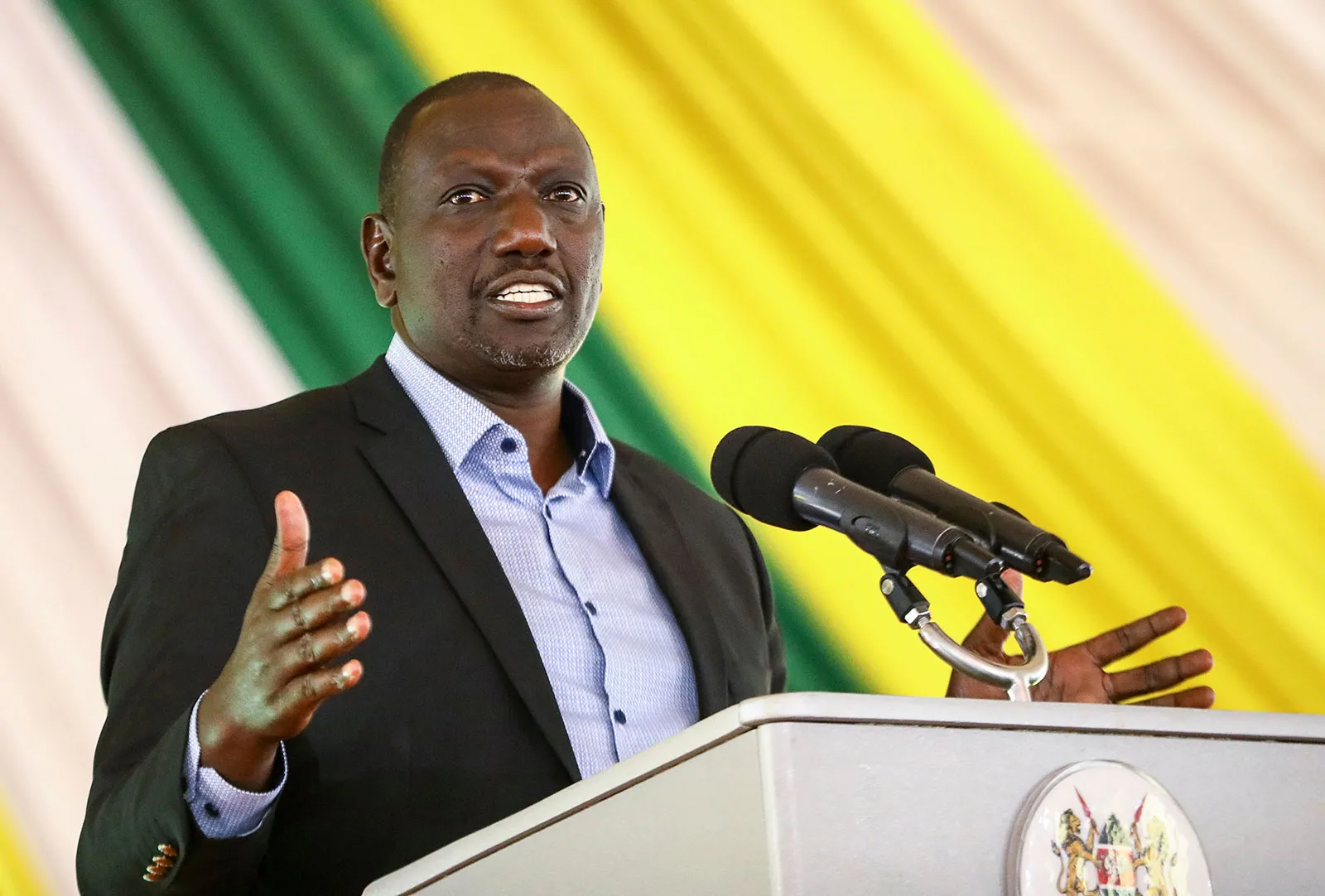
Kenyan President William Ruto has moved to clarify controversial comments about Nigerian-accented English, saying his remarks were taken out of context and misrepresented after sparking widespread criticism.
Speaking at a mining conference in Nairobi, Ruto explained that the comments, which drew backlash online, were originally made during what he described as a private conversation and not intended for public interpretation.
The issue was raised at the event by Nigeria’s Minister of Solid Minerals Development, Dele Alake, who addressed the controversy humorously, affirming that Nigerians speak good English.
Responding, Ruto insisted his remarks had been distorted, emphasizing his close ties to Nigeria, noting that one of his daughters is married to a Nigerian.
The Kenyan leader had earlier faced criticism after suggesting that Nigerian English could be difficult to understand, while praising Kenya’s education system for producing strong English speakers. His comments triggered debate across social media, particularly among Nigerians.
Clarifying his position, Ruto said his intention was to highlight the high standard of English spoken across Africa, including in Nigeria. He added that in some cases, Nigerians speak English at such a high level that others may struggle to fully grasp it.
Ruto reiterated that the remarks were meant in a comparative and lighthearted context, blaming the controversy on the comments being taken out of their original setting.
The incident has since fueled broader discussions on linguistic diversity and accents across the African continent, where hundreds of languages influence how English is spoken in different regions.