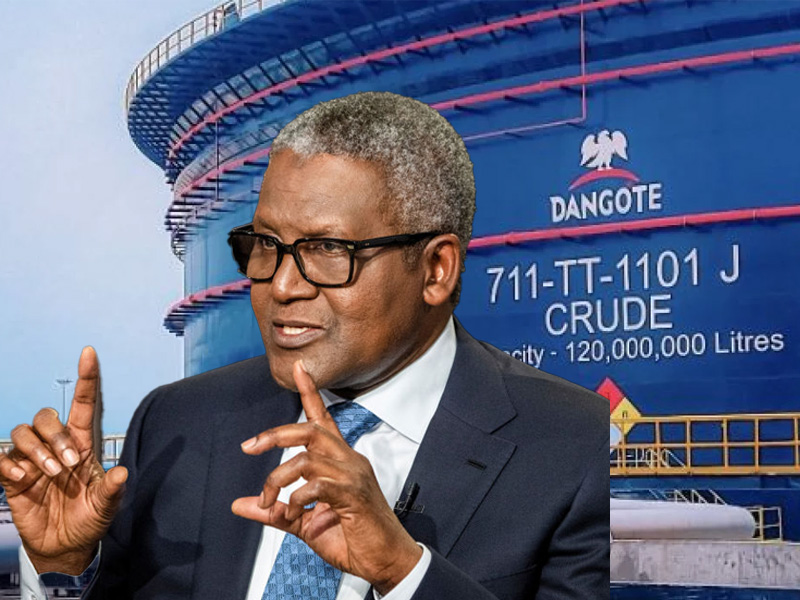
Africa’s leading industrialist, Aliko Dangote, has unveiled plans to expand his business empire into the power sector, targeting a generation capacity of 20,000 megawatts (MW) as part of a broader push to accelerate industrialisation across the continent.
Dangote disclosed the plan during a high-level meeting with Maktar Diop at the headquarters of the International Finance Corporation (IFC), where he outlined the next phase of growth for the Dangote Group.
According to him, the proposed investment in power generation is aimed at tackling one of Africa’s most persistent development challenges—insufficient electricity supply—which continues to hinder industrial growth and economic competitiveness.
He explained that the planned capacity would complement the group’s existing large-scale projects, including its refinery and fertiliser plants, forming an integrated industrial ecosystem designed to boost self-sufficiency and reduce reliance on imports.
While details such as location and project timelines were not disclosed, Dangote highlighted the company’s strengthened financial position, noting that improved cash flow from its refinery operations has created room for expansion into new sectors.
He also revealed ongoing investments in mining, liquefied natural gas, and the construction of a deep-sea port, all aimed at enhancing value addition within Africa.
Beyond business expansion, Dangote raised concerns over structural barriers affecting economic growth across the continent, including restrictive visa policies, inefficient transport systems, and high logistics costs, which he said continue to limit intra-African trade.
He further announced plans to list some of the group’s major assets on stock exchanges, allowing African investors to participate more directly in its ventures. According to him, dividends from such investments would be paid in dollars, offering flexibility and encouraging capital retention within the continent.
Dangote stressed that greater involvement from local investors is critical to attracting foreign capital, urging African stakeholders to take the lead in financing development.
He reaffirmed his long-term vision of building a self-reliant Africa driven by industrialisation, job creation, and strategic investments in key sectors such as energy, agriculture, and infrastructure.