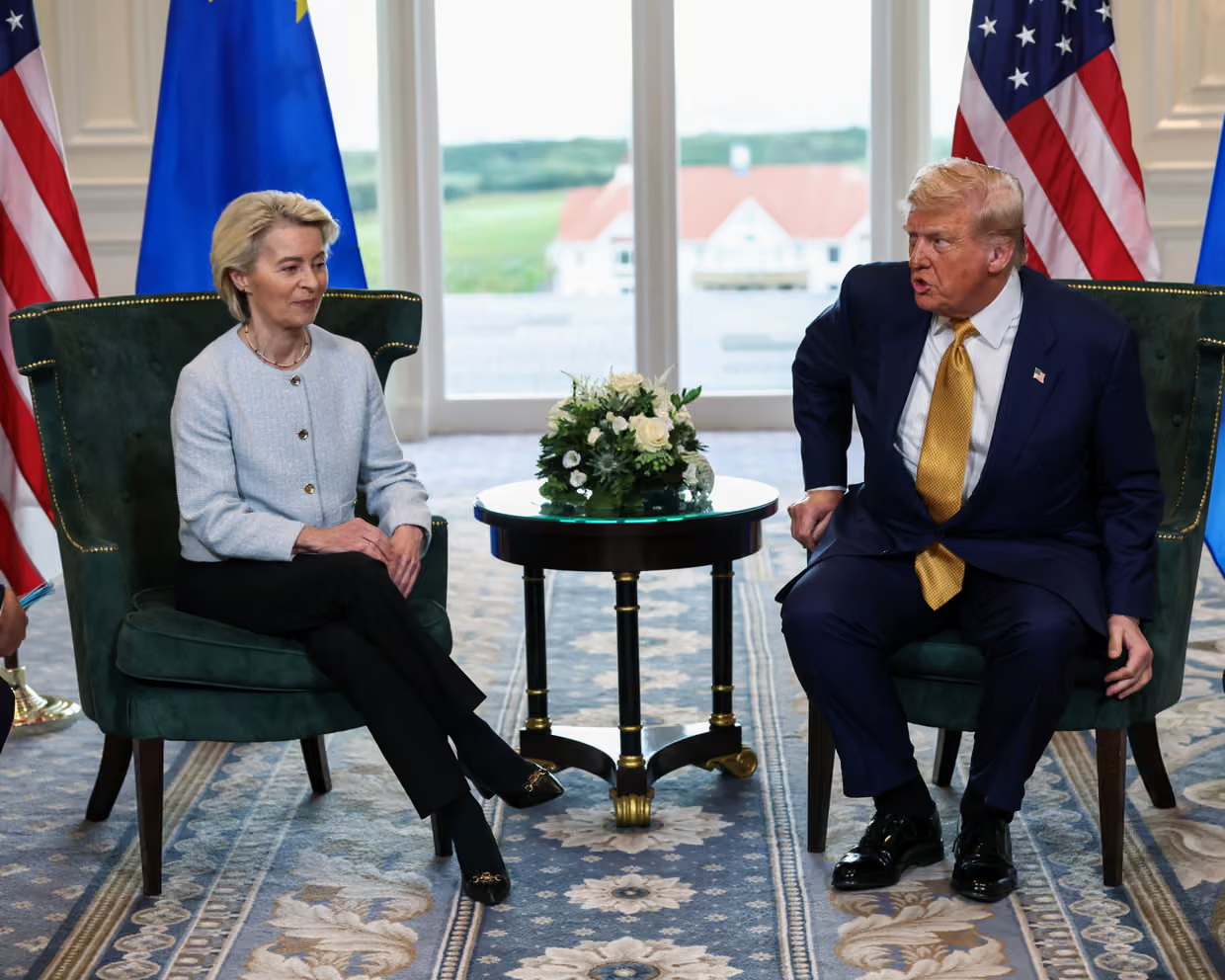
US President Donald Trump has warned the European Union that tariffs on European goods could rise sharply if the bloc fails to approve a trade agreement with the United States before July 4.
Trump issued the warning after a phone conversation with European Commission President Ursula von der Leyen, saying he agreed to extend negotiations until America’s 250th Independence anniversary celebration.
According to Trump, failure by the EU to remove tariffs on US goods could trigger “much higher” levies on European exports entering the American market.
The renewed threat adds pressure to ongoing negotiations between Washington and Brussels over a trade agreement reached last July but still awaiting full implementation.
Von der Leyen, however, maintained that discussions were progressing positively, saying both sides were making “good progress towards tariff reduction.”
“We remain fully committed, on both sides, to its implementation,” she said in a statement posted on X.
Under the proposed agreement, tariffs on EU exports to the US would be reduced to 15 percent, lower than Trump’s earlier proposal of 30 percent duties on European products.
Despite receiving conditional backing from the European Parliament in March, the agreement still requires approval from all 27 EU member states before it can take effect.
European lawmakers have also demanded exemptions for European steel and aluminium products from Trump’s global 50 percent tariff on the metals before fully supporting zero tariffs on American goods.
Chief EU negotiator Bernd Lange said discussions were ongoing, although key issues remained unresolved.
“There is still some way to go,” Lange said, adding that negotiators are expected to meet again on May 19 in Strasbourg.
The latest developments came as Trump’s broader tariff policy faced fresh legal scrutiny in the United States.
A US trade court ruled on Thursday that the administration’s recently introduced 10 percent global tariff was not justified under the trade law provision used to impose it.
The court decision currently affects only two importing companies but is expected to encourage additional legal challenges against the administration’s tariff measures.
Trump had introduced the tariff in February after a previous Supreme Court ruling invalidated an earlier set of tariffs imposed last year.
The trade tensions have continued to strain relations between the United States and the European Union, with Trump recently accusing the bloc of failing to comply with the existing trade agreement and threatening higher duties on European cars and trucks.