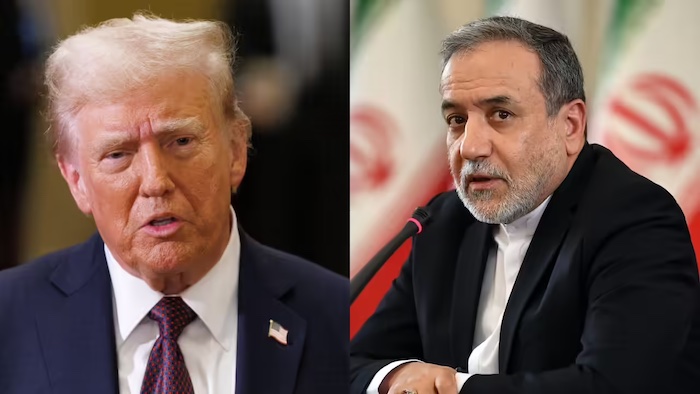
U.S. President Donald Trump has rejected Iran’s latest response to a proposed ceasefire agreement, describing Tehran’s terms as “totally unacceptable” amid continued tensions across the Middle East and growing fears over global energy security.
Iran reportedly delivered its response to Washington through Pakistani mediators, insisting that any negotiations must focus on a permanent end to the conflict, the lifting of sanctions, and guarantees against future attacks. The proposal also called for an end to hostilities in Lebanon, where Israeli forces remain engaged with the Iran-backed militant group Hezbollah.
According to Iranian state television, Tehran is also seeking assurances for the safety of international shipping routes, particularly around the strategically important Strait of Hormuz. The latest U.S. proposal had reportedly included measures aimed at ending the war, reopening maritime access through the Gulf, and reducing Iran’s nuclear activities.
Trump, however, swiftly dismissed the Iranian response without elaborating on specific objections. In a social media post, he accused Tehran of “playing games” with the United States for decades, warning that Iran would “be laughing no longer.”
U.S. Ambassador to the United Nations Mike Waltz said Washington remains open to diplomacy but stressed that military options remain on the table if negotiations collapse.
Meanwhile, Iranian state media reported that Iran’s new supreme leader, Mojtaba Khamenei, recently met with senior military commanders and issued what were described as “decisive directives” for continued operations against adversaries. No further details were disclosed.
Iran’s semi-official Tasnim news agency stated that Tehran’s proposal included an immediate halt to military operations, the removal of the U.S. naval blockade, guarantees against further attacks, and the lifting of economic sanctions, including restrictions on Iranian oil exports.
Reports from The Wall Street Journal indicated that Iran may also be willing to dilute part of its highly enriched uranium stockpile and transfer the remainder to a third country as part of a broader diplomatic arrangement.
Pakistan, which has played a mediating role throughout the crisis, confirmed that it forwarded Iran’s response to U.S. officials.
Although a fragile ceasefire has largely held for several weeks, security concerns remain high after hostile drones were reportedly detected over multiple Gulf states on Sunday, renewing fears of a wider regional escalation.
The war has already triggered major disruptions in global energy markets, particularly due to tensions surrounding the Strait of Hormuz, a critical shipping route that previously handled nearly one-fifth of the world’s oil supply.
Speaking in a televised interview, Israeli Prime Minister Benjamin Netanyahu insisted that military operations against Iran were not yet complete, saying additional steps were needed to dismantle Tehran’s nuclear infrastructure and address its ballistic missile programme and regional proxy networks.
Netanyahu stated that diplomacy remained the preferred route for removing Iran’s enriched uranium stockpiles but did not rule out the use of force if necessary.
Trump, commenting on the state of the conflict, said Iran had been “defeated” but warned that the threat was far from over.