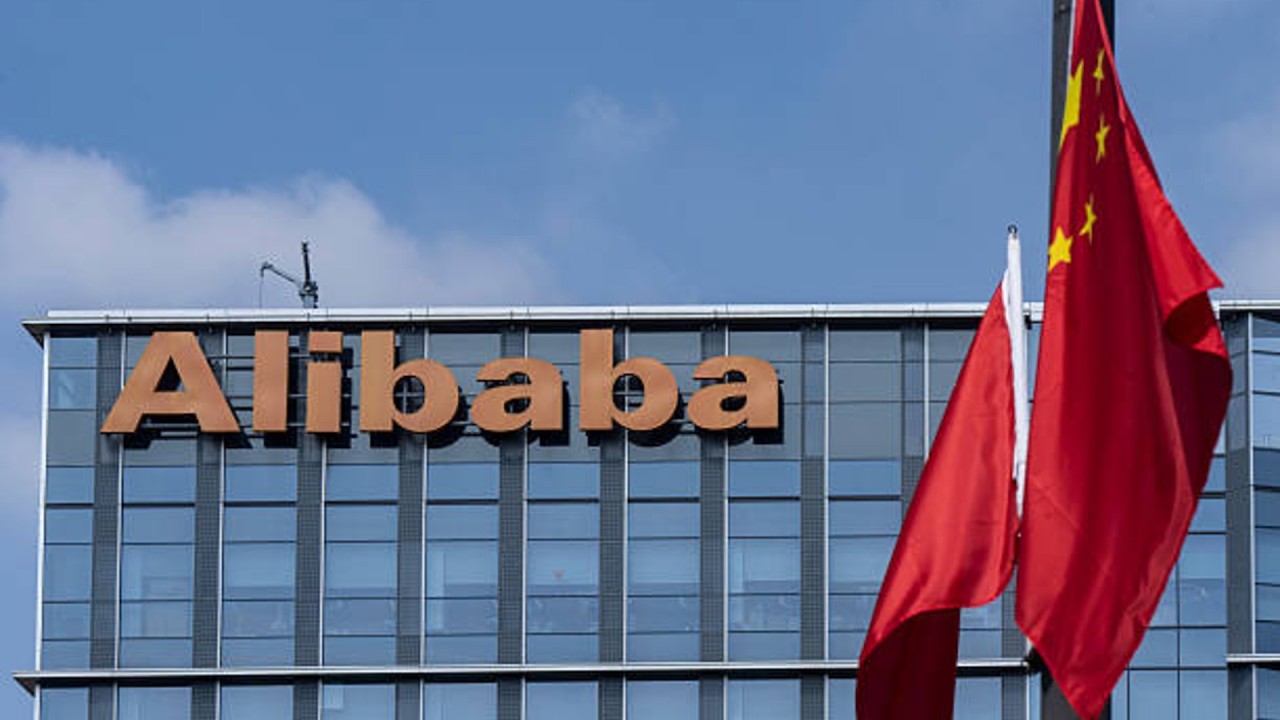
China has strongly criticized the United States following Washington’s decision to add several leading Chinese technology companies, including Alibaba and Baidu, to a blacklist of firms allegedly linked to the Chinese military.
Speaking at a press briefing on Tuesday, Chinese Foreign Ministry spokesperson Lin Jian described the move as an unjustified attempt to suppress Chinese businesses under the guise of national security concerns.
“China firmly opposes the United States’ broad interpretation of national security and its unreasonable actions against Chinese enterprises,” Lin said. He urged Washington to reverse what he called “mistaken practices” and warned that Beijing would take necessary steps to protect the lawful rights and interests of affected companies.
The Pentagon updated its list on Monday, naming 80 companies and subsidiaries it believes are supporting China’s military modernization efforts. The revised list closely mirrors a version briefly published in February before it was unexpectedly withdrawn.
Among the firms restored to the latest list are memory chip manufacturers ChangXin Memory Technologies and Yangtze Memory Technologies, both of which had been removed from the earlier version.
The decision marks another point of tension between the world’s two largest economies, despite recent efforts to improve relations. Last month, US President Donald Trump and Chinese President Xi Jinping met in Beijing for a high-profile summit aimed at easing bilateral strains. Trump has also invited Xi to visit Washington in September.
The Pentagon’s latest designation targets several of China’s most influential artificial intelligence and technology companies, including Alibaba, Baidu, and Tencent. Tencent had already appeared on previous versions of the blacklist.
Alibaba rejected the designation, calling its inclusion an error, while Baidu argued that there was “no credible justification” for being added to the list.
Although the blacklist carries limited immediate legal consequences for many of the affected firms, analysts view the move as a potential precursor to stricter restrictions or future sanctions by the United States.