United States President Donald Trump and Iranian President Masoud Pezeshkian have signed an interim peace agreement aimed at ending hostilities between their countries and paving the way for a comprehensive settlement through negotiations over the next 60 days.
The 14-paragraph memorandum of understanding, which took effect on Wednesday, establishes a framework for de-escalation and outlines steps toward resolving longstanding disputes between Washington and Tehran. The agreement allows for the negotiation period to be extended by mutual consent should additional time be required to reach a final accord.
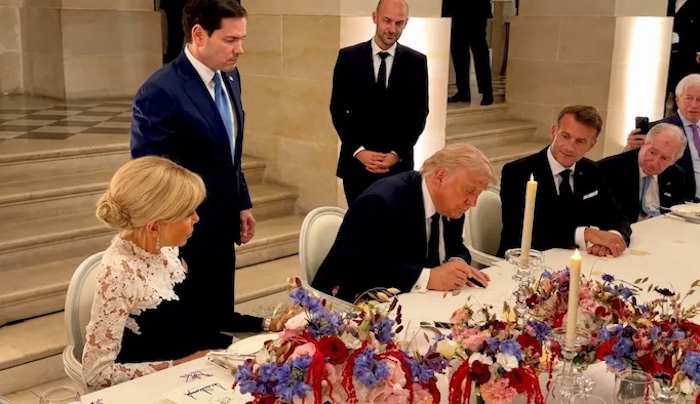
Trump signed the document during a dinner meeting in Paris hosted by French President Emmanuel Macron. The signing came ahead of a previously planned ceremony involving US and Iranian representatives in Switzerland, though it remains uncertain whether that event will still take place.
A central provision of the agreement commits the United States and its allies to an immediate and permanent cessation of military operations across all theatres of conflict, including Lebanon, where violence linked to broader regional tensions has escalated in recent months.
Lebanon has remained a flashpoint throughout the conflict, with the Iran-backed group Hezbollah and Israel frequently trading accusations of ceasefire violations.
Iranian Foreign Ministry spokesman Esmail Baghaei warned that any further Israeli military action in Lebanon would be considered a breach of the memorandum. Iranian state media also quoted him as saying that the continued presence of Israeli troops in Lebanon would violate the terms of the agreement.
His comments followed renewed Israeli strikes in southern Lebanon on Wednesday. The Israeli military also reported the death of a soldier who had been wounded in an incident in the same region.
Addressing reporters during the G7 Summit in France, Trump acknowledged ongoing tensions in Lebanon but emphasized that securing peace with Iran remained the primary objective. He said the situation in Lebanon would require further attention, adding that the agreement with Tehran represented the more significant diplomatic achievement.
The Israeli government has yet to issue an official response to the accord.
The memorandum also provides for the reopening of the Strait of Hormuz, a critical global shipping corridor. Under the agreement, Washington will begin lifting its naval blockade, with a complete withdrawal expected within 30 days.
In return, Iran has pledged to use its best efforts to guarantee the safe passage of commercial vessels through the strait for a 60-day period without imposing transit charges.
Economic measures form another major component of the deal. The agreement proposes a $300 billion reconstruction and development programme for Iran and commits the United States to ending all sanctions imposed on the country as part of the broader peace process.
On the nuclear issue, Iran has pledged not to seek or acquire nuclear weapons, while both governments agreed to pursue a comprehensive settlement within a maximum period of 60 days.
Although the accord sets a timeline for final negotiations, Trump indicated that talks could continue beyond the deadline if necessary to secure a durable agreement.
The memorandum marks the most significant diplomatic breakthrough between Washington and Tehran since the conflict began and establishes a roadmap toward a permanent peace settlement between the two countries.