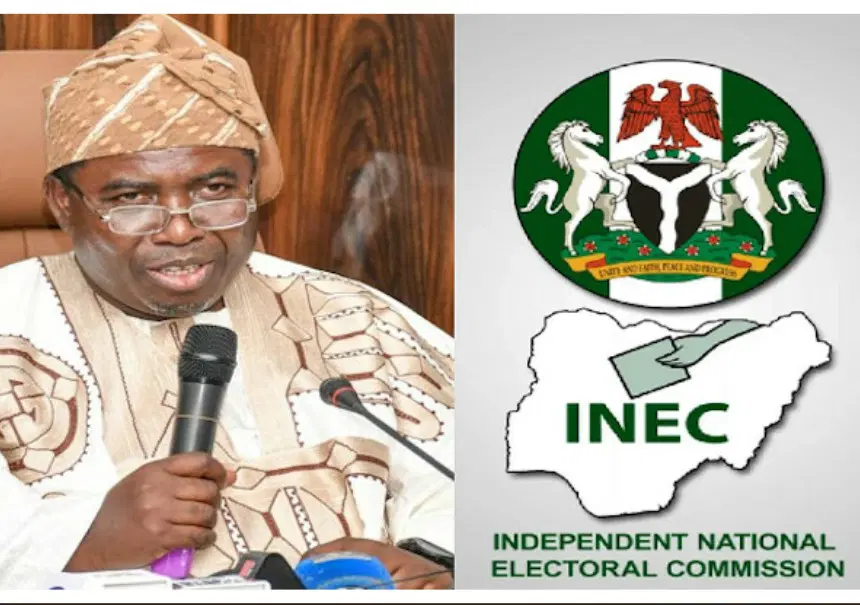
The Independent National Electoral Commission (INEC) has disclosed that it is yet to receive the budgetary allocation required for the conduct of the 2027 general elections, although preparations for the nationwide exercise are already underway.
INEC National Commissioner in charge of Voter Education and Publicity, Mohammed Haruna, made the disclosure on Thursday in Abuja during a cross-sectoral interactive session organised by the Peering Advocacy and Advancement Centre in Africa (PAACA) in partnership with Legis360.
The forum, which brought together representatives of political parties, civil society organisations (CSOs) and electoral officials, reviewed the recently concluded Ekiti State governorship election while examining the commission’s readiness for the 2027 general elections.
Haruna explained that although the commission has not received its election funds, the situation remains within the timeline stipulated by the Electoral Act 2026, which requires election funds to be released at least six months before a general election.
INEC has proposed a budget of N873.78 billion for the 2027 polls, with significant provisions for election logistics, technology deployment and capital expenditure.
Despite the pending release of funds, Haruna said the commission has commenced arrangements to procure new election equipment, including replacements for Bimodal Voter Accreditation System (BVAS) devices that were damaged, lost or not recovered after previous elections.
He revealed that INEC’s Director of Information and Communication Technology recently visited China to facilitate procurement processes, noting that the acquisition of specialised election equipment requires considerable lead time.
According to him, the commission also plans to conduct mock presidential election exercises before the 2027 polls to test its technological infrastructure and prevent a repeat of the technical challenges experienced with the INEC Result Viewing (IReV) portal during the 2023 presidential election.
Addressing concerns over the proposed election budget, Haruna argued that the overall cost should be viewed in relation to the number of registered voters, stating that the estimated expenditure translates to approximately six dollars per voter, which he described as relatively modest by international standards.
He attributed the high financial outlay largely to Nigeria’s dependence on imported election materials, including BVAS devices, as well as the impact of exchange rate fluctuations on procurement costs.
The national commissioner also identified conflicting court orders as a recurring operational challenge for the commission, citing instances during the Ekiti governorship election where last-minute judicial rulings compelled INEC to reconfigure election software and revise printed result sheets shortly before the polls.
He said the commission intends to engage judicial authorities to minimise such disruptions ahead of future elections, adding that similar consultations were undertaken before the 2023 general elections.
Haruna also reassured Nigerians over recent concerns about an alleged data breach involving the commission. He disclosed that an electoral officer accused of deliberately leaking sensitive information had been suspended, while the matter has been referred to the Nigeria Data Protection Commission (NDPC). Investigations by the Nigeria Police Force and the Department of State Services (DSS) are ongoing.
Reviewing the conduct of the Ekiti governorship election, Haruna described the exercise as largely successful, noting that BVAS recorded a 98 per cent voter accreditation success rate. He acknowledged minor biometric verification issues involving some elderly voters but said INEC’s technical teams resolved them promptly.
He, however, expressed concern over the persistence of vote buying, saying election observers witnessed voters openly waiting to receive financial inducements before casting their ballots.
Speaking with journalists after the event, PAACA Executive Director, Ezenwa Nwagwu, urged the Federal Government to release election funds to INEC well ahead of schedule, warning that delayed funding encourages emergency procurement practices that could undermine transparency and accountability.
Nwagwu said early funding was essential because the commission must meet international procurement timelines for critical election technology, including replacing BVAS devices damaged during previous election cycles.
He also called on civil society groups and citizens to hold political actors accountable for delays that affect election planning instead of placing sole responsibility on INEC whenever logistical shortcomings arise.
On the issue of conflicting court judgments, Nwagwu argued that reducing unnecessary litigation would ease pressure on the electoral process, adding that many election-related disputes could be resolved administratively rather than through prolonged court proceedings.
He said the stakeholders’ meeting was convened to assess the strengths and shortcomings of the Ekiti governorship election and identify practical reforms that would strengthen Nigeria’s electoral process ahead of the 2027 general elections.
Participants at the session also recommended that INEC institutionalise continuous training programmes for ad hoc election personnel, particularly members of the National Youth Service Corps (NYSC), to improve election management and service delivery.