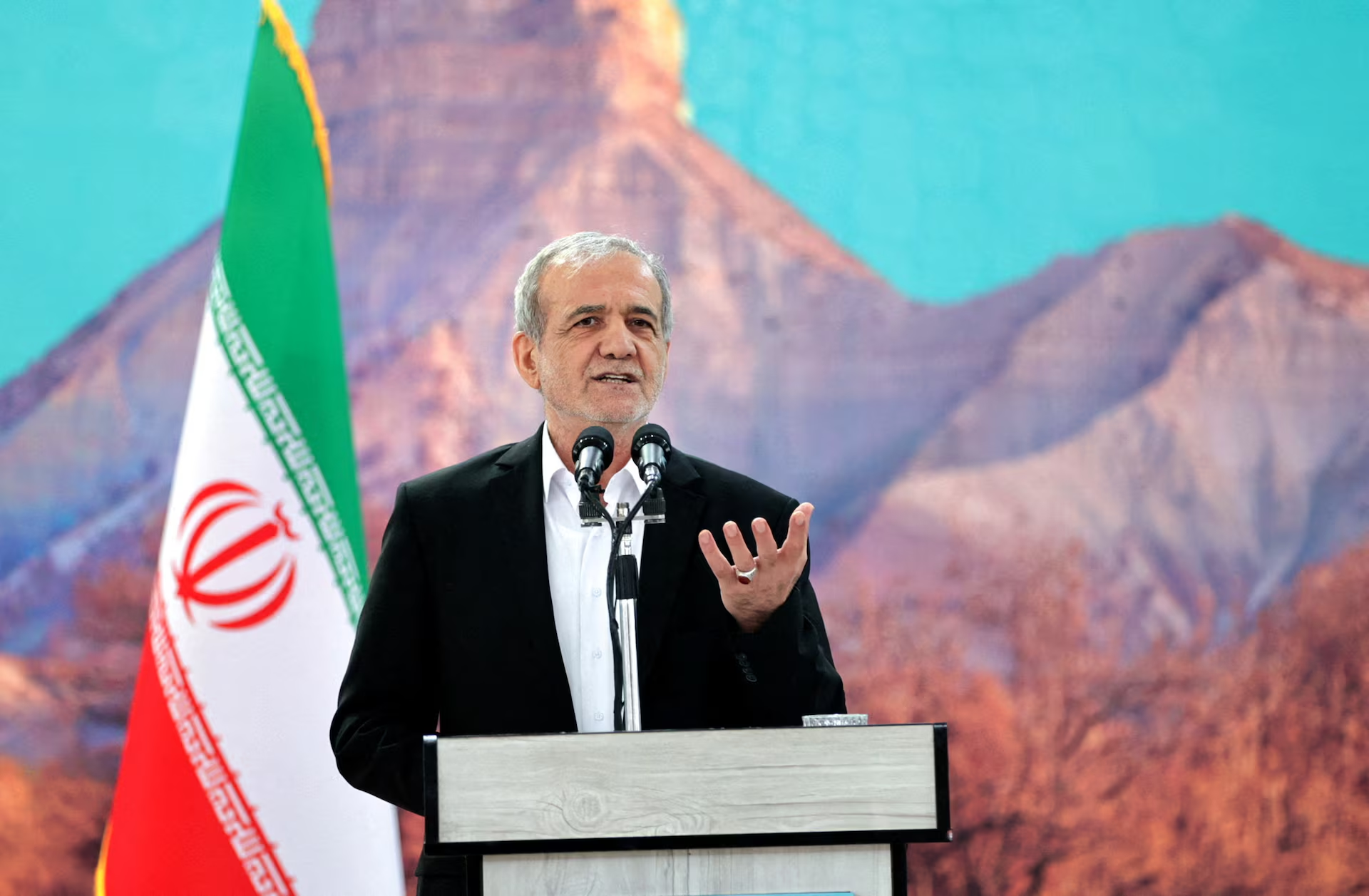
Iranian President Masoud Pezeshkian has openly acknowledged the mounting economic and social challenges facing the country, saying his administration is working to address inflation, unemployment, declining living standards and other hardships affecting millions of citizens.
Pezeshkian made the remarks in a speech broadcast on state television on Sunday, coming shortly after the United States announced a new round of sanctions aimed at increasing pressure on Tehran and further isolating the Iranian economy.
The Iranian president said he understood the frustration and difficulties being experienced by the population, particularly as the country continues to struggle with rising prices and declining purchasing power.
“I understand that we have many problems in society right now. We are trying to prevent these as much as we can,” Pezeshkian said.
His comments came against the backdrop of renewed tensions between Tehran and Washington, nearly six months after the outbreak of war between the two countries.
The United States last week announced a new sanctions campaign and vowed to intensify efforts aimed at weakening the Iranian government. Washington’s move has raised fresh concerns over the already fragile state of Iran’s economy.
Responding to the latest sanctions, Pezeshkian accused US President Donald Trump of escalating pressure on Iran, claiming the country was already fighting what he described as a broad economic, military and security conflict.
According to him, the latest measures represented another attempt by Washington to force Iran into submission.
“Thanks to Mr Trump, we are in a full-scale economic, military and security war,” Pezeshkian said.
“He says he is imposing the most crushing and terrifying sanctions on Iran,” the Iranian president added.
Iran’s economy has faced years of difficulties, including the impact of international sanctions, persistent inflation, currency depreciation and restrictions on trade and financial transactions.
The worsening economic situation has contributed to repeated demonstrations across the country, with many Iranians expressing anger over the rising cost of food and other basic necessities.
In recent years, protests triggered by economic hardship have often expanded into broader demonstrations against the country’s political leadership.
At the end of December last year, public anger over the rising cost of living reportedly sparked another protest movement that later developed into large-scale demonstrations against those in power.
The unrest led to a violent confrontation between protesters and security forces, with authorities and human rights groups providing sharply different accounts of the number of people killed.
Iranian authorities said more than 3,000 people died during the unrest and accused the United States and Israel of being responsible for orchestrating the violence.
However, foreign-based non-governmental organisations disputed the official account, alleging that Iranian security authorities carried out an indiscriminate crackdown on protesters that resulted in thousands of deaths.
The conflicting reports have further highlighted the deep divisions surrounding the protests and the government’s response to public dissatisfaction.
Despite the challenges, Pezeshkian insisted that his administration remained focused on addressing the country’s worsening economic problems and restoring hope among the Iranian people.
He said his government would continue working to control inflation, create jobs, improve living conditions and build a more secure future for the country’s population.
“We are striving with all our hearts to overcome inflation, livelihood problems, unemployment, and to secure the future of the people, so that they can live with dignity and pride,” Pezeshkian said.
His admission of the country’s difficulties represents one of the clearest acknowledgements by Iran’s leadership of the scale of the challenges facing ordinary citizens.
With the United States tightening economic pressure and public frustration continuing to simmer, the Pezeshkian administration faces the difficult task of stabilising the economy while preventing further social unrest.
The coming months are expected to test the Iranian government’s ability to contain the effects of sanctions, address widespread economic grievances and maintain stability in a country increasingly affected by both internal pressure and external conflict.