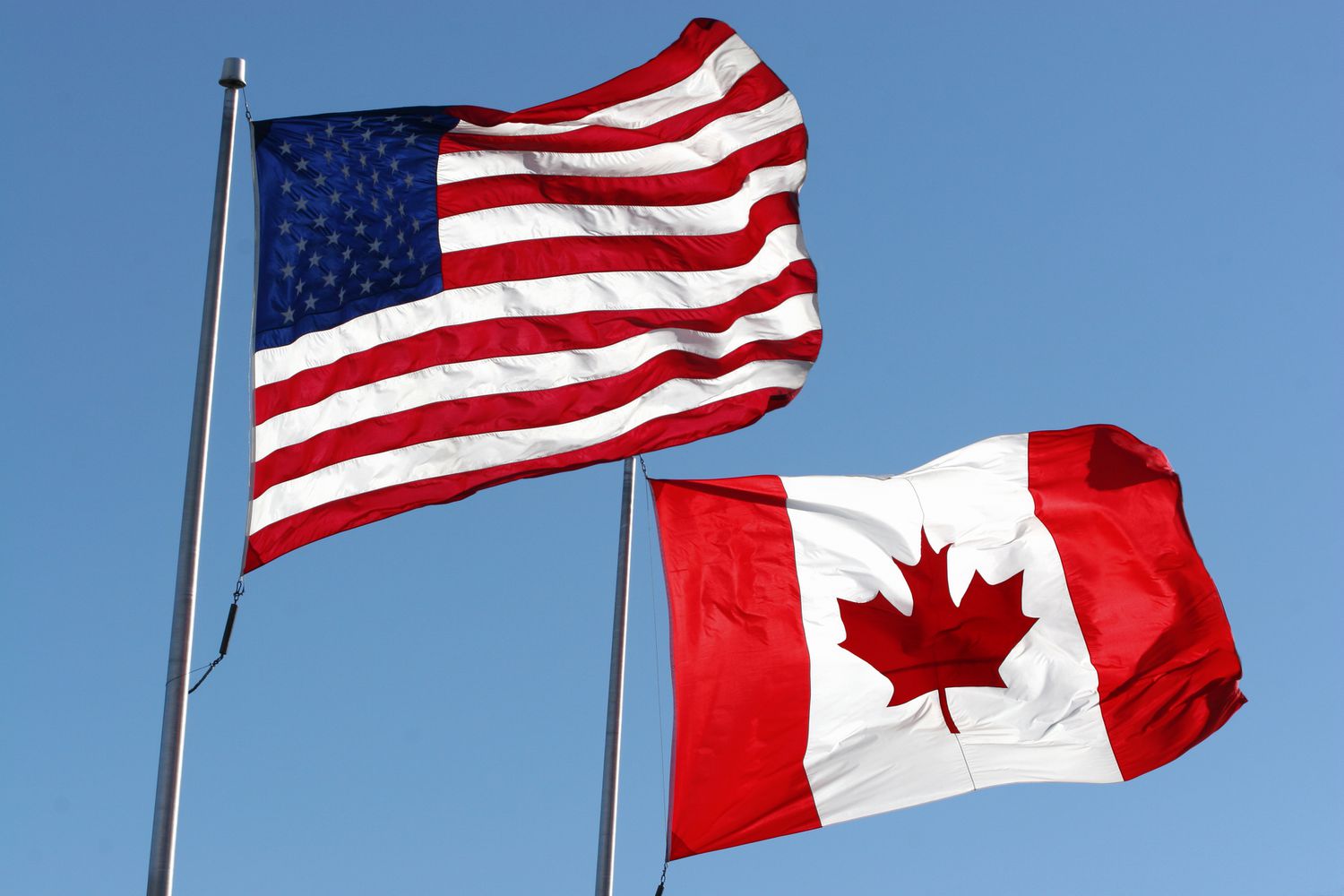
Trade relations between the United States and Canada have suffered a major setback following the collapse of negotiations between the two countries, prompting Washington to impose additional tariffs of up to 50 per cent on a range of Canadian goods.
The new US tariffs took effect on Saturday and affect about $20 billion worth of Canadian exports, including wine, furniture, dairy products, cement, clothing, fishing rods and hockey equipment.
In response, Canada has announced plans to introduce retaliatory tariffs beginning September 8, raising concerns over a further escalation of the trade dispute between the two North American neighbours.
The breakdown came after negotiators from both countries spent the week attempting to finalise an agreement, with officials on both sides expressing optimism that a deal was close.
US President Donald Trump had earlier postponed a tariff deadline, saying negotiations were nearing a conclusion, while Canada’s Trade Minister, Dominic LeBlanc, also said the two countries were “very close” to reaching an agreement.
However, the negotiations collapsed after Washington and Ottawa failed to agree on the final terms.
US Trade Representative Jamieson Greer accused Canada of refusing to conclude a deal based on terms that had been agreed earlier in the week.
Canadian Prime Minister Mark Carney, however, said the United States introduced last-minute proposals that were “unfair” and “uneconomic.”
Speaking at a news conference in Ottawa on Saturday, Carney said Canada could not accept the final demands presented by Washington.
“They asked too much and offered too little,” he said.
Carney said Canada had been willing to remove its remaining retaliatory tariffs on US steel, aluminium and automobiles if Washington agreed to reduce its own duties.
Instead, Ottawa announced new countermeasures targeting US products in sectors including steel, dairy, agricultural equipment, pulp and paper.
Details of the retaliatory tariffs are expected to be released in the coming days, with the Canadian government saying the measures would be implemented on a “dollar-for-dollar” basis.
Carney also highlighted Canada’s importance as an energy supplier to the United States, saying, “Canada fuels American growth,” while warning that Washington would not want Ottawa to disrupt energy supplies.
Trump, meanwhile, criticised Canada’s trade policies, accusing the country of benefiting from access to the US market while imposing barriers on American farmers.
The latest escalation has sparked concerns among US lawmakers and business leaders.
Democratic Senate Minority Leader Chuck Schumer warned that higher tariffs could increase costs for American households.
Republican Senator Susan Collins of Maine also raised concerns about the potential impact on her state, which imports an estimated $2 billion worth of non-petroleum products from Canada annually.
She urged the Trump administration to consider the impact of the dispute on businesses, communities and families and to return to the negotiating table.
Business Roundtable CEO Joshua Bolten also warned that the US tariffs and Canada’s planned retaliation could raise costs for businesses and consumers, disrupt supply chains and further strain economic relations between the two countries.
Despite the collapse of negotiations, Greer said there were currently no plans for fresh talks between Washington and Ottawa.
The latest US tariffs were imposed under Section 338 of the US Tariff Act of 1930, which gives the president authority to impose duties of up to 50 per cent on goods from countries found to discriminate against American products.
The provision, which has not been used since 1949, adds a new dimension to the trade dispute between the two countries.
The growing tensions also come amid uncertainty over the future of the United States-Mexico-Canada Agreement, USMCA, the trilateral trade pact involving the three North American countries.
The agreement was not renewed in July amid concerns over US trade deficits, further complicating efforts to maintain stability in the region’s trade relationship.