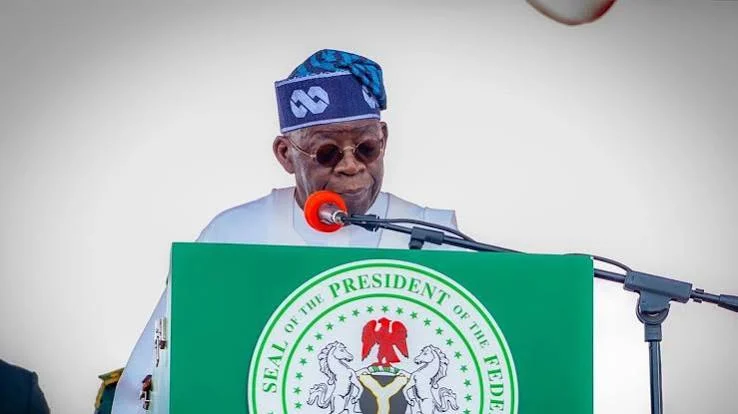
As the inauguration of
President-elect Bola Tinubu draws near, the anticipation surrounding his first
appointments grows. According to tradition, after being sworn in as President
by the Chief Justice of Nigeria, Justice Olukayode Ariwoola, Tinubu is expected
to make three crucial appointments to ensure the smooth functioning of the
government until further appointments are approved by the National Assembly.
These three key positions are the Secretary to the Government of the Federation
(SGF), Chief of Staff, and presidential spokesperson.
However, amidst the clamor for
appointments, including ministerial positions, in the upcoming Tinubu
administration, sources close to the president-elect revealed that nothing is
set in stone regarding the appointments to be announced tomorrow or the
following day. Despite several names being mentioned as potential candidates,
including close associates of Tinubu, it remains uncertain who will fill these
positions.
The president-elect has
intentionally kept the list of potential appointees confidential, causing
intense anxiety among those lobbying for positions in the new government.
Tinubu’s refusal to disclose any information regarding his cabinet members,
personal aides, Presidential Villa officials, and ministers has left many
guessing and speculating about their prospects.
However, there have been
speculations regarding some individuals who may play significant roles in
Tinubu’s administration. The Speaker of the House of Representatives, Mr. Femi
Gbajabiamila, the Minister of Works and Housing, Mr. Babatunde Fashola,
Governor Nasir el-Rufai of Kaduna State, and Mr. James Faleke, a federal
lawmaker from Lagos, have been mentioned as potential appointees. Furthermore,
outgoing governors Aminu Masari of Katsina State and Atiku Bagudu of Kebbi
State, alongside el-Rufai, are reportedly in the running for the SGF position.
Additionally, former Governor Kayode Fayemi of Ekiti State is said to be a
strong contender for a ministerial position, potentially as the Minister of
External Affairs.
Traditionally, members of the
ruling party who lost gubernatorial elections in their states were often
compensated with ministerial appointments. This pattern might also be followed
in the upcoming Tinubu government.
However, multiple sources
indicated that Gbajabimila faced significant opposition to the possibility of
becoming the Chief of Staff to the President.
The appointment of a
presidential spokesperson remained undisclosed, but there were high-profile
professionals associated with the Tinubu Presidential Campaign who were deemed
suitable for the role, including Mr Bayo Onanuga and Mr Dele Alake.
A source, speaking on the
condition of anonymity, revealed that all the names circulating regarding
appointments in the Tinubu administration were mere speculation. The source
emphasized that President Tinubu was likely to announce his first appointments
on Monday or Tuesday to ensure a swift start to his administration. However,
the list of appointees remained a closely guarded secret known only to the
President-elect himself.
Regarding the ongoing
controversy surrounding the selection of presiding officers for the 10th
National Assembly, there were indications that Speaker Gbajabiamila might face
setbacks. Northern leaders expressed their dissatisfaction with Gbajabiamila’s
involvement in the selection of Mr Tajudeen Abass as the next Speaker and Mr
Benjamin Kalu as the Deputy Speaker.
The All Progressives Congress
(APC), supported by President-elect Tinubu, had designated the speakership to
the North-West and micro-zoned it to Abbas, while the deputy speakership was
zoned to the South-East and micro-zoned to Kalu.
A source revealed the North’s
displeasure over the alleged imposition of Abbas and stated that tensions and
anger were mounting. Concerns were raised about the perception of the
South-West imposing its choices on the North, which was not well-received.
The source indicated that the
numbers in support of Abbas were uncertain, and unless the opposition parties
were swayed, they might gather over 200 members-elect against the ruling
party’s choice. The opposition was determined to work against the APC if their
concerns were not addressed. The source estimated that less than 100
members-elect supported Abbas within the ruling party’s camp.
The situation was causing a
rift between the North and the South-West, with traditional rulers expressing
apprehensions about the potential Chief of Staff allegedly mistreating Wase, a
northern politician. The President-elect faced significant pressure from Yoruba
leaders to resolve the speakership issue amicably and avoid a perceived
North-South conflict.
In conclusion, the anticipation
surrounding President-elect Bola Tinubu’s first appointments created intense
speculation and anxiety among politicians and individuals vying for positions
in the upcoming administration. The President-elect had chosen to keep his list
of appointees secret, leading to uncertainty and conjecture. Meanwhile,
controversies surrounding the selection of presiding officers for the National
Assembly fueled tensions between the North and the South-West. The unfolding
Tinubu government held the hopes and expectations of the Nigerian people as it
embarked on its early stages.