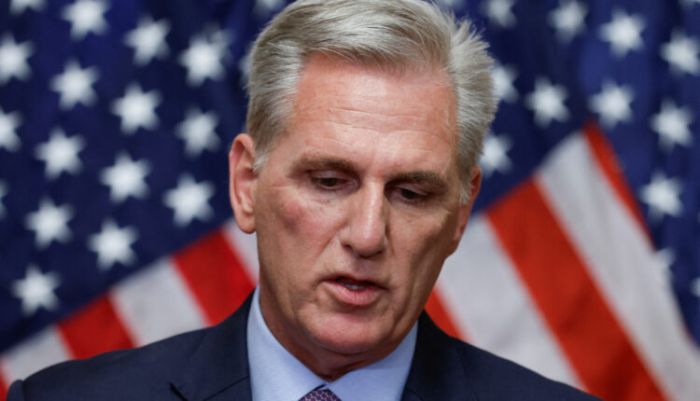

In a historic turn of events, the United States House Speaker, Kevin McCarthy, found himself ousted from his position following an unprecedented challenge to his leadership from within his own party. The Republican stalwart had managed to secure his position just months earlier after enduring a grueling 15-round voting process. However, his political fortunes took a dramatic and unforeseen twist when a motion to vacate was initiated by none other than Matt Gaetz, a staunch ally of former President Donald Trump.
This momentous move marked the very first instance in the nation’s storied history where House representatives collectively voted to remove their Speaker from power. Behind closed doors, during the early hours of a fateful Tuesday, McCarthy, reflecting on his tumultuous journey, candidly admitted to his fellow Republicans, “If I counted how many times someone wanted to knock me out, I would have been gone a long time ago.”
Despite the brewing storm, McCarthy’s resilience was apparent. As the meeting progressed, numerous Republican lawmakers voiced their unwavering support for him, punctuating their declarations with standing ovations, serving as a testament to the Speaker’s enduring influence within his party.
The tumultuous sequence of events leading to McCarthy’s ouster began when he made a critical decision over the weekend. In a move that drew the ire of the far-right faction of his party, McCarthy chose to cooperate with Democrats to ensure the continued operation of the government, rather than risk a damaging shutdown. His strategy relied on Democratic votes to pass a temporary funding extension, effectively averting a partial government shutdown. This approach infuriated Matt Gaetz and other fervent Republicans who had hoped for a more hardline stance.
A group of approximately 20 Republicans had succeeded in forcing McCarthy’s hand by repeatedly obstructing other legislative efforts. The frustration with the slow pace of spending legislation during McCarthy’s tenure had reached a boiling point. Republican Representative Tim Burchett, who firmly stood against McCarthy, underscored the sentiment, remarking, “We took a whole month of August off. I think that that’s pretty telling.”
As the sun set on this extraordinary day in American political history, the nation watched as the balance of power within the Republican Party underwent a seismic shift. Kevin McCarthy’s removal from the Speaker’s office would undoubtedly have far-reaching implications for the future of the party and the broader political landscape. The drama had only just begun, and the repercussions of this historic moment would reverberate through the halls of Congress and beyond.