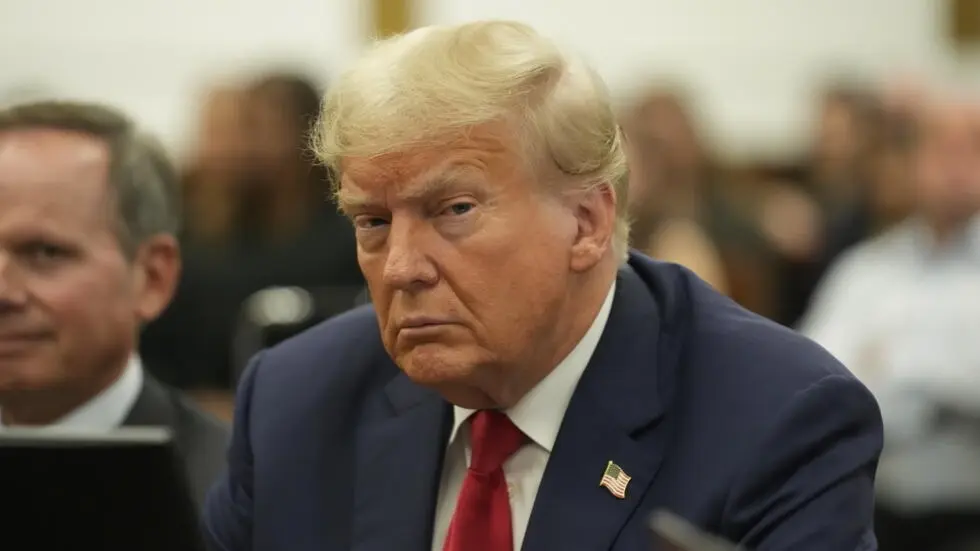
In a pivotal development, the US Supreme Court rejected, on Friday, the immediate consideration of former President Donald Trump’s claim of immunity from prosecution. Special Counsel Jack Smith had urged the Supreme Court to expedite the immunity case, bypassing the federal court of appeals, which could potentially delay Trump’s trial on charges related to the alleged interference in the 2020 election.
The Supreme Court, holding a conservative majority of 6-3, including three justices nominated by Trump, issued a succinct one-line order without providing specific reasons for the denial.
Trump, 77, currently the leading contender for the 2024 Republican presidential nomination, faces charges of conspiring to overturn the November 2020 election, won by Democrat Joe Biden. The trial is scheduled for March 4, 2024.
The former president’s legal team has persistently sought to postpone the trial, arguing that a former president is entitled to “absolute immunity” and cannot be prosecuted for actions taken while in office. US District Judge Tanya Chutkan, assigned to preside over Trump’s trial, rejected the immunity claim on December 1, asserting that a former president does not possess a “lifelong ‘get-out-of-jail-free’ pass.”
Trump’s lawyers appealed Chutkan’s decision to the US Court of Appeals for the DC Circuit. Smith, the special counsel, subsequently urged the Supreme Court to intervene and hear the case directly, citing the fundamental question of whether a former president is immune from federal prosecution for actions during their tenure.
With the Supreme Court’s refusal to expedite the case, the appeals court will now take precedence in addressing the immunity claim. Legal experts, including Carl Tobias, a law professor at the University of Richmond, speculate that this could complicate the maintenance of the March trial date.
Trump welcomed the Supreme Court’s decision, expressing his anticipation of presenting arguments before the appeals court. On his Truth Social platform, he reiterated claims of presidential immunity, insisting on his right to investigate and speak about the alleged irregularities in the 2020 Presidential Election.
The DC appeals court is set to hear arguments on January 9, and its ruling is expected to eventually reach the Supreme Court. Concurrently, Trump’s legal team is likely to seek the Supreme Court’s intervention in a separate case involving the Colorado Supreme Court’s decision, barring Trump from the Republican primary ballot due to allegations of incitement of the January 6, 2021 Capitol attack.
The Supreme Court has already agreed to hear a challenge to the use of a law behind one of the charges against Trump and his supporters implicated in the Capitol attack.