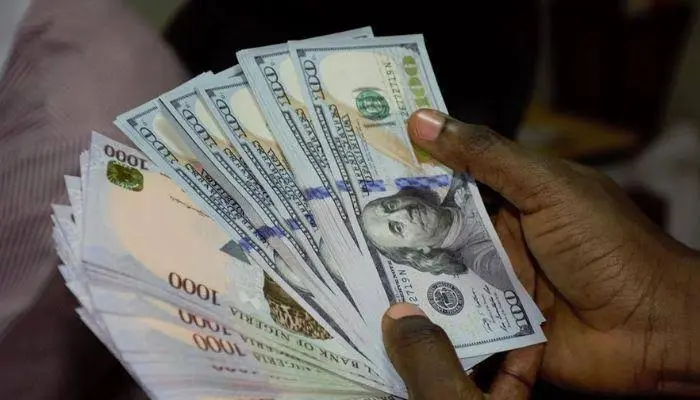
The currency market in Nigeria is gripped with heightened uncertainty this week, as investment analysts outline factors that may trigger additional depreciation of the Naira, with potential repercussions for Nigerians and the economy. The previous week witnessed a staggering 61% depreciation of the Naira, raising concerns about the national currency’s stability and its impact on the cost of goods and services, as well as debt servicing.
Investment analysts have identified key factors that could contribute to further depreciation, emphasizing the need for the Central Bank of Nigeria (CBN) to curb the growth in money supply, take action against currency manipulators, and address the backlog of mature dollar obligations estimated at $5 billion.
External Reserves Show a Positive Turn
Despite the challenges in the currency market, the nation’s external reserves, a significant indicator of the Naira’s future exchange rate, experienced a positive turn. According to data from the CBN, external reserves rose by 3.6% to $33.35 billion in January, reversing a five-month decline that started in August. This increase is attributed to the rise in the price of Nigeria’s crude oil grade, Bonny Light, and an uptick in oil production.
On the flip side, the volume of dollars traded in the Nigerian Foreign Exchange Market (NAFEM) saw a 3.2% month-on-month decline to $2.14 billion in January 2024 from $2.21 billion in December.
Naira’s Recent Depreciation and Market Dynamics
Despite the rise in external reserves, the Naira witnessed a significant 61% depreciation to N1,435.53 per dollar in the NAFEM, driven by measures introduced by the CBN aimed at enhancing transparency in the forex market. The CBN’s actions sought to address illegal transactions that distorted market transparency and prevent under-reporting of transaction rates.
Analysts believe that these measures are intended to aid price discovery in the official market and prevent the reappearance of substantial foreign exchange gaps. The sudden crash in the Naira’s value highlights the challenges of balancing market forces and regulatory interventions.
Impact on the Economy and Investment
The implications of a weakened Naira, as highlighted by experts, include a surge in the cost of imported items, fueling inflation. Consumers’ purchasing power may erode, leading to a decline in the standard of living. Companies relying on imported raw materials might face increased costs, potentially impacting profitability and competitiveness, potentially resulting in job losses or price hikes.
Foreign investment may also be affected, as a weaker Naira makes Nigerian investments less attractive to foreign investors. Increased volatility in the exchange rate can create uncertainty for investors, discouraging investment, especially in long-term projects.
Outlook and Uncertainty
Analysts express uncertainty over the direction of the exchange rate in the coming week, citing the need for increased foreign exchange supply and a return to monetary targeting. The actions of the CBN are expected to play a crucial role in determining the future trajectory of the Naira.
While some believe that an aggressive decline in exchange rates may occur, others caution that any improvement in the exchange rate may be temporary, as fundamental issues affecting the Naira’s weakening persist. Limited supply of dollars, unabating demand for the dollar, and low investor confidence are identified as key factors contributing to the continuous fall of the Naira. Currency speculators, foreign exchange backlogs, and the shift of investors to foreign assets also contribute to the challenges faced by the Naira.