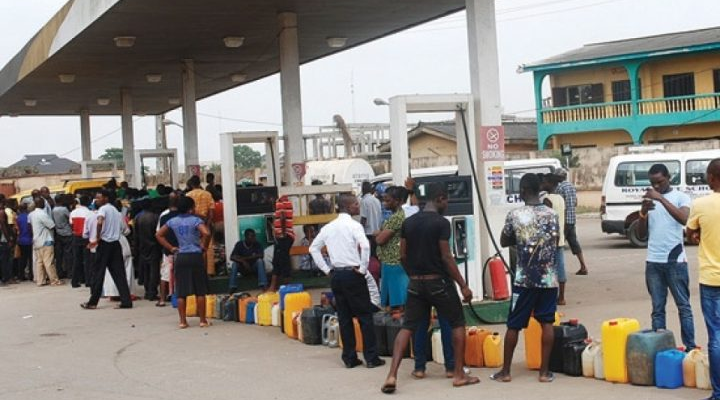
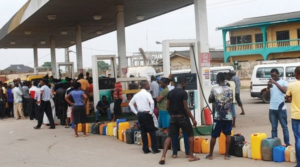
Long queues snaked through filling stations across Lagos State as the city grappled with fuel scarcity, despite the National Association of Road Transport Owners (NARTO) calling off its strike. The queues, which began forming on Tuesday, stemmed from concerns among Nigerians about a potential shortage of premium motor spirit due to the now-suspended NARTO strike.
The refusal of tanker drivers to lift fuel on Monday and Tuesday further exacerbated the situation, impacting filling stations owned by independent marketers, many of which ran out of supply. Major areas in Lagos experienced gridlock as queues persisted, causing inconvenience for motorists and commuters alike.
Filling stations along the Alausa axis, including Mobil, Total, and Conoil, were among those inundated with long queues. Similarly, Nigerian National Petroleum Company Limited (NNPC) stations in Ogunnusi, Ojodu-Berger, and Ikorodu Road faced fuel shortages, contributing to the citywide scarcity.
Reports indicate that while some filling stations managed to dispense fuel, others were completely depleted. At locations like Apata Round-about and Isolo General Hospital, fuel was unavailable, leaving consumers frustrated and stranded.
The scarcity prompted reactions from Lagosians, who took to social media platforms to express their grievances. Many lamented the challenges posed by the scarcity, including increased prices on the black market and disruptions to daily routines.
Meanwhile, the NARTO strike, driven by concerns over freight rates, added pressure to an already strained situation. Despite efforts to negotiate with industry authorities for fair rates, the strike compounded supply issues, underscoring the complexities of the fuel distribution system.
As the fuel scarcity persists, Lagosians endure the challenges posed by limited supply and inflated prices, highlighting the need for sustainable solutions to prevent future disruptions in the country’s fuel supply chain.