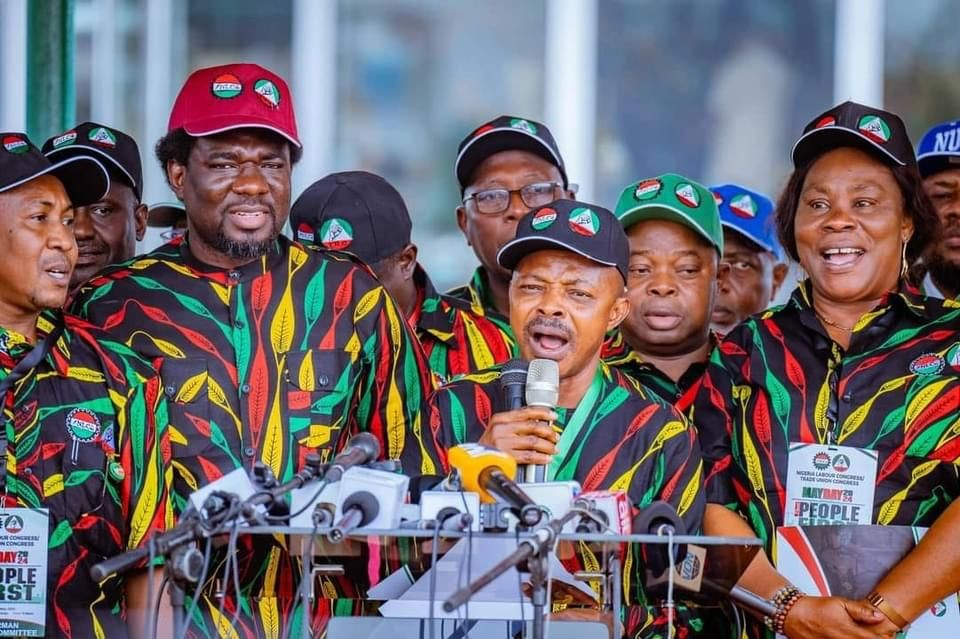
The Nigeria Labour Congress (NLC) and the Trade Union Congress (TUC) have abandoned minimum wage negotiations after the Federal Government proposed a N48,000 minimum wage, significantly below the N615,000 demanded by the unions. The labour leaders expressed their outrage at an emergency press conference on Wednesday, describing the offer as “an insult to the sensibilities of Nigerian workers.”
This marks the second breakdown in negotiations within two weeks, following a deadlock on April 29 when the government rejected the N615,000 minimum wage demand as unreasonable.
NLC President Joe Ajaero explained that the N615,000 figure was calculated based on the current economic conditions and the needs of an average Nigerian family of six. “Living wage is such that will, at least, keep you alive. It is not a wage that will make you poorer and poorer. It is not a wage that will make you borrow to go to work. It is not a wage that will lead you to be in the hospital every day because of malnutrition,” Ajaero said.
He provided a breakdown of the N615,000 demand, including:
- Housing and accommodation: N40,000
- Electricity: N20,000 (before the recent tariff increase)
- Utilities: N10,000
- Kerosene and gas: N25,000 to N35,000
- Food for a family of six: N9,000 per day (N270,000 per month)
- Medical expenses: N50,000
- Clothing: N20,000
- Education: N50,000
- Sanitation: N10,000
- Transportation: N110,000
Ajaero highlighted the significant disparity between the proposed minimum wage and current living costs, emphasizing the need for a wage that genuinely supports workers’ livelihoods.
At the press conference in Abuja, Ajaero disclosed that the organised private sector had proposed an initial offer of N54,000, which still falls short of the union’s demand. He criticized both the government and the private sector for the breakdown in negotiations, stating, “Despite earnest efforts to reach an equitable agreement, the less than reasonable action of the government and the organised private sector has led to a breakdown in negotiations.”
He further condemned the government’s N48,000 offer, pointing out that even the lowest-paid workers in the private sector receive N78,000. “The Government’s proposal of a paltry N48,000 as the minimum wage not only insults the sensibilities of Nigerian workers but also falls significantly short of meeting our needs and aspirations.”
Ajaero accused the government of failing to provide data to support its offer, undermining the negotiation’s credibility. “Furthermore, the government’s failure to provide substantiated data to support their offer exacerbates the situation. This lack of transparency and good faith undermines the credibility of the negotiation process and erodes trust between the parties involved.”
He stressed that accepting the government’s proposal would result in a wage reduction for federal workers, who currently receive N30,000 plus additional allowances totaling N77,000. “Such a regressive step would undermine the economic well-being of workers and their families and is unacceptable in a national minimum wage fixing process.”
In conclusion, Ajaero noted that the unions had to walk out of the negotiations but remained committed to fighting for the rights of Nigerian workers. He called on the government to reconsider its position and return to the negotiation table with a fair offer reflecting the true value of workers’ contributions and the socioeconomic realities.
“In the light of these developments, and to prevent the negotiation of a wage deduction, the Nigeria Labour Congress and Trade Union Congress have decided to walk out of the negotiation process. We remain committed to advocating for the rights and interests of Nigerian workers and will continue to engage in reasonable dialogue with the government if they show serious commitment to find a fair and sustainable resolution to this impasse,” Ajaero stated.
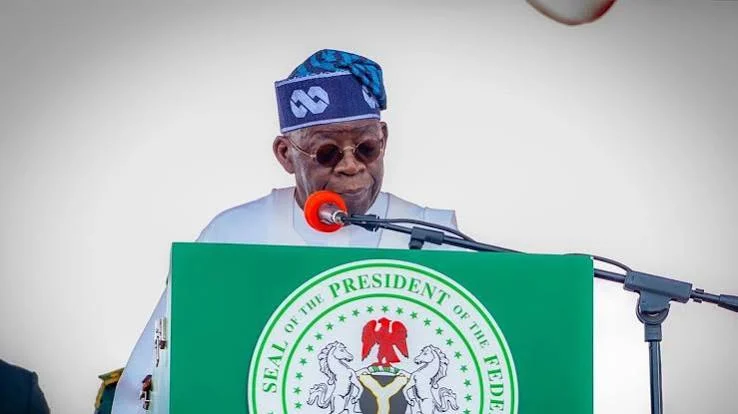
He urged the government to collaborate with labour unions to finalize the proposed N615,000 minimum wage, aligning with President Bola Tinubu’s pledge to ensure a living wage for Nigerian workers.