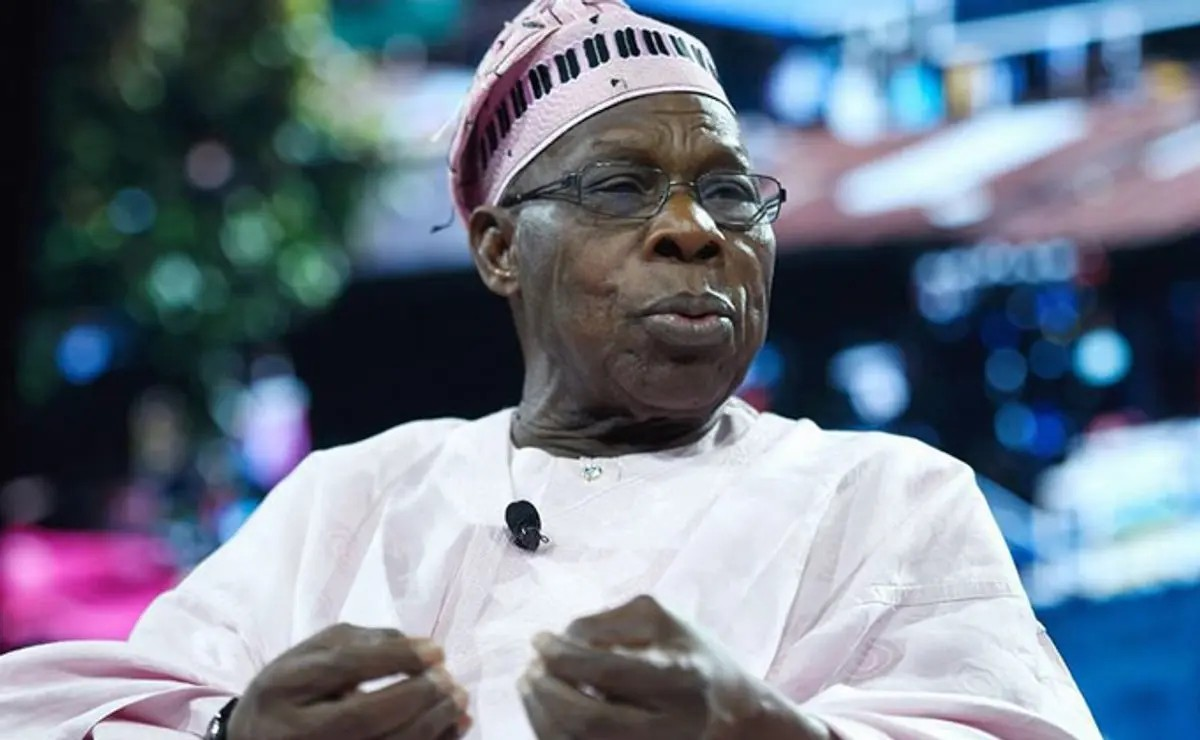
Former President Olusegun Obasanjo has raised concerns about the escalating volatility and uncertainty in Nigeria, emphasizing the increasing insecurity, suffering, and hunger across the nation. Speaking on Saturday at the Africa Methodist Council Heads of Conference Summit and Women’s Movement Leadership Summit in Lagos, Obasanjo urged Nigerian leaders to rise to their responsibilities to create a better future for all citizens.
The event, where Obasanjo served as Chairman, featured a public lecture by Bishop Ivan Abrahams, General Secretary of the World Methodist Council, titled “Leadership in a Volatile, Uncertain, Complex, and Ambiguous World.” In his opening remarks, Obasanjo highlighted the urgent need for Nigerian leaders to re-evaluate their approach to governance.
“How do we re-evaluate the world? That is what I believe we have to do in our re-evaluating the world. Jesus Christ himself told us that in this world, we would have trouble,” Obasanjo stated. He stressed the necessity of a new generation of moral, transformational, and servant leaders to guide Nigeria through its challenges.
Obasanjo painted a bleak picture of Nigeria’s current state, describing it as “volatile, uncertain, complex, ambiguous, and dangerous.” He pointed out that despite Africa’s abundant resources, effective leadership remains crucial for harnessing these resources for the continent’s development.
He reflected on his experiences, revealing that late South African leaders Nelson Mandela and Desmond Tutu had advised him to run for the presidency a second time. “When I came out of prison, and there was pressure mounting on me to take the mantle of leadership in Nigeria, the only place I went outside Nigeria was South Africa. I went to seek advice from Nelson Mandela and Desmond Tutu,” Obasanjo shared.
During the question-and-answer session, Obasanjo criticized the removal of History from Nigeria’s educational curriculum, calling it a “huge disaster.” He emphasized the importance of teaching history to avoid repeating past mistakes and to preserve the memory of significant events like the slave trade.
On Nigeria’s economic challenges, Obasanjo lamented that the discovery of crude oil had been a mixed blessing for the country. “One of the things that was a little bit of misfortune in Nigeria is crude oil. We were drinking and sleeping oil, and it was a misfortune for us. It made us abandon agriculture. Oil is a waste asset. Agriculture is renewable. We have to go back to it,” he argued.
Obasanjo highlighted the plight of Nigeria’s youth, who he described as “restive, frustrated, and dangerous” due to a lack of education, skills, empowerment, and employment opportunities. He warned that failure to address these issues could lead to increased violence and instability.
Advising aspiring politicians, Obasanjo criticized those who enter politics without any backup plan or alternative livelihood. “You must not be a professional politician. Politics is one profession you go into without any training. You can wake up today and say you are a politician,” he said. He stressed the importance of having a secondary means of livelihood, sharing his own experience of being able to return to farming when political pressures became too great.
Obasanjo’s remarks have sparked a conversation about the urgent need for effective leadership and strategic planning to address Nigeria’s pressing challenges and to pave the way for a stable and prosperous future.