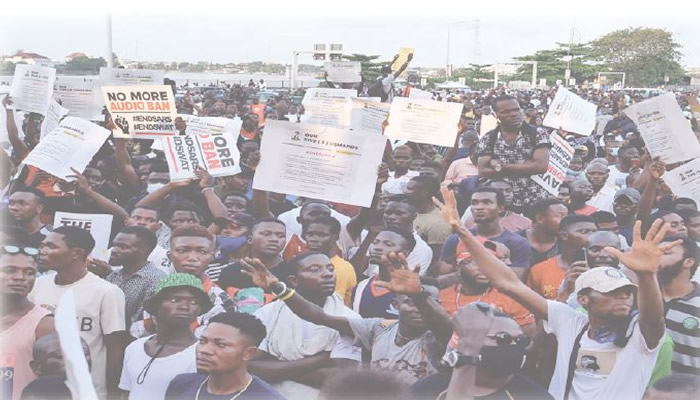
The #EndBadGovernanceInNigeria protest has brought economic activities in Lagos State to a near standstill, as citizens rally to address various socio-economic grievances.
Coinciding with the state’s weekly sanitation exercise, which takes place every Thursday from 7 am to 10 am, markets across Lagos remained shut even after the exercise concluded. Major markets in Ikotun, Egbeda, Iyana Ipaja, Dopemu, Akowonjo, Ayobo, Ikeja, Agege, and Ojota all stayed closed, significantly disrupting daily commerce.
Our correspondent observed the eerie calm as traders refrained from opening their shops, waiting to see how the protests would unfold. Emmanuel, a trader, explained, “We are going to open our shops but not yet. We are still observing how the protest will turn out.” Another trader, who preferred to remain anonymous, added, “Many of us did not observe the sanitation exercise. All we are concerned about is the safety of our market.”
The impact extended beyond markets, with banks and filling stations also shutting down in the affected areas. Residents were seen gathering in clusters, discussing the ongoing developments and expressing their concerns about the future.
A heavy security presence was noted in strategic locations across the city. Security forces were seen patrolling and manning key points to maintain order and prevent any potential violence.
The protest, dubbed “Days of Rage,” is scheduled to take place nationwide from August 1 to 10. However, several top government officials, groups, and religious bodies, including the Christian Association of Nigeria, the Muslim Student Society of Nigeria (Lagos chapter), and the Muslim Rights Concern, have called for the protest to be canceled. They expressed fears that the demonstration could be hijacked by individuals with ulterior motives, potentially leading to violence and further instability.
Despite these calls, the protest has already made its mark, underscoring the deep-seated frustrations among Nigerians and the urgent need for reforms. The coming days will reveal whether the movement will sustain its momentum and achieve its goals or be quelled by government and security interventions.