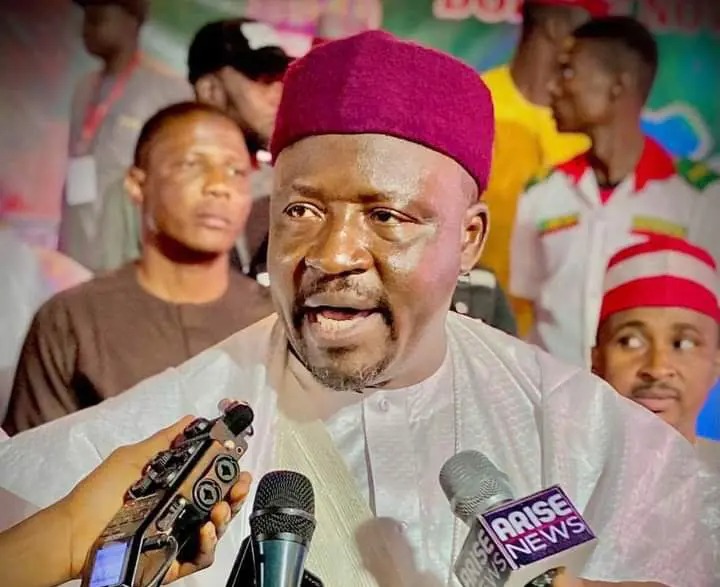
In a startling disclosure, Senator Sumaila Kawu, representing Kano South, revealed that his total monthly earnings amount to over N21 million, a figure significantly higher than the official salary structure released by the Revenue Mobilisation Allocation and Fiscal Commission (RMAFC). The revelation comes amid ongoing public scrutiny of lawmakers’ salaries and allowances in Nigeria.
Senator Kawu made the revelation during an interview with the British Broadcasting Corporation (BBC) Hausa Service on Wednesday. He explained that while his official monthly salary is less than N1 million, his total take-home pay, after including other allowances and benefits, exceeds N21 million.
This admission has sparked controversy, especially in light of RMAFC’s recent statement, which indicated that each of the 109 senators in Nigeria receives a monthly salary and allowances totaling N1.06 million. According to RMAFC Chairman, Mohammed Shehu, this figure comprises a basic salary of N168,866 and various allowances, including those for motor vehicle fueling, personal assistants, domestic staff, entertainment, and constituency activities.
Senator Kawu’s disclosure sharply contrasts with RMAFC’s breakdown, leading to questions about the true earnings of federal lawmakers. Kawu also noted that deductions from his salary occasionally reduce his take-home pay to around N600,000, but this does not account for the significant additional allowances he receives.
The debate over lawmakers’ earnings gained momentum last week when former President Olusegun Obasanjo criticized federal lawmakers for allegedly setting their own salaries and allowances. Obasanjo’s remarks came during a meeting with members of the House of Representatives, where he labeled the practice as “immoral.”
Adding to the controversy, former Kaduna Central Senator Shehu Sani previously revealed that each senator receives a monthly running cost of N13.5 million, in addition to the official N750,000 salary. This further fueled public debate on the transparency and fairness of lawmakers’ compensation.
The Senate has since refuted Obasanjo’s claims, stating that the figures quoted by the former president were inaccurate. However, Senator Kawu’s recent disclosure has only intensified the scrutiny on the financial entitlements of Nigeria’s federal lawmakers.
As the public continues to demand greater transparency and accountability, this issue is likely to remain a focal point of national discourse in the coming weeks.