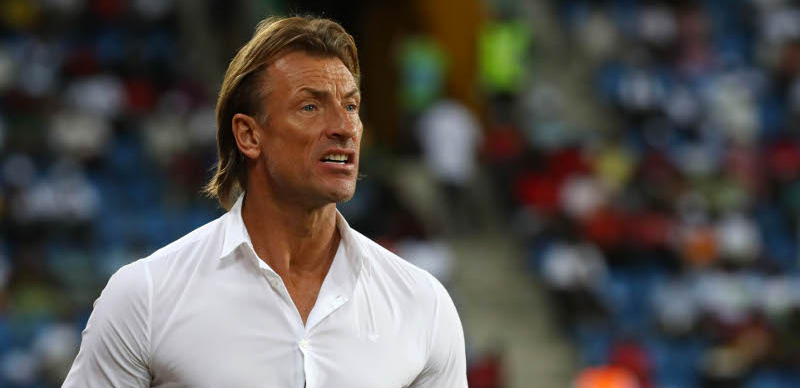
Renowned French football coach Hervé Renard has shed light on his decision to turn down the opportunity to manage Nigeria’s national football team, the Super Eagles. Renard, who has previously achieved success coaching Ivory Coast and Zambia, was reportedly on the verge of taking the job following the departure of Finidi George in May.
The Nigeria Football Federation (NFF) approached Renard as their top candidate after initial talks with German coach Bruno Labbadia fell through. However, despite the substantial offer from Nigeria, Renard ultimately decided to pass on the role.
In an interview with French publication L’Équipe, Renard explained that while the offer was the most financially rewarding of his career, it did not align with his personal goals. “I almost went to Nigeria,” Renard revealed. “I weighed the pros and cons for a few days, even weeks, before eventually turning it down. It was the best offer I’ve had so far, but it didn’t suit me in the end.”
Renard’s decision to decline the role has left the Super Eagles in search of a permanent head coach as they gear up for the 2025 Africa Cup of Nations (AFCON) qualifiers. Interim coach Augustine Eguavoen is currently leading the team, and has hinted at conditions that could influence him to accept the job on a permanent basis.
Eguavoen, who has had several stints as head coach of the Super Eagles, emphasized the need for a long-term vision and support from the NFF if he were to take on the role full-time. Speaking to Brila FM, Eguavoen explained, “The Super Eagles job isn’t one you take lightly. If I were to take it permanently, I’d need to sit down, reflect, and think deeply because it’s not a small task.”
He added that any potential contract would have to include provisions for patience and realistic expectations. “It’s going to be tough. I’d need a long-term contract, patience, and clauses in the deal because you don’t win every day. It takes time to build a team,” Eguavoen said.
Reflecting on his previous experiences as head coach, Eguavoen lamented that he had not been given enough time to implement his vision for the team. “In 2006, I was in charge for six months. Every other time, it was just two months or two to three games. Clemens Westerhof had five years. Gernot Rohr had six years. They got time, but I never had two straight years,” he noted.
Eguavoen reiterated that, for the team to succeed under his leadership, he would need long-term assurances, contractual guarantees, and full confidence from the NFF. As Nigeria prepares for the upcoming AFCON qualifiers, the question of who will permanently lead the Super Eagles remains unanswered.