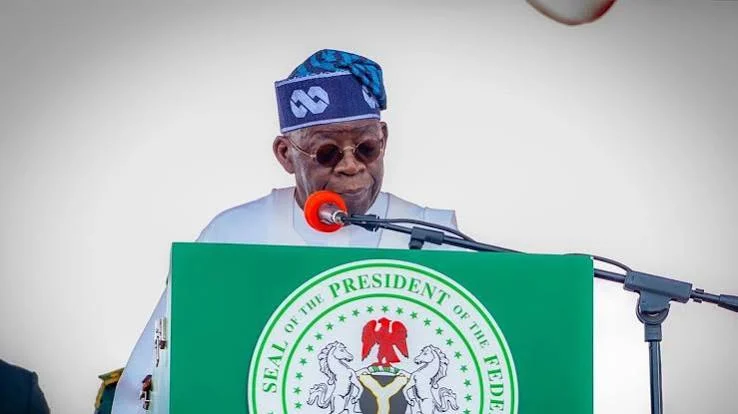
In response to the skyrocketing prices of Liquefied Petroleum Gas (LPG), commonly known as cooking gas, the Federal Government, under President Bola Ahmed Tinubu, has imposed an immediate ban on the export of LPG produced within Nigeria. This decision comes amidst widespread public outcry over the soaring cost of cooking gas, which has seen prices jump dramatically over the past year.
The announcement was made on Tuesday in a statement by the media aide to the Minister of State for Petroleum Resources (Gas), Ekperikpe Ekpo. The government’s intervention follows a sharp increase in LPG prices, which have risen from N1,100–N1,250 per kilogram to N1,525 per kilogram, placing significant financial strain on households across the country.
Minister Ekpo expressed concern over the growing burden on Nigerian families, stating that despite previous efforts to stabilize prices, the situation had worsened. The Federal Government had earlier formed a high-level committee in November 2023, headed by the Authority Chief Executive of the Nigerian Midstream Downstream Petroleum Regulatory Authority (NMDPRA), Mr. Farouk Ahmed, to explore solutions. However, the price hikes have continued, prompting more decisive measures.
Government Actions to Address Price Hikes
During a meeting with key players in the LPG value chain, Minister Ekpo outlined several critical measures that the government will implement to tackle the crisis:
- Immediate Ban on LPG Exports:
Starting November 1, 2024, all Nigerian producers of LPG, including the Nigerian National Petroleum Company Limited (NNPCL), are prohibited from exporting cooking gas produced in the country. The government’s directive aims to ensure that all locally produced LPG is made available for domestic consumption to help ease the supply shortage. Furthermore, companies that fail to comply and continue exporting will be required to import an equivalent volume of LPG at cost-reflective prices. - Development of a New Pricing Framework:
Over the next 90 days, the NMDPRA will collaborate with industry stakeholders to create a revised domestic pricing framework for LPG. The new pricing model will reflect the cost of in-country production, moving away from the current practice of linking domestic LPG prices to international benchmarks from regions like the Americas and Far East Asia. This shift is expected to stabilize prices and offer relief to consumers. - Long-Term Infrastructure Development:
In addition to immediate measures, the government is embarking on a 12-month plan to enhance the country’s LPG infrastructure. This plan includes the development of facilities for blending, storage, and distribution of cooking gas. The export ban will remain in effect until domestic supply can adequately meet national demand and LPG prices stabilize.
Goal: Affordable and Accessible LPG
Minister Ekpo emphasized that these steps are essential to ensuring that LPG is both affordable and accessible to Nigerian households, many of whom are struggling with rising costs of living. He assured the public that the government is committed to reducing the financial burden on citizens by stabilizing the LPG market.
The Minister’s meeting with stakeholders in the LPG value chain is part of a broader effort to address critical challenges in the domestic gas market. By focusing on long-term infrastructure improvements and recalibrating the pricing model, the Federal Government aims to foster a more sustainable and stable energy market for Nigeria.
As the country navigates these changes, the government’s decisive actions are seen as a significant step towards protecting Nigerian consumers from the volatility of the global gas market, ensuring that essential commodities like cooking gas are priced within reach for everyday citizens.