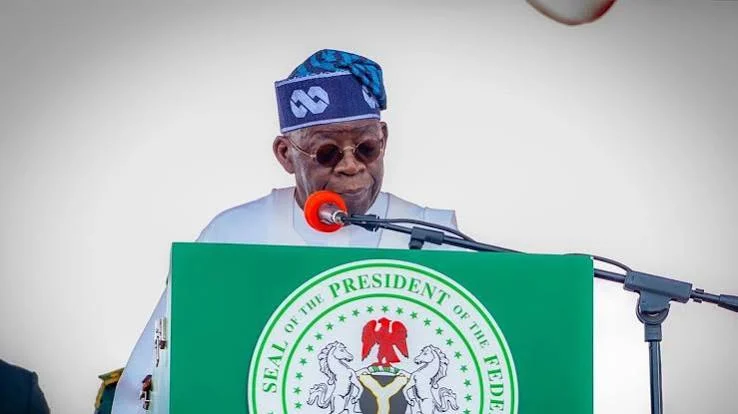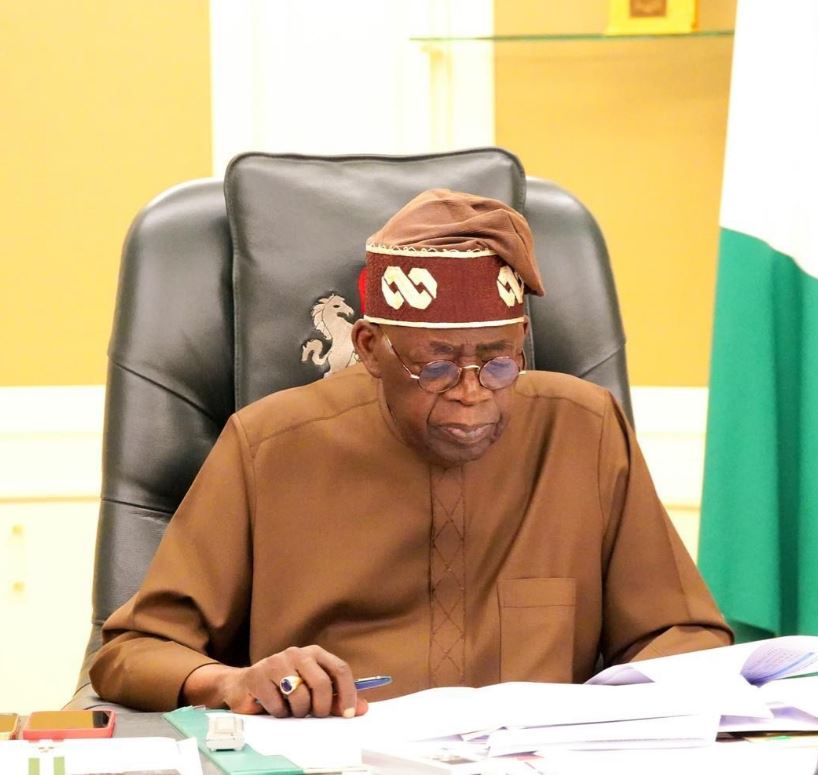
The Federal Executive Council (FEC) has approved a $618 million loan from a group of international financiers to support the procurement of six fighter aircraft and ammunition for the Nigerian Air Force. This decision, announced by the Minister of Information and National Orientation, Mohammed Idris, was made following the council’s meeting chaired by President Bola Tinubu in Abuja on Wednesday.
Idris disclosed that the funds, which include €443.3 million and an additional $141 million, would be used to acquire M346 fighter jets and essential ammunition as part of Nigeria’s ongoing efforts to modernize its air defense capabilities. This decision comes as part of a broader national defense strategy aimed at addressing security challenges.
Earlier in October, the Nigerian Air Force revealed its plans to acquire a total of 24 M346 combat jets and 10 AW109 Trekker helicopters, as part of a fleet renewal strategy. The first three M346 jets are expected to be delivered by early 2025, with the rest arriving through mid-2026.
Infrastructure Projects and Road Development
In addition to the defense loan, the FEC approved N740 billion for the construction of the Berger stretch of the Abuja-Kano road, which is part of ongoing efforts to improve Nigeria’s road infrastructure. Minister of Works, Dave Umahi, provided an update on several high-profile road projects during the press briefing. He announced that the Shagamu-Benin road is undergoing major rehabilitation, and construction on the Sokoto-Badagry road is set to commence soon.
Umahi also confirmed that work would resume on the long-stalled Oyo-Ogbomoso road, which has seen little progress in 18 years. Other critical projects include significant repairs on the Makurdi-Katsina-Ala road and a phased approach to the construction of the Biu-Kangiwa-Kamba-Kaya road, which links Nigeria to the Niger Republic.
To tackle the extensive backlog of infrastructure projects, Umahi said the Ministry of Works had inherited N1.6 trillion in debt tied to over 2,600 projects, with a total contract value of N13 trillion. He emphasized a phased approach to completing projects based on available funds, with special attention to rising inflation and exchange rate fluctuations impacting construction costs.
Creative Economy Fund
The FEC also took a significant step to bolster Nigeria’s creative industry by approving the establishment of a Creative Economy Development Fund. Minister of Arts, Culture, Tourism, and Creative Economy, Hannatu Musawa, announced the creation of this fund, designed to provide financial support to the creative sector and encourage economic expansion.
Musawa explained that the fund will allow industry players to use their intellectual property (IP) as collateral for loans. The initiative is supported by commitments from organizations such as Afreximbank, which has pledged $200 million for the fund.
“We are laying the necessary foundations to unlock the potential of the creative economy,” said Musawa, emphasizing the need for policies that ensure Nigeria’s creative industry can compete globally. The initiative is expected to create jobs, particularly for young Nigerians, while deepening economic and cultural growth.
CNG Conversion for Fuel Stations
Minister of State for Petroleum Resources (Gas), Ekperikpe Ekpo, revealed that President Tinubu had directed the conversion of most fuel stations across the country to accommodate Compressed Natural Gas (CNG). This initiative, Ekpo said, is part of the government’s broader strategy to encourage the use of alternative fuels, which are cheaper and safer for consumers.
He highlighted that the use of CNG can significantly reduce fuel costs, with a comparison showing that a litre of fuel, which could cost N1,000, is only N200 when using CNG. This, according to Ekpo, will benefit Nigerians greatly as the government expands CNG availability nationwide.
Educational Initiatives and Science Textbooks Distribution
In an effort to improve Nigeria’s education system, the council also approved the printing of one million science textbooks for distribution across public secondary schools. This move is part of a larger initiative spearheaded by the Petroleum Technology Development Fund (PTDF) to address deficiencies in science and technology education.
The textbooks, covering subjects such as physics, chemistry, biology, mathematics, and computer science, will be distributed to schools across Nigeria’s 774 local government areas, unity schools, and special schools. Additionally, PTDF plans to build digital and physical libraries in approximately 1,000 secondary schools nationwide to enhance learning resources for students.
This comprehensive set of initiatives underscores the FEC’s commitment to strengthening Nigeria’s defense, infrastructure, economy, and education sectors as part of a broader national development strategy.