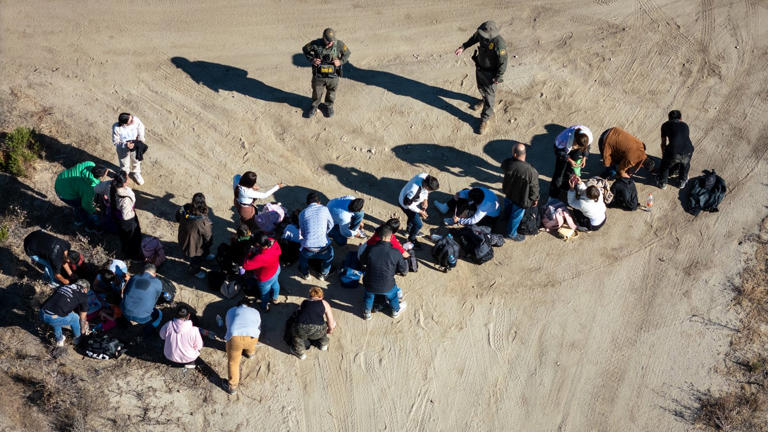
In a recent effort to curb illegal immigration, the U.S. Department of Homeland Security (DHS) deported a group of Indian nationals residing unlawfully in the country. DHS confirmed that a chartered deportation flight departed for India on October 22, coordinated with Indian authorities to facilitate the repatriation. Although the exact number of deportees remains undisclosed, this move reflects a broader U.S. crackdown on undocumented immigration.
DHS Acting Deputy Secretary Kristie A. Canegallo addressed the matter, underscoring that “Indian nationals without a legal basis to remain in the United States are subject to swift removal.” She cautioned potential migrants against trusting smugglers who make false promises about guaranteed entry. “Intending migrants should not fall for the lies of smugglers who proclaim otherwise,” she added.
The deportation comes amid a year marked by increased migration enforcement. According to U.S. Customs and Border Protection (CBP), 90,415 Indians were intercepted attempting to cross into the U.S. without proper documentation between October 2023 and September 2024. DHS reports that, since the enforcement of new policies under the Securing the Border Presidential Proclamation in June 2024, encounters at unauthorized southwestern border crossings have decreased by 55%.
Statistics released by DHS reveal the scale of the crackdown: more than 160,000 individuals were deported or returned in fiscal year 2024 alone, with over 495 repatriation flights to over 145 countries, including India. The U.S. government has been actively collaborating with various countries to expedite the repatriation of individuals without legal authorization to remain in the country, which DHS states is aimed at reducing irregular migration and countering transnational smuggling operations.
Over the past year, the U.S. has also deported citizens of Colombia, Egypt, Peru, China, and other nations as part of its ongoing immigration enforcement measures. This recent deportation of Indian nationals is the latest development in the U.S.’s intensified approach to managing migration and upholding its immigration laws.