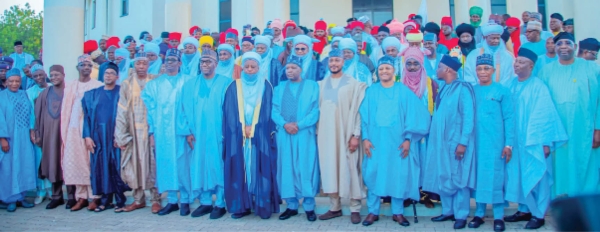
In a significant gathering held in Kaduna on Monday, the governors of Nigeria’s 19 northern states, along with influential northern monarchs, voiced a united opposition to the Nigeria Tax Reform Bill, recently submitted to the National Assembly by President Bola Tinubu. The meeting, part of the Northern States Governors’ Forum, aimed to address pressing socio-economic challenges impacting the region, including rising insecurity, poverty, and gaps in education.
Attendees included prominent leaders like Kaduna State Governor Uba Sani, Gombe’s Inuwa Yahaya, and Borno’s Babagana Zulum, alongside traditional rulers such as the Sultan of Sokoto, Alhaji Muhammad Sa’ad Abubakar III, and the Shehu of Borno, Alhaji Abubakar Ibn Umar Garba El-Kanemi. Key government figures, including Chief of Defence Staff General Christopher Musa, were also present.
Opposition to Tax Amendments
In a joint communiqué, the northern governors voiced their disapproval of the recent tax bill, particularly its proposed shift to a VAT distribution model based on derivation. The governors argued that this model disproportionately favors regions with higher commercial activity, at the expense of others. “This VAT amendment ignores the unique economic and structural disparities across Nigeria and will hinder the North’s economic stability,” said Northern Governors’ Forum Chair Inuwa Yahaya.
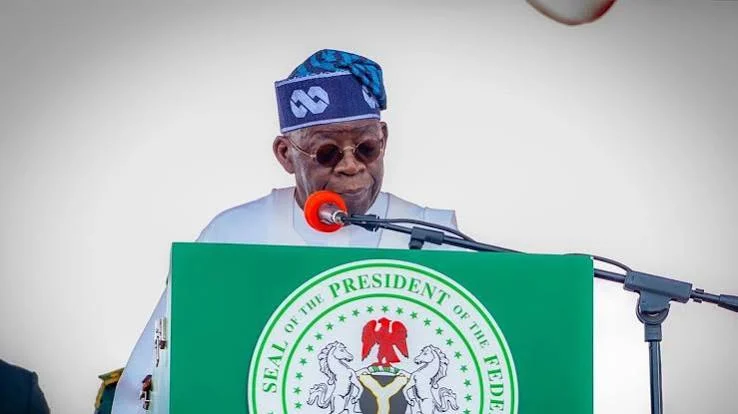
President Tinubu’s reform package includes four bills targeting Nigeria’s tax framework: the Nigeria Tax Bill 2024, Tax Administration Bill, Nigeria Revenue Service Establishment Bill, and the Joint Revenue Board Establishment Bill. Tinubu, who submitted the bills while on a brief vacation in London, argued that the proposed tax changes would stimulate Nigeria’s economy and strengthen fiscal institutions.
Concerns Over Economic Inequality
Governor Yahaya highlighted the intensifying economic hardship in the northern region compared to southern states, noting that VAT collections tend to be concentrated in wealthier regions, a pattern reinforced by the current distribution model. Yahaya emphasized, “Our region faces distinct challenges. A one-size-fits-all policy risks further entrenching existing inequalities.”
The forum’s communique appealed to the National Assembly to reconsider the VAT amendment, urging an equitable policy approach that doesn’t marginalize any region. “While the Northern Governors’ Forum is committed to national development, we call for fair policies that address Nigeria’s diverse economic landscape,” Yahaya noted.
Social and Economic Hardship
The governors also addressed issues of poverty, unemployment, and youth restiveness, urging a proactive approach to tackling underlying causes such as lack of access to education and economic opportunities. Yahaya added, “The EndSARS and EndBadGovernance movements have shown us that northern youth are demanding change. It’s imperative that we respond through sustainable programs focused on skill development, education, and job creation.”
The forum highlighted that widespread poverty and inadequate infrastructure have worsened the challenges in the North. With several areas experiencing electricity shortages due to a malfunction in the Shiroro-Kaduna transmission line, the region has been plunged into darkness, exacerbating the strain on local businesses and citizens.
Emphasis on Security and Agricultural Growth
Security was another focal point, with the governors commending General Christopher Musa for his contributions to the nation’s security. The group pledged to support agricultural initiatives that could spur industrialization and alleviate hunger. “The North has immense agricultural potential that must be harnessed. Revitalizing the agro-allied industry can drive job creation and economic growth,” the communique stated.
The group also called for a greater role for traditional rulers in security efforts, particularly in tackling banditry, kidnapping, and communal conflicts. The Sultan of Sokoto highlighted the importance of addressing the issue of Almajiri children and out-of-school youth, advocating for resources to be channeled toward the recently established Almajiri and Out-of-School Children Commission.
Call for Political and Grassroots Engagement
The Arewa Consultative Forum (ACF) praised the northern governors’ stance, urging them to increase their involvement in grassroots affairs. ACF National Publicity Secretary Professor Tukur Muhammad-Baba called on leaders to prioritize the North’s socio-economic well-being over partisan politics. “The governors’ firm stance shows they understand the plight of their people. We hope to see even greater engagement in addressing grassroots challenges,” he stated.
As President Tinubu’s administration seeks to push forward with fiscal reforms, northern leaders have emphasized the need for a balanced approach, one that considers the North’s unique socio-economic dynamics. The meeting underscored a growing regional sentiment that, while supportive of national growth, urges inclusivity and fairness across Nigeria’s diverse communities.