The United States, often celebrated as a leader in democracy, has a unique system for choosing its president: the Electoral College. While Americans cast their votes on Election Day, it’s actually 538 appointed “electors” who formally decide the outcome. This process, established by the Constitution, can lead to a president being elected even if they don’t win the popular vote.
Since the first U.S. presidential election in 1789, the Electoral College has generally aligned with the popular vote in all but five instances, two of which occurred in recent decades. One of the most notable cases was in 2000 when Democrat Al Gore received 543,895 more votes nationwide than Republican George W. Bush. However, after a heated Supreme Court ruling ended a recount in Florida, Bush was awarded the state’s crucial 25 electoral votes, pushing him past the 270-vote threshold needed to win the presidency.
In 2016, a similar scenario unfolded when Hillary Clinton won nearly 2.9 million more votes than Donald Trump, yet Trump secured the presidency by capturing 304 electoral votes to Clinton’s 227.
The mechanics of the Electoral College allocate electors to each state based on its congressional representation, totaling 538 electors. A candidate needs a majority of at least 270 electoral votes to win the presidency. Most states use a winner-takes-all system, where the candidate with the most votes in the state, regardless of margin, claims all its electoral votes. Maine and Nebraska, however, distribute electoral votes by congressional district, offering a more nuanced representation.
The Electoral College remains controversial. Critics argue it undermines the “one person, one vote” principle by focusing candidates’ efforts on swing states, leaving many voters in solidly red or blue states as virtual bystanders. They propose shifting to a national popular vote, where every vote counts equally, ensuring a direct choice by the people.
Supporters of the Electoral College argue the system protects the influence of smaller states. They suggest that if the presidency were decided by popular vote alone, candidates would prioritize campaigning in populous states like California, Texas, and New York, potentially neglecting smaller states entirely.
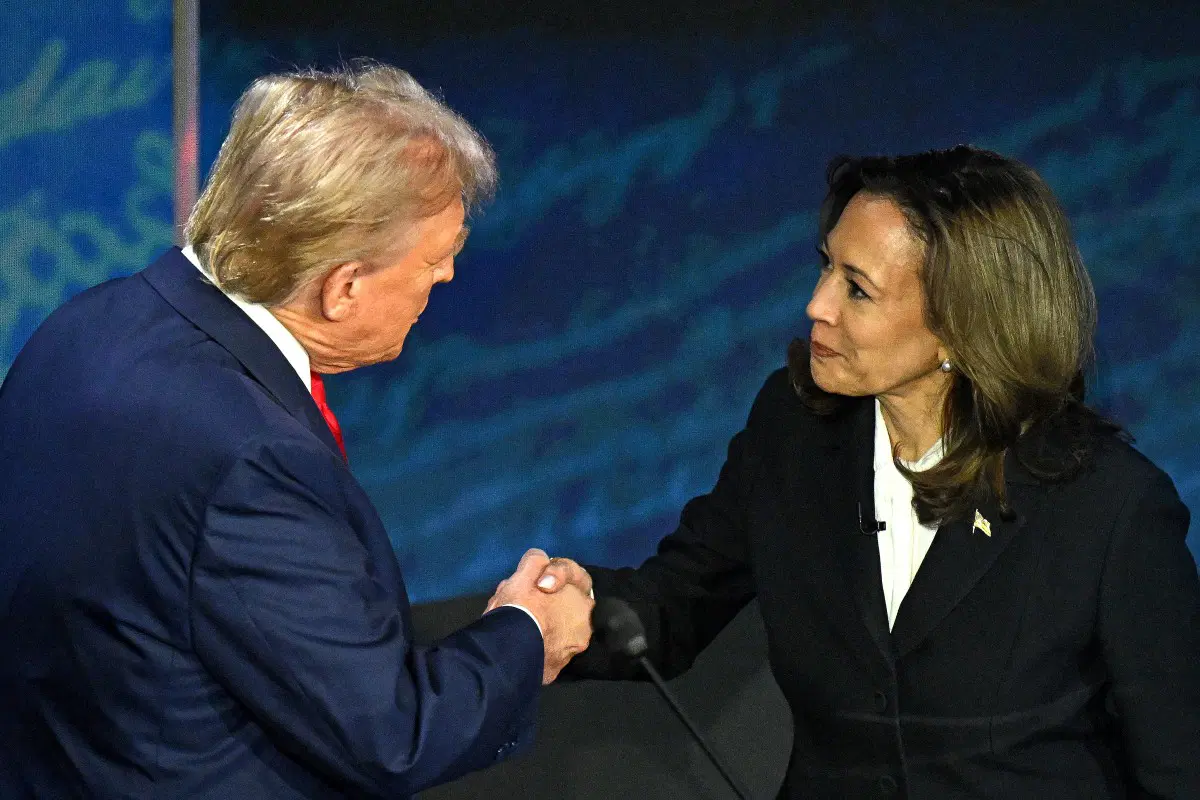
Meanwhile, as Americans prepare for the 2024 election, attention is focused on two distinctive candidates. Vice President Kamala Harris, aiming to become the first woman president, has a platform emphasizing unity, equality, and progressive policies. Raised in California by immigrant parents from Jamaica and India, Harris has a rich background in law and public service, previously serving as California’s attorney general and U.S. senator. Her historic rise has earned her widespread attention and support.
On the Republican side, former President Donald Trump, known for his brash and polarizing style, has remained a dominant figure, unfazed by legal challenges and controversies. Trump, who first stunned the political establishment with his victory in 2016, continues to appeal to a base frustrated with establishment politics. His current campaign leans heavily on themes of anti-immigration and a promise to “drain the swamp,” while his rhetoric has grown more direct, often sparking debate and divisive reactions from both supporters and critics.
As election season intensifies, the debate over the Electoral College and popular vote underscores deep divides within the American political landscape. Some call for reform to ensure every vote has equal weight, while others defend the system as a cornerstone of American federalism. Whichever path is chosen, the unique structure of U.S. presidential elections will continue to shape American democracy and influence how campaigns are run across the country.