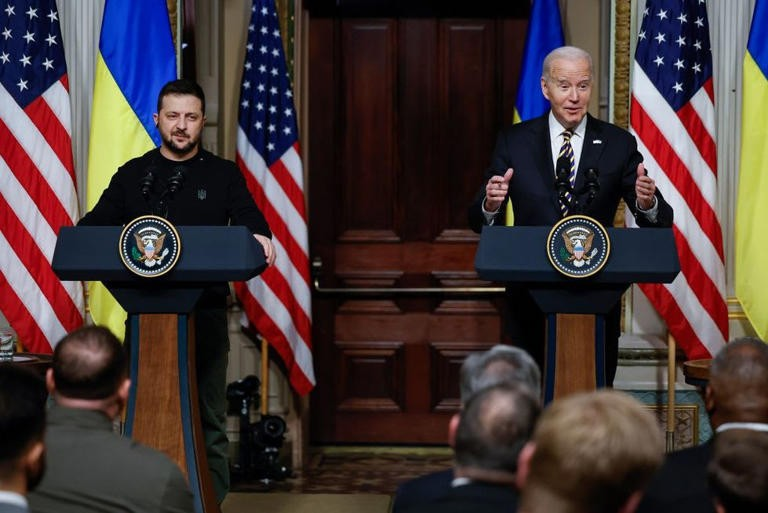
Former President Donald Trump’s son, Donald Trump Jr., has sharply criticized President Joe Biden’s recent decision to authorize Ukraine’s use of long-range missiles inside Russian territory, accusing the administration of escalating the ongoing conflict and risking a global war.
The Biden administration approved the deployment of Army Tactical Missile Systems (ATACMS), which have a range of up to 190 miles, granting Kyiv the ability to strike deeper into Russian territory. This policy shift marks a significant escalation in U.S. military support for Ukraine.
Timing and Controversy
The decision comes just weeks before President-elect Donald Trump is set to take office. The Biden administration’s move is reportedly driven by concerns over Trump’s stated intention to scale back U.S. support for Ukraine and prioritize ending the war.
Trump Jr.’s Criticism
Donald Trump Jr. took to X (formerly Twitter) to voice his disapproval, accusing Biden of pandering to the military-industrial complex and jeopardizing global peace.
He tweeted:
“The military industrial complex seems to want to make sure they get World War 3 going before my father has a chance to create peace and save lives. Gotta lock in those $Trillions. Life be damned!!! Imbeciles!”
Reactions and Implications
The decision has sparked a heated debate among political and military analysts. Critics argue that enabling Ukraine to strike within Russia could provoke a direct confrontation with Moscow, potentially escalating the war to a global scale.
Proponents of the policy assert that providing Ukraine with advanced capabilities is necessary to deter further Russian aggression and bolster Kyiv’s defensive posture.
Biden Administration’s Position
The Biden administration has yet to officially comment on Trump Jr.’s statements but has previously maintained that its support for Ukraine is rooted in defending international norms and countering Russian expansionism.
Broader Context
The authorization of ATACMS marks a turning point in U.S. involvement in the Ukraine-Russia conflict, underscoring the complexities of balancing military aid with diplomatic efforts. As Donald Trump prepares to assume the presidency, the future of U.S. foreign policy in the region remains uncertain, with both parties deeply divided on the issue.
The international community now watches closely to see how these developments will impact the fragile geopolitical balance in Eastern Europe.