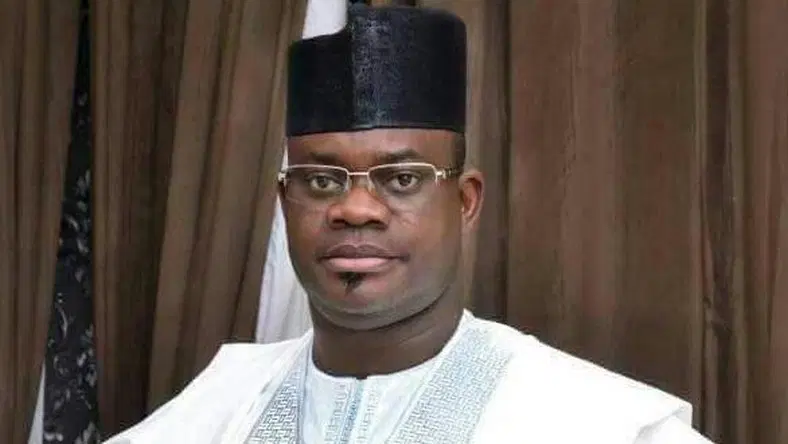
Former Kogi State Governor, Alhaji Yahaya Bello, pleaded not guilty on Wednesday to a 16-count charge of alleged fraud involving N110 billion. The charges were brought against him by the Economic and Financial Crimes Commission (EFCC) before Justice Maryann Anenih at the High Court of the Federal Capital Territory in Maitama, Abuja.
Bello appeared in court alongside two co-defendants, Umar Oricha and Abdulsalami Hudu, as the EFCC accused the trio of conspiracy, criminal breach of trust, and possession of unlawfully acquired property. The charges, marked CR/7781, include allegations of misappropriation of state funds during Bello’s tenure as governor.
The Alleged Offenses
The EFCC outlined how the former governor allegedly diverted public funds to acquire an array of properties in Nigeria and abroad. Some of the properties cited in the charge sheet include:
- No. 35 Danube Street, Maitama District, Abuja (N950 million)
- No. 1160 Cadastral Zone C03, Gwarimpa II District, Abuja (N100 million)
- No. 2 Justice Chukwudifu Oputa Street, Asokoro, Abuja (N920 million)
- Block D Manzini Street, Wuse Zone 4, Abuja (N170 million)
- Hotel Apartment Community in Burj Khalifa, Dubai (valued at AED 5.7 million, approximately N1.4 billion)
- Block 18, Gwelo Street, Wuse Zone 4, Abuja (N60 million)
- No. 9 Benghazi Street, Wuse Zone 4, Abuja (N310.4 million)
The prosecution also alleged that Bello and his co-defendants transferred large sums of money to foreign accounts, including $570,330 and $556,265 to TD Bank in the United States. Additionally, they were accused of possessing unlawfully obtained funds, such as N677.8 million from Bespoque Business Solution Limited.
Court Proceedings
Bello, dressed in a white caftan and blue cap, entered the courtroom at 9:45 a.m. to take his place in the dock. His appearance marked the end of a prolonged standoff with the EFCC, during which his whereabouts remained unknown until his eventual surrender on Tuesday.
During the proceedings, the defense counsel argued for his client’s innocence, while the prosecution maintained that they had overwhelming evidence of financial misconduct. The judge adjourned the case, setting further hearings to allow for the presentation of evidence and arguments.
Public Reactions
The arraignment has drawn significant public attention, with many viewing it as a litmus test for Nigeria’s anti-corruption efforts. The EFCC, in a statement, reiterated its commitment to holding public officials accountable and ensuring the recovery of misappropriated funds.
As the case unfolds, legal experts and citizens alike are closely monitoring proceedings, which could set a precedent for handling high-profile corruption cases in Nigeria.